The Complete Minami-Horie Zakka Guide: Best Stores, Gift Ideas, and Practical Advice

Just three blocks west of the frantic neon displays of the Shinsaibashi fashion district, the pace of Osaka drops noticeably. Cross the Hanshin Expressway overpass into Minami-Horie, and the crowded retail corridors give way to tree-lined avenues, industrial-chic concrete facades, and the distinct aroma of roasted coffee mixed with aged cedar. This neighborhood, centered along the 800-meter stretch of Orange Street (Tachibana-dori), houses the highest concentration of design-driven retail in western Japan.
Modern Japanese zakka culture treats household objects not merely as utilitarian tools, but as tactile everyday rituals. In Minami-Horie, this philosophy shapes an ecosystem of multi-level concept spaces, mid-century furniture importers, and quiet ceramic studios. For international design collectors and casual travelers planning a focused shopping run, navigating this dense grid requires knowing where historic craftsmanship ends and contemporary lifestyle retail begins.
📌 Key Takeaways:
- The Epicenter: Orange Street (Tachibana-dori) anchors Minami-Horie, balancing century-old woodworking roots with high-end independent concept stores.
- Price-to-Style Diversity: The district spans high-end Scandinavian imports priced over ¥30,000 down to everyday Hasami porcelain bowls starting at ¥1,800.
- Logistics for 2026: Independent boutiques largely open late (between 11:00 AM and 12:00 PM) and frequently close on Wednesdays; digital transit cards and mobile payments are now universal across nearly all shops.
How Orange Street Evolved From Meiji Woodcraft to Design Haven
Tachibana-dori was not conceived as a haven for minimalist home decor. During the late Edo and Meiji eras, this specific corridor running parallel to the Dotonbori canal was Osaka’s primary furniture manufacturing quarter. Timber floated directly down the canal network into local workshops, where cabinetmakers specialized in heavy paulownia dressers (tansu) and lacquered household furnishings. By the mid-20th century, the street held dozens of family-owned furniture showrooms serving the Kansai region.
Economic shifts in the late 1990s decimated traditional domestic furniture demand. As older storefronts shuttered, low rents attracted young Osaka lifestyle design boutiques, apparel experimenters, and cafe owners displaced from the soaring rents of central Chuo-ku. The street was rebranded as "Orange Street", a playful nod to Tachibana, an ancient Japanese citrus variety, and quickly transformed into an alternative design artery.
Today, that lineage remains physically legible. Rather than demolishing the neighborhood's mid-century warehouses and woodcraft spaces, independent concept stores stripped them back to raw concrete, exposed iron rafters, and reclaimed lumber. Walk down the side alleys of Minami-Horie 1-Chome and 2-Chome, and you will still find working upholstery workshops and cabinet suppliers operating next to glass-fronted lifestyle boutiques showcasing hand-poured botanical candles and forged iron cutlery.
Sourcing Tableware, Mid-Century Nordic Accents, and Everyday Goods
Finding quality pieces in Minami-Horie depends on identifying which specialty shops curate for distinct functional needs. The neighborhood splits broadly into three design camps: authentic regional ceramics, mid-century Scandinavian furniture and accents, and high-utility everyday household staples.
For artisan tableware and ceramics, the focus centers on contemporary interpretations of heritage kilns. Several independent stockists on the western end of Orange Street bypass mass-market wholesale channels entirely, sourcing directly from kilns in Nagasaki (Hasami-yaki), Gifu (Mino-ware), and Shiga (Shigaraki-yaki). These collections emphasize matte glazes, stackable profiles, and textured stoneware engineered for daily microwave and dishwasher use. Prices for individual small plates (mamezara) generally run between ¥900 and ¥1,800 ($6 to $12), while hand-thrown ramen bowls and ceramic serving platters command ¥3,500 to ¥8,500 ($23 to $57).
Vintage European imports hold an equally strong foothold. Importers throughout Minami-Horie spend several months each year sourcing directly from Denmark, Sweden, and Finland. Showrooms such as Shark Attack and nearby mid-century dealers feature restored 1960s teak sideboards, Arne Jacobsen chairs, and pristine 1970s Arabia Finland stoneware. Unlike Tokyo’s vintage furniture market, which often carries aggressive markups, Osaka dealers price their European stock competitively, offering smaller Scandinavian glass candleholders, brass desk trays, and ceramic vases ranging from ¥4,500 to ¥16,000 ($30 to $107).
Those hunting for accessible gifts and daily home organization discover an abundance of utilitarian zakka. Japanese lifestyle labels across the district emphasize brushed aluminum storage boxes, canvas tool rolls, linen kitchen aprons, and handcrafted stationery crafted from traditional washi fibers. These functional items reflect the modern Japanese obsession with functional order, designed to occupy minimal square footage while elevating routine tasks.
Comparing Minami-Horie’s Definitive Lifestyle Boutiques
The retail density of Minami-Horie makes it easy to lose hours in stores that look nearly identical from the street. The table below compares the district's key anchors by focus, typical price tier, and practical purchase suitability.
| Store / Space | Core Aesthetic & Focus | Average Price Tier | Best For Suitcase Packing |
|---|---|---|---|
| Biotop Osaka | Multi-level concept retail, botanical apothecary, minimalist homeware | ¥3,500, ¥45,000 ($23, $300) | Aromatherapy oils, fine linen spray, ceramic diffusers |
| Timeless Comfort | Modern kitchenware, functional tabletop utensils, regional ceramics | ¥1,200, ¥12,000 ($8, $80) | Enamel cookware, Hasami mugs, brass cutlery sets |
| Puebco Stockists / Collaborations | Industrial upcycled goods, military-surplus canvas, utilitarian wire racks | ¥800, ¥7,500 ($5, $50) | Foldable fabric bins, steel desk trays, canvas tote organizers |
| Shark Attack Minami-Horie | Vintage industrial hardware, mid-century lighting, European decorative accents | ¥4,000, ¥120,000 ($27, $800) | Cast-iron hooks, vintage key plates, small brass tabletop objects |
| Standard Products (Nearby OPA/Daimaru) | Affordable domestic zakka, Seki cutlery, understated cedar accessories | ¥330, ¥1,100 ($2, $7) | Seki stainless pairing knives, incense cones, wooden serving spoons |
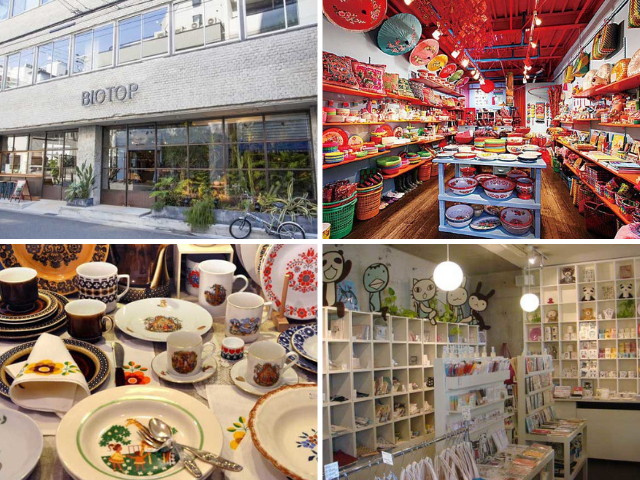
Hidden Backstreet Studios and Osaka’s Independent Ceramic Artisans
While the main boulevard of Orange Street draws heavy foot traffic, the most rewarding design finds occupy the residential alleys stretching north toward Kitahorie and south toward the Minatomachi riverfront. Here, rents remain accessible enough for individual potters, leatherworkers, and stationery curators to operate storefront-studios where the workshop sits right behind the counter.
Local Osaka craft makers working out of these compact spaces frequently experiment with mixed-material design. You will encounter turned cherry-wood canisters fitted with hand-hammered copper lids that oxidize into deep patinas over decades of use. Ceramic artists based in the neighboring hills of Tamba or Shigaraki regularly host week-long solo exhibitions in Horie’s micro-galleries, selling small-batch matcha bowls (chawan) and asymmetrical vases that never make it to commercial export portals.
These backstreet studios also serve as the best entry point for curated Japanese souvenirs with authentic provenance. Instead of mass-produced novelties, small spaces like Muku and neighborhood independent papermakers stock hand-bound journals using raw Mulberry paper, indigo-dyed linen hand towels (tenugui), and incense sticks hand-rolled on Awaji Island across Osaka Bay. A single bundle of aged sandalwood or hinoki incense from an independent Horie perfumer rarely costs more than ¥1,500 ($10), yet it captures the sensory quality of western Japan far better than department store packaged goods.
Crafting an Efficient Minami-Horie Shopping Itinerary
Planning a successful shopping run through Minami-Horie requires tactical timing. The neighborhood operates on an afternoon schedule; showing up at 9:00 AM guarantees finding locked iron shutters and empty streets.
11:30 AM | Arrive at Yotsubashi Station (Exit 5/6)
Begin with coffee and lifestyle browsing at Biotop Osaka.
12:30 PM | Walk westward along Orange Street (Tachibana-dori)
Browse mid-century imports, modern homeware, and kitchen supply shops.
02:30 PM | Detour into 1-Chome & 2-Chome Backstreets
Visit independent ceramic studios, artisan incense makers, and vintage outposts.
04:30 PM | Cross north into Kitahorie
Explore specialty paper suppliers, stationery ateliers, and patisseries.
06:00 PM | Return east toward Dotonbori River
Drop off ceramic purchases; evening dining in Amerikamura or Namba.
If your itinerary involves purchasing fragile ceramics or heavy vintage lighting, keep packaging logistics in mind. Most boutique operators in Minami-Horie pack delicate purchases meticulously using multiple layers of corrugated paper and bubble wrap, often asking if you are "flying international" (hikoki de omochikaeri). While convenient, high-volume ceramic shopping will rapidly consume suitcase weight allowances. Consider packing a collapsible duffle bag inside your primary luggage to handle soft goods, leaving hard-shell, padded suitcase space dedicated exclusively to boxed ceramics and glassware.
Frequently Asked Questions (FAQ)
Q1: What is the nearest subway station to Orange Street in Minami-Horie?
A1: The most direct transit point is Yotsubashi Station (Yotsubashi Line), Exit 5 or 6, which places you within a three-minute walk of the eastern gate of Orange Street. You can also walk easily from Shinsaibashi Station (Midosuji Line) via the underground Crysta Nagahori walkway in approximately 8 to 10 minutes, or from JR Namba Station in about 10 minutes.
Q2: Do boutique zakka shops in Minami-Horie offer tax-free shopping for tourists?
A2: Major multi-brand spaces and large concept stores like Biotop or Timeless Comfort provide standard tax-free processing for purchases exceeding ¥5,000 (pre-tax) upon presentation of a physical passport. However, small backstreet ceramic galleries, antique dealers, and independent single-artist workshops generally operate below the legal tax-free threshold and will charge standard 10% domestic consumption tax.
Q3: How do retail prices in Minami-Horie compare to Tokyo neighborhoods like Shimokitazawa or Nakameguro?
A3: Retail prices for curated artisan ceramics and independent homewares in Minami-Horie are roughly 15% to 25% lower than comparable concept boutiques in Tokyo's Nakameguro or Daikanyama. Lower square-footage overhead in Osaka allows boutique owners to maintain accessible margins, particularly on domestic pottery and vintage furniture imports.
Navigating Osaka’s Zakka Landscape in 2026
The retail environment across Minami-Horie reflects a conscious retreat from disposable consumer culture. Rather than cycling through rapid seasonal trends, the independent shops anchoring Orange Street and its surrounding blocks prioritize physical permanence, repairability, and materials that mature through handling.
For anyone traveling through Kansai, Minami-Horie provides a sharp contrast to the high-volume commercialism of central Osaka. Taking an afternoon to walk its grid, inspecting hand-beaten tin containers, talking with studio ceramicists, and sourcing functional kitchen implements, offers direct access to the modern Japanese domestic aesthetic at its most thoughtful level.
