The Complete Udon Asuro Visitor Guide: Location, Best Menu Items, Queue Rules, and Pro Tips
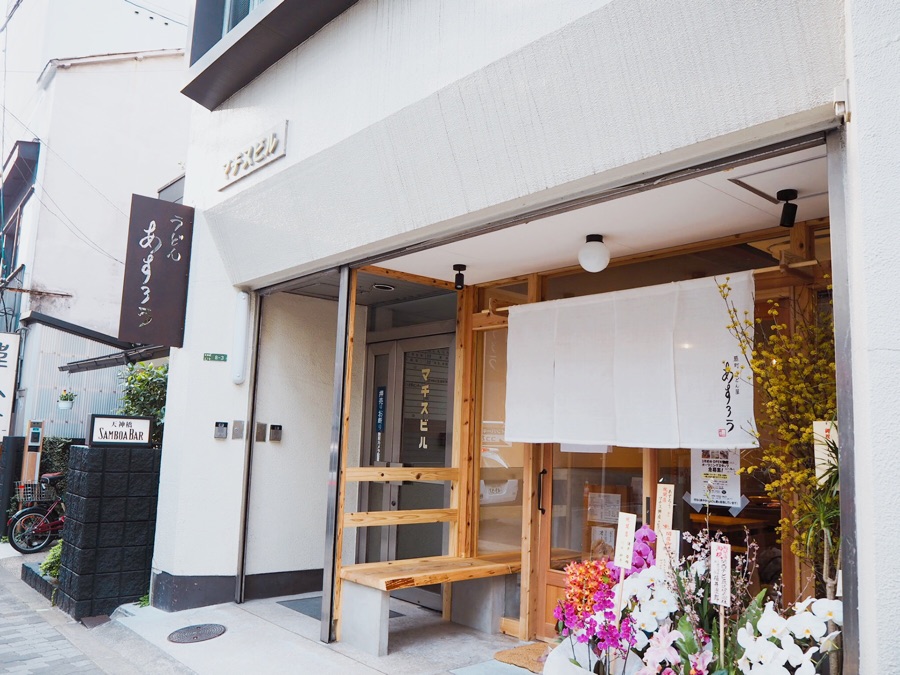
Turn south past the playground swings of Ogimachi Park, and you will hit a modest storefront where the scent of boiling flour and steeped kelp cuts clean through the humid Osaka air. This is Udonya Asuro. Long before the shop pulls back its sliding door at 11:00 AM, a quiet line forms along the pavement, composed of neighborhood retirees, downtown office workers, and traveling gourmands holding well-thumbed food guides.
Osaka does not lack for starch. The city treats flour like cultural currency, yet this small counter shop has captured outsized attention across the Kansai dining circuit. Holding regular honors in the Tabelog 100 Famous Stores udon selections and retaining a spot among Michelin Bib Gourmand Osaka noodles, Asuro balances rustic craftsmanship with razor-sharp kitchen discipline.
📌 Key Takeaways:
- The Signature Texture: Master noodles cut daily to deliver genuine Sanuki style elasticity without the punishing jaw fatigue of raw undercooked dough.
- Peak Line Demands: Lunch rush wait times regularly exceed 45 to 60 minutes, requiring strict adherence to local queue etiquette.
- The Essential Order: First-timers should target the cold Kijoyu soy sauce udon accompanied by freshly fried tai-chikuwa tempura.
The Rise of Udonya Asuro in Osaka's Competitive Tenma Corridor
The bustling Tenma dining district is legendary for smoke-filled yakitori stalls, cramped tachinomi standing bars, and late-night izakayas. Securing a daylight reputation here requires an entirely different operational standard. Udonya Asuro opened its doors with an uncompromising technical foundation, shaped by its owner-chef’s rigorous training in premier Sanuki noodle workshops before adapting the craft to Osaka's gentler culinary palette.
Most noodle shops choose between speed and texture. Industrial noodle machines can churn out decent batches every five minutes, keeping lines moving at the expense of textural depth. Asuro rejected that compromise. The kitchen operates on a continuous, small-batch cycle: mixing, resting, rolling, cutting, and plunging handmade fresh noodles into rolling cauldrons of boiling water throughout the service window. The resulting product exhibits a translucent sheen and a springy rebound that sets standard commercial noodles to shame.
Word of mouth spread rapidly across local foodie networks, pushing the shop into prestigious rankings. today food tourism often defaults to hyper-marketed Dotonbori franchises, Asuro stands as a quiet benchmark of artisanal technique tucked neatly into the residential edge of Kita-ku.
Decoding the Texture: Sanuki Elasticity Meets Kansai Dashi Broth
True noodle devotees obsess over koshi, the inner resistance a strand offers when your teeth bite through it. Sanuki purists from Kagawa Prefecture often prefer rigid firmness. Osaka diners, historically, favor softer noodles floating in rich, drinkable soup. Asuro reconciles these two distinct philosophies.
The exterior layer of an Asuro noodle is yielding, glossy, and slippery. Bite halfway through, however, and you hit a taut core of pure elasticity. Achieving this balance requires precise flour hydration and strict temperature management during kneading. A hot summer day demands adjustments in salt ratios and resting periods; a chilly January morning requires the opposite. The cooks read the dough by hand rather than relying on automatic timers.
Then comes the liquid base. Kansai dashi broth is an exercise in subtle extraction. Rather than leaning heavily on dark, sweet soy sauce like Tokyo styles, Asuro’s warm broth is pale gold, built on a foundation of high-grade Ma-kombu kelp harvested off Hokkaido, blended with urume (round herring), saba (mackerel), and katsuo (bonito) flakes. The resulting soup provides an umami foundation that supports the wheaty aroma of the noodle without overwhelming it.
Signature Orders: From Kijoyu Soy Sauce Udon to Golden Chikuwa Tempura
The menu board outside Asuro is simple, categorizing offerings primarily by broth presence and serving temperature. To experience the pure mechanical quality of the dough, cold preparations are mandatory. When chilled in cold water baths, the gluten structure tightens, displaying maximum snap.
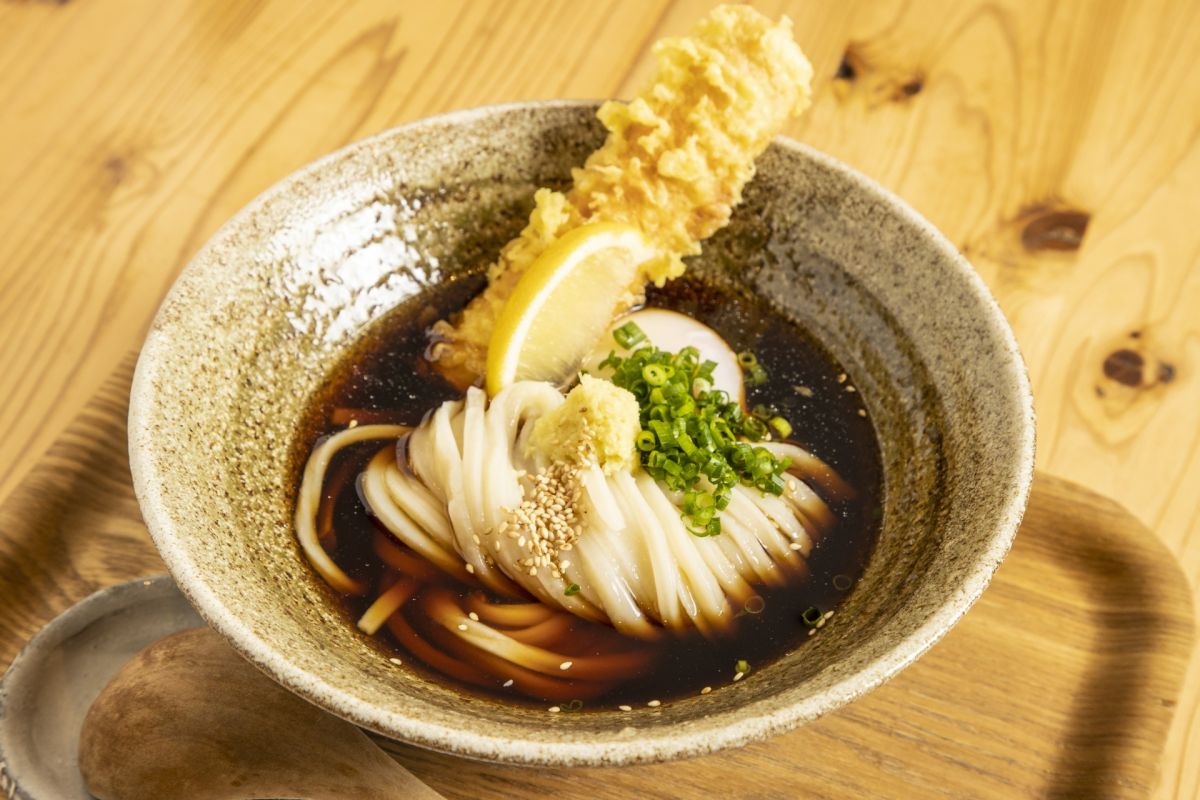
The standout benchmark is the cold Kijoyu soy sauce udon. Served naked in a shallow ceramic bowl with grated daikon radish, finely sliced green onions, and fresh citrus, typically sudachi or lemon depending on the season, it comes accompanied by a small cruet of artisanal, unpasteurized soy sauce. You splash just a few circles of soy over the mound, squeeze the citrus, and toss gently. Every slurp highlights the pure flavor of wheat and natural salt.
| Menu Selection | Serving Temperature | Core Characteristics | Price Range (JPY) |
|---|---|---|---|
| Kijoyu Udon | Cold (Hiyashi) | No broth; dressed table-side with raw soy sauce, grated radish, and citrus. | ¥800, ¥950 |
| Hiyakake Udon | Cold (Hiyashi) | Chilled dashi broth; crystal clear, savory, refreshing summer staple. | ¥850, ¥1,000 |
| Kake Udon with Tempura | Hot (Atsu) | Steaming golden dashi; noodles relax into a silky, comforting chew. | ¥1,000, ¥1,300 |
| Chikuwa & Egg Tempura Side | Hot / Fried to order | Deep-fried sea bream fish cake paired with a runny soft-boiled egg. | ¥350, ¥500 |
No order is complete without the fryer selections. The Chikuwa tempura is made from premium fish paste, fried until the outer batter shatters like spun glass while the interior remains pillowy and sweet. Pair it with a hanjuku tamago (soft-boiled egg) tempura, cracked open over your noodles so the rich yolk mingles directly with the soy sauce glaze.
Queue Survival: Navigating Lunch Rush Wait Times and Line Etiquette
Securing a stool at Asuro demands patience and strategic timing. The dining room is compact, seating roughly a dozen diners across a counter and a handful of small tables. Consequently, turnover is dictated entirely by how fast diners finish their bowls and how fast the kitchen can boil fresh batches.
Peak queue times kick off around 11:30 AM and run steadily through 1:30 PM. On weekends and public holidays, stepping into line at noon can mean an wait of 60 to 75 minutes. If you arrive past 2:00 PM, you run the risk of meeting a handwritten sign announcing they have sold out of noodles for the day.
Line etiquette is taken seriously by the staff and local patrons. First, your entire party must be present before joining the queue. Saving spaces while friends browse local shops is strictly taboo and will draw polite but firm reprimands from staff. Second, review the laminated menu handed out down the line. A server will frequently take your order 15 to 20 minutes before you step through the entrance. This kitchen staging ensures your noodles hit the boiling pot at the exact moment your predecessor vacates their seat. Once seated, focus on your meal; lingering over phones after finishing is frowned upon when dozens wait outside.
Navigating Ogimachi: Exact Transit Routes and Daily Operating Logistics
Locating the shop is straightforward if you anchor yourself to major transit hubs. As part of any competent Ogimachi Station food guide, travelers should note that the shop sits within an easy 3-minute stroll from Ogimachi Station (Osaka Metro Sakaisuji Line, Exit 4 or 5). Ascend to street level, walk south toward Suehirocho, and watch for the modest wooden noren curtain hung above the door.
If coming via the JR network, take the Osaka Loop Line to Temma Station. From the ticket gates, head south through the covered shopping arcade before veering west past the edge of Kids Plaza Osaka and Ogimachi Park. The walking distance from Temma is approximately 7 to 8 minutes at an easy pace.
Operational hours focus heavily on the lunch window, typically running from 11:00 AM until 3:00 PM (or until noodle dough is depleted), with selective evening services depending on the weekday schedule. The shop observes scheduled weekly closures, generally on Tuesdays and select Wednesdays. Always carry yen banknotes; high-volume noodle spots in this quarter rarely accept foreign credit cards or smartphone tap-to-pay setups.
Frequently Asked Questions (FAQ)
Q1: What is the single best time to arrive to minimize waiting?
A1: Arriving between 10:20 AM and 10:35 AM, roughly 30 minutes before the 11:00 AM opening, generally guarantees you a seat in the very first seating cycle, keeping your total wait under 35 minutes.
Q2: Does Udonya Asuro accept reservations?
A2: No. Like most traditional Kansai noodle bars, Asuro operates strictly on a walk-in, first-come-first-served basis. No phone or digital reservations exist.
Q3: Is the menu accessible for travelers who do not speak Japanese?
A3: The staff is accustomed to international visitors thanks to guidebooks, and photo-assisted or basic English menus are generally available. Ordering by pointing to key items like Kijoyu or Kake udon is standard practice.
What Sets Asuro Apart in Osaka's Shifting Noodle Landscape
Osaka’s culinary identity is constantly pushed toward flashy spectacle, from flaming ramen bowls to towering skewer platters. Udonya Asuro offers the inverse: an unpretentious room where the entire experience hinges on flour, water, salt, and broth.
The dedication to hand-rolled dough and precision frying keeps this counter permanently packed. Whether you are seeking refuge from the neon density of Umeda or exploring the working-class alleyways of Tenma, a single bowl here illustrates why simple food, executed with unwavering technical discipline, outlasts every passing culinary trend.
