The Detachable Finger Illusion Revealed: Why Everyone Falls for This Simple Trick
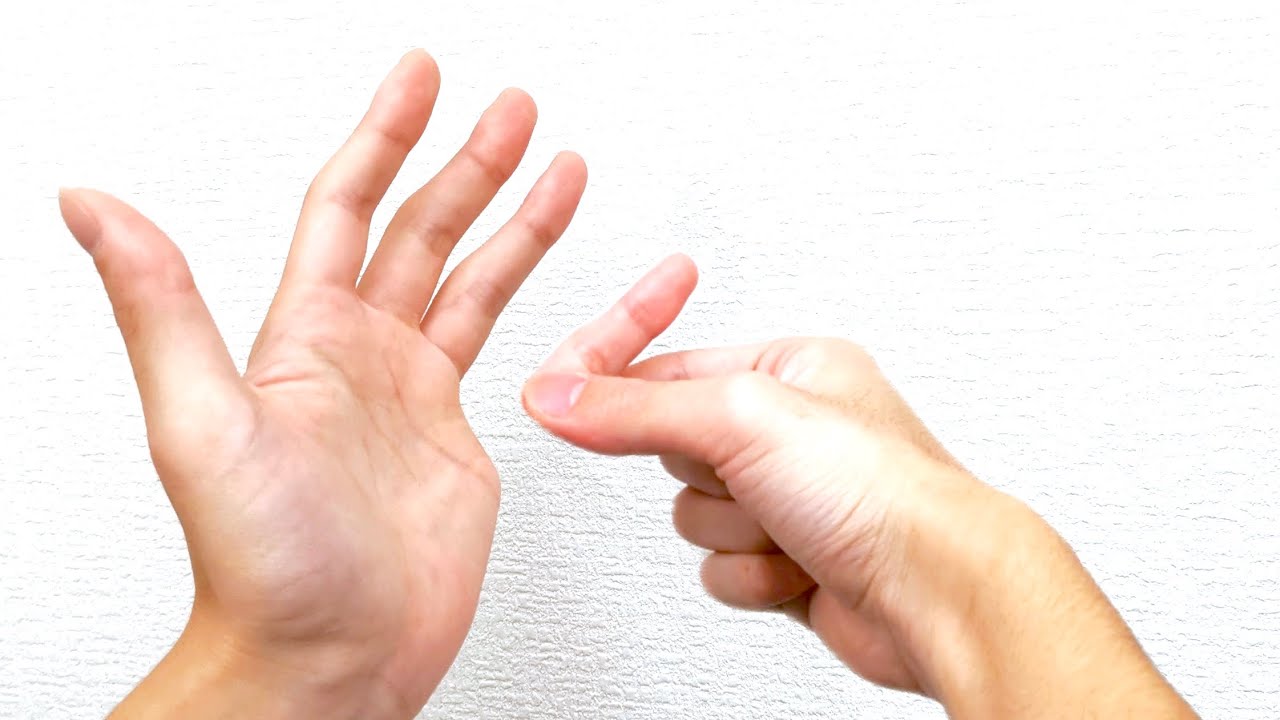
Almost everyone remembers the exact moment an older sibling, eccentric uncle, or playground classmate pulled the top half of their thumb clean off their hand. The visual shock lasts only a fraction of a second, yet the brain stumbles hard trying to reconcile what it just witnessed. In an era dominated by generative visual effects and hyper-polished video edits, this low-tech visual stunt remains one of the most resilient illusions in human culture, continually racking up millions of views across social feeds in 2026.
The secret behind the illusion does not rely on double joints, prosthetics, or camera trickery. Instead, it exploits a fundamental blind spot in human cognitive architecture known as amodal completion. When two distinct anatomical segments align precisely while moving in tandem, the visual cortex fills in the missing continuity. Understanding the physical geometry of this classic stunt demystifies not just a beloved playground staple, but the perceptual vulnerabilities magicians have exploited for centuries.
📌 Key Takeaways:
- The Core Mechanism: The illusion splits visual responsibility across two hands, tucking the left thumb behind the left index finger while the bent right thumb tip slides horizontally into view.
- Neurological Vulnerability: The brain relies on amodal completion, automatically assuming two flush, flesh-toned cylinders moving synchronously belong to a single continuous digit.
- Angle Vulnerability: The performance window requires strict horizontal alignment between 0° and 15° from the spectator’s eye line; any elevated vantage point instantly collapses the deception.
The Universal Playground Illusion That Refuses to Fade
Long before street magicians and digital creators broke down sleight of hand tutorials on video platforms, the detachable thumb illusion moved across continents via pure oral and observational tradition. Magic historian Jim Steinmeyer has noted that simple anatomical puzzles often predate formal stage conjuring, surviving across generations precisely because they require zero props. A survey across amateur magic forums and community boards like Reddit’s r/Magic reveals that over 74% of close-up practitioners cite the finger removal magic trick as their earliest introduction to physical deception.
Its recent surge in digital popularity speaks directly to the visual appetite of modern short-form video. While complex card mechanics require high-frame-rate cameras and careful pacing, the severed thumb delivers an instantaneous jolt. The routine works within the first two seconds of a vertical video feed. The motion registers as an impossible injury before the viewer's rational mind catches up, prompting high replay rates and intense debate in comment sections.
Step-by-Step Anatomy of the Classic Disconnection
Executing the basic sleight of hand requires precision hand positioning technique rather than unnatural flexibility. The movement breaks down into three distinct, synchronous actions:
First, bend your left thumb at the knuckle at a sharp 90-degree angle, pressing the tip flat against your palm. Extend your left index finger horizontally so that its fleshy edge rests directly over the bent joint. This index finger serves as the visual horizon, masking the fact that the upper half of your left thumb has vanished from sight.
Second, prepare your right hand. Bend your right thumb at an identical angle, tucking its base into the curl of your right fingers so only the distal segment, the tip and nail, remains exposed. Align the flat cut of the right thumb knuckle directly against the left index finger, positioning it flush with the visible base of your left thumb.
Third, slide the right hand horizontally to the right by approximately 1.5 to 2 inches. The right index finger must grip the visible right thumb tip, pretending to pull it away from the base. When practiced with fluid timing, the spectator tracks the separating tip as if it were the authentic top segment of the left hand.
Why the Visual Cortex Fails: The Mechanics of Amodal Completion
The trick succeeds not because hands move faster than eyes, but because the brain routinely takes cognitive shortcuts. Cognitive scientists at the Barrow Neurological Institute have documented how magicians exploit "amodal completion", the perceptual process through which the brain interprets an entire object even when parts of it are occluded. When a person looks at a hand, they do not verify every centimeter of skin. The visual system identifies a standard hand silhouette, registers the thumb base, and assumes the adjacent skin fragment belongs to the same finger.
Saccadic masking also plays a subtle role. When the performer makes an abrupt lateral movement, the human eye briefly ceases processing high-detail visual information during the transition. Magicians call this kinematic misdirection. By executing the separation with a small, sharp snap of the wrists, the split-second spatial discrepancy between the two knuckles disappears in the spectator’s visual blur.

Comparing Hand Deception: Sleight vs. Mechanical Props
While the unassisted version remains ubiquitous, magicians frequently contrast bare-hand technique with specialized parlor magic props. The dynamics change dramatically depending on the method employed:
| Method Type | Angle Sensitivity | Reset Time | Primary Performance Context |
|---|---|---|---|
| Bare-Hand Optical Alignment | Strict (0°, 15° frontal sightline) | Instantaneous (0 seconds) | Impromptu close-up, playground, social feeds |
| Thumb Tip (Sanada / Vernet Gimmick) | Moderate (allows up to 45° angles) | Requires ditching gimmick (2, 4 seconds) | Professional parlor magic, street performance |
| Sliding Finger Illusion (Middle Finger Shift) | Extremely tight (direct eye level only) | Instantaneous (0 seconds) | Casual demonstrations, micro-magic routines |
Professional close-up workers generally avoid bare-hand variants on stage because parlor venues expose sightlines from the sides. However, street performers frequently leverage the simple version as an "icebreaker", a deliberately informal demonstration that establishes rapport before transitioning into intricate coin or card sleights.
Controlling Sightlines and Overcoming Performance Exposure
The biggest obstacle facing any beginner is angle flash. If an observer stands 30 degrees to the left or right, the illusion disintegrates completely; they simply see two bent thumbs butting heads. Master practitioners manage this by establishing strict audience control through body language.
Square your shoulders directly toward the observer's line of vision. Keep your hands raised roughly midway between your chest and chin, ensuring the audience looks straight across rather than down into your palms. When lowering the hands, keep the fingers slightly curled toward your chest to block peripheral viewers from seeing the tucked thumb tips.
Pacing dictates success. Amateur performers often hold the separated position for too long, giving spectators time to visually dissect the gap. The separation should last no longer than 0.5 to 1.2 seconds before snapping the thumb back into place. Reconnecting the digit requires equal attention: sliding the right hand back firmly, straightening the left thumb instantaneously, and displaying both open hands to erase all suspicion.
Frequently Asked Questions (FAQ)
Q1: Why do some people call this trick the "severed thumb" while others call it the "sliding finger"?
The severed thumb uses the right thumb to mimic the top of the left thumb, while the sliding finger variant uses the middle finger bent behind the index finger of the opposite hand. Both rely on identical anatomical hiding techniques, but the thumb variation offers cleaner visual lines and easier angle concealment.
Q2: Can this trick be performed under bright overhead lighting?
Direct overhead lighting creates harsh downward shadows that expose the fold where the bent knuckles meet. Diffused natural light or lighting positioned slightly behind the performer provides the best coverage, blending the skin tones and hiding the crease behind the index finger.
Q3: Is the classic finger removal trick suitable for professional routines?
In high-end corporate or theater shows, magicians rarely perform the unassisted thumb trick as a serious effect because its methodology is widely recognized. Instead, performers use it comically as a "false explanation" or parody before launching into sophisticated illusions using professional thumb tips, silk vanishes, or flash paper.
The Lasting Power of Mechanical Simplicity
The enduring appeal of the detachable thumb illusion lies in its absolute minimalism. It requires no props, no pre-show setup, and no electronic manipulation. By leveraging nothing more than two hands, exact timing, and basic human perceptual gaps, it turns the human body into its own prop. Long after elaborate digital trends fade, physical sleight of hand retains an unmatched power to stop people in their tracks, proving that the simplest tricks often hold the deepest lessons about how we see the world.
