The Evolution of Ghost/Steel Pokémon: From Aegislash to Gholdengo's Dominance
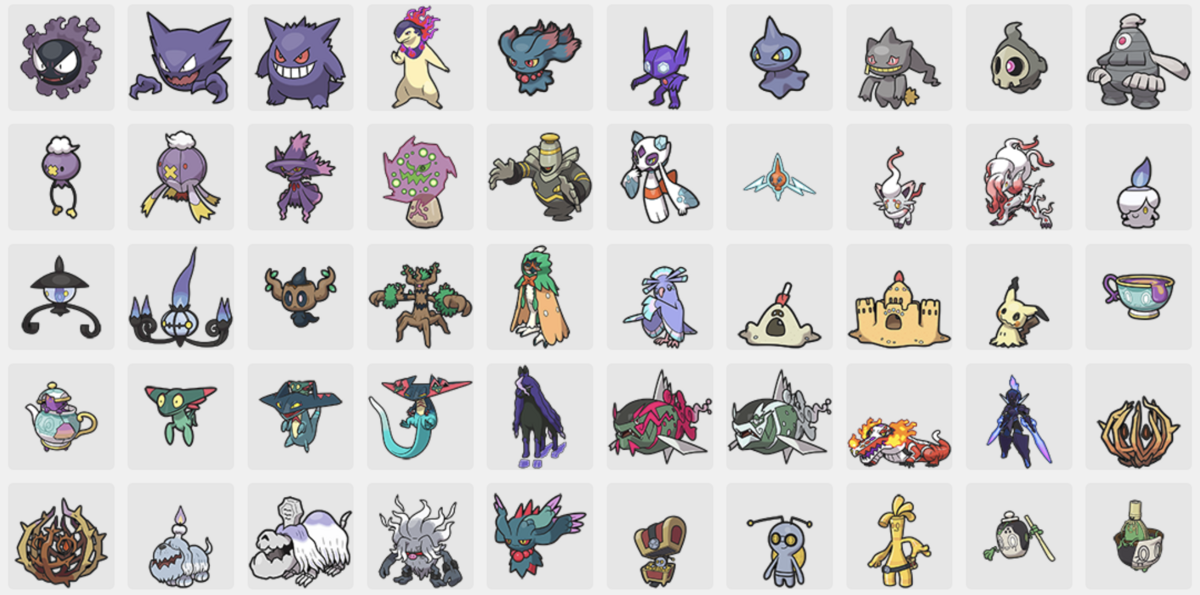
When Pokémon introduced the Ghost/Steel typing in Generation VI, competitive battling changed permanently. Pairing Steel's unmatched defensive profile with Ghost's natural avoidance created a monster on paper: three absolute immunities (Normal, Fighting, and Poison) alongside resistance to more than half the elemental chart. Culturally and mechanically, blending an ethereal spirit with hardened iron has captured players worldwide, drawing the same analytical scrutiny that Japanese folklore adaptations frequently receive, such as the intense historical critiques chronicled in a Diario AS Report on cultural source accuracy. Within Pokémon, this pairing produced two of the most meta-warping combatants in franchise history: Aegislash and Gholdengo.
Between 2013 and 2026, competitive Pokémon witnessed a dramatic shift in how designers balance defensive typing with overwhelming offensive utility. Kalos brought the Honedge evolution line, showcasing an interactive sword-and-shield mechanic that tested player prediction. Nine years later, Paldea debuted Gholdengo, stripping away intricate stance switching in favor of passive, automated shutdown capabilities. The contrast between these two titans tells the broader story of modern competitive design.
📌 Key Takeaways:
- Defensive Superiority: The Ghost/Steel typing grants three immunities (Normal, Fighting, Poison) and resists eight distinct types, forming Pokémon's single strongest defensive profile.
- Mechanical Evolution: Aegislash relied on interactive turn-by-turn mind games via Stance Change, while Gholdengo relies on absolute ability-based denial through Good as Gold.
- Competitive Centralization: Both species redefined entry hazard dynamics, evolving from high-risk Rapid Spin blockers into offensive sweepers capable of punishing defensive counterplay.
The Kalos Revolution: Honedge and the Architecture of Defensive Typing
Before Generation VI, competitive builders treated Steel and Ghost as separate tactical anchors. Steel functioned as the premier physical sponge, while Ghost offered utility through spin-blocking and fighting-type negation. The Honedge evolution line, spanning Honedge, Doublade, and Aegislash, welded these attributes together.
The math was devastating. Steel naturally resisted Bug, Dragon, Fairy, Flying, Grass, Ice, Normal, Psychic, Rock, and Steel, while resisting Poison completely. Ghost contributed immunities to Normal and Fighting while removing Steel’s historic vulnerability to martial strikes. The resulting type matchup resistances left opponents with only four weaknesses: Fire, Ground, Dark, and Ghost.
Doublade immediately carved out a niche in lower tiers using Eviolite, turning into a physical tank that shrugged off earthquakes. Yet Aegislash captured global tournament play. Its presence forced players to rethink turn-one strategies, team building constraints, and damage calculations.
Aegislash, Stance Change, and the Smogon Ubers Exile
Aegislash did not dominate through typing alone. Its signature ability, Stance Change, turned every turn into high-stakes psychology. In Shield Forme, the royal sword possessed base 150 defenses; in Blade Forme, those metrics flipped into base 150 offensive stats.
King’s Shield allowed Aegislash to revert to safety on priority, dropping an attacker’s physical stat by two stages if they made contact. This interaction created an agonizing loop for opponents. Guessing correctly meant landing a super-effective strike on a fragile Blade Forme. Guessing wrong meant giving Aegislash a free Swords Dance or suffering crippling offensive drops.
By mid-2014, the Smogon OU tier council took unprecedented action. Aegislash was voted out of standard play and banished to Ubers. Critics argued that its binary stance mechanic reduced elite tournaments to fifty-fifty guesses, suffocating creative counter-building across standard formats.
Comparing the Ghost/Steel Archetypes Across Generations
The functional gap between Aegislash and Gholdengo illustrates how modern design philosophy moved from reactive play patterns to proactive prevention. While Aegislash required active turns to execute its identity, Gholdengo suppresses enemy counterplay simply by standing on the field.
| Attribute | Aegislash (Generation VI, VIII) | Gholdengo (Generation IX, 2026) |
|---|---|---|
| Signature Ability | Stance Change (Dynamic Stat Inversion) | Good as Gold (Status Move Immunity) |
| Signature Move | King's Shield (Contact Attack Drop) | Make It Rain (120 BP Spread Special Attack) |
| Base Stat Distribution | Base 60 HP / 140 Atk / 140 Def (Post-Nerf) | Base 87 HP / 133 Sp.Atk / 84 Speed |
| Primary Battle Role | Predictive Pivot, Mixed Attacker | Hazard Retainer, Fast Special Sweeper |
| Hazard Control Dynamic | Spin Blocker vulnerable to Defog | Blocks Rapid Spin, Defog, and Court Change |

The Generation VIII Nerf and the Fall of the Sword
Game Freak rarely applies explicit stat nerfs to established species between releases, making the Generation VIII balance patch a watershed moment. Aegislash saw both its maximum offensive and defensive stats shaved from base 150 down to base 140. Furthermore, King's Shield was re-tuned: physical attackers targeting the shield saw their Attack stat drop by only one stage rather than two.
These numerical trims altered survival thresholds. Classic damage rolls that Aegislash routinely absorbed in Sword Forme suddenly resulted in immediate knockouts. The simultaneous rise of pervasive Dark-type offensive tools like Knock Off and the emergence of fast Ground-type sweepers progressively chipped away at its flexibility.
By the time the competitive arena shifted toward Paldea, Aegislash sat in an unusual position: still inherently dangerous, but shackled by mechanical baggage and strict stat limits that restricted its old dominance.
Good as Gold and the Total Suppression of Hazard Removal
Enter Gholdengo in the Generation IX competitive meta. Number 1,000 in the National Pokédex took the Ghost/Steel defensive synergy and infused it with pure utility suppression.
Its signature ability, Good as Gold, provides complete immunity to all status moves directed at it. This single trait fundamentally broke standard balance archetypes. Opponents could not hit Gholdengo with Will-O-Wisp, Thunder Wave, Spore, or Taunt. More critically, Gholdengo became the definitive anti-hazard removal tool.
Because it was a Ghost type, it blocked Rapid Spin. Because Good as Gold reflected targeted status moves, it rendered Defog completely useless. Hazards placed by Ting-Lu or Great Tusk became permanent fixtures on the field the moment Gholdengo swapped in.
Backing this defensive gatekeeping is Make It Rain, a base 120 Special Attack that hits both targets in double battles while generating in-game currency. Even with a modest Special Attack drop following execution, items like Choice Specs or Nasty Plot setups allow Gholdengo to punch clean holes through incoming defensive walls.
Ghost/Steel Dominance in Competitive Pokémon VGC
In the official Competitive Pokémon VGC format, the typing functions with ruthless efficiency. The four-Pokémon double-battle environment amplifies Gholdengo's strengths while masking its flaws through smart partner synergies.
Pairing Gholdengo alongside Tailwind users or redirection specialists like Amoonguss and Ogerpon gives it free reign to spam Make It Rain across opposing boards. Because status moves cannot incapacitate it, standard disruption tools such as Prankster-boosted Encores or Spore cannot stop its offensive assault.
Where Aegislash historically demanded careful team configurations to protect it during exposed turns, Gholdengo fits into hyper-offense, balance, and trick room setups with minimal friction. Its raw damage output and absolute refusal to interact with support moves make it a foundational pillar of modern VGC formats.
Frequently Asked Questions (FAQ)
Q1: Why is Ghost/Steel considered superior to other dual types?
A1: It holds three complete immunities (Normal, Fighting, and Poison) and resists eight other types. By eliminating Steel's natural weakness to Fighting via Ghost's immunity, it leaves only four weaknesses while remaining immune to poisoning and trapped switch conditions.
Q2: Why was Aegislash banned to Ubers in Gen VI while Gholdengo remained legal in Gen IX OU?
A2: Aegislash created an inescapable turn-by-turn guessing loop with Stance Change and King’s Shield that forced opponents into high-risk prediction cycles. Gholdengo, while centralizing due to Good as Gold and Make It Rain, operates predictably without stance switching and remains vulnerable to high-speed Dark, Ground, and Fire offenses.
Q3: Can Defog clear entry hazards if Gholdengo is switched into the field?
A3: No. Defog is classified as a status move directed at the opposing target. Good as Gold makes Gholdengo completely immune to it, causing the move to fail outright and leaving all hazards intact.
Q4: Did the Generation VIII balance patch permanently ruin Aegislash?
A4: It significantly lowered its competitive power ceiling. Dropping base offensive and defensive stats from 150 to 140, along with reducing King's Shield's Attack drop from two stages to one, eliminated the small margins of error that allowed it to dictate matches in Generations VI and VII.
The Enduring Legacy of Ghost and Steel
The trajectory of the Ghost/Steel typing demonstrates how competitive mechanics have matured over a decade. Aegislash represented an experiment in interactive complexity, relying on mind games, risk management, and reactive defensive postures. Gholdengo represents modern streamlining: raw baseline speed, overwhelming single-click offense, and passive mechanical denial that enforces strategic control simply by participating.
Both design paths proved one reality: giving an organism the defensive resilience of Steel alongside the untouchable profile of Ghost distorts tournament battlefields. As competitive formats push deeper into current generations, this dual typing remains the benchmark against which all defensive synergies are measured.
