The Evolution of Kororo: How Japanese Candy Tech Sparked a Global Texture Craze
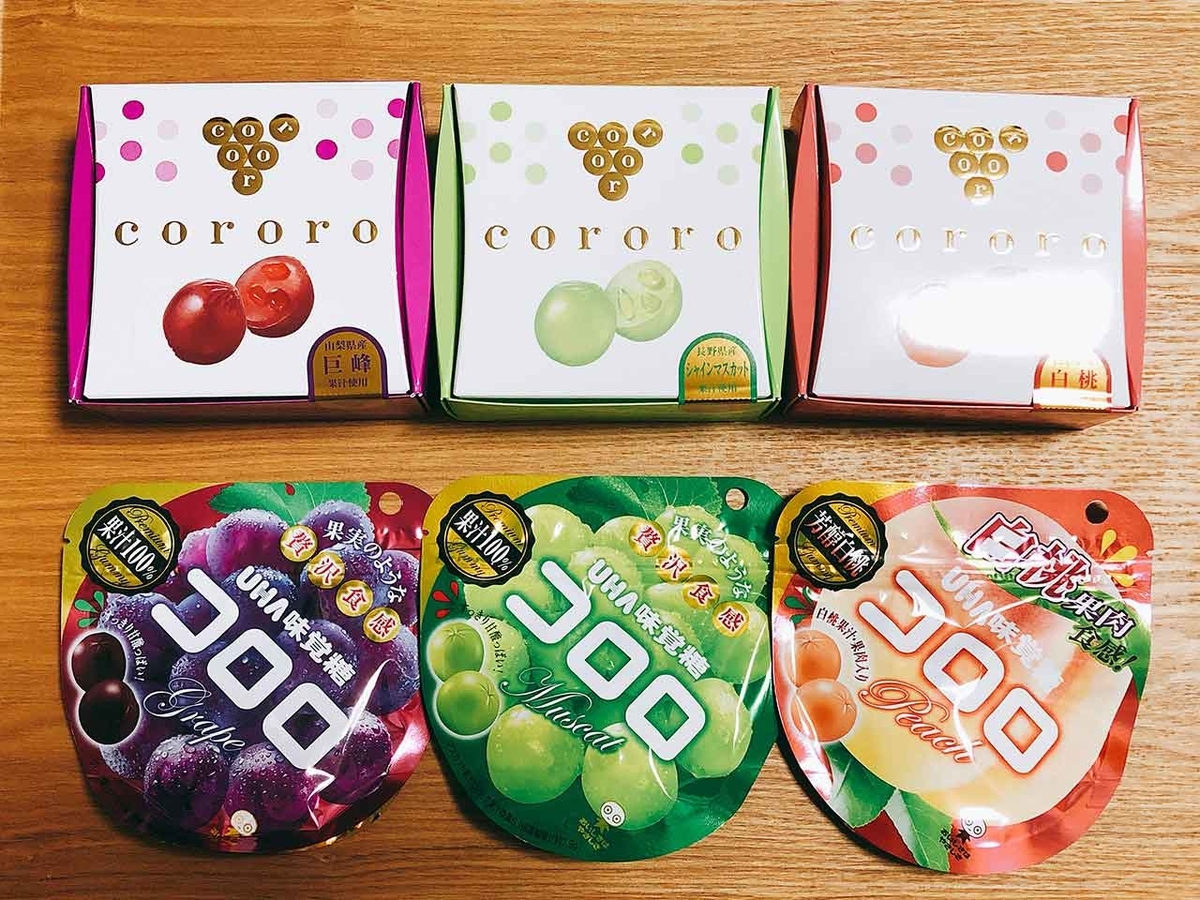
Biting into a Kororo gummy does not feel like chewing candy. The tooth meets an initial, papery resistance, pierces an ultra-thin tension layer, and sinks immediately into a burst of concentrated, gelatinous fruit pulp. When Osaka-based confectionery giant UHA Mikakuto rolled out the first purple bags of Kororo grape gummies in 2014, domestic convenience store shoppers were baffled. Some Japanese food critics labeled the sensation off-putting; others accused it of imitating raw offal or cocktail sausages rather than candy. Within months, however, that polar mouthfeel became one of the most commercially successful texture experiments in modern Japanese food science.
More than a decade after its domestic debut, Kororo has transcended its origins as a quirky Japanese drug store impulse purchase. The snack has ignited an international search for texture dupes across TikTok, Reddit, and global snack forums, turning the query "candies similar to Kororo" into an SEO fixture. By ditching the rubbery, uniform chew that defined 20th-century gummies, UHA Mikakuto kicked off a quiet revolution in hydrocolloid engineering that now influences confectioners from Tokyo to Los Angeles.
📌 Key Takeaways:
- The Innovation: UHA Mikakuto engineered Kororo by wrapping high-moisture fruit puree inside a microscopic collagen casing, recreating the exact mouth-snap of a fresh Shine Muscat or Kyoho grape.
- The Dupe Hunt: Surging import prices and frequent stock shortages have driven consumers toward substitutes, ranging from Chinese peelable jellies to molecular popping boba.
- The Industrial Shift: Confectionery giants are shifting R&D funds away from conventional gelatin chewiness to multi-layered, membrane-encased hydrocolloid formats.
Engineering the Pop: The Sausage-Casing Science Behind Kororo
Traditional gummies rely on a straightforward base. Confectioners dissolve gelatin, corn syrup, sucrose, and pectin, pour the hot liquid into cornstarch molds, and dry the batch until it hits a water content of roughly 15% to 18%. The outcome is structural, springy, and predictable. Meiji perfected this balance in 1988 with Kaju Gummy, establishing a rubbery, elastic benchmark that dominated Japanese supermarket shelves for a quarter of a century.
UHA Mikakuto took an entirely different route. Instead of pouring a single homogeneous mixture, their food scientists borrowed an industrial technique straight out of the meat processing industry: mechanical collagen co-extrusion. In savory production, collagen casings are applied continuously over emulsified meats to form breakfast links without using animal intestines. UHA Mikakuto adapted this machinery for high-acid, high-moisture fruit purees.
The interior of a Kororo gummy contains an unusually high moisture ratio, hovering near 30% water activity. It is essentially a concentrated fruit jelly stabilized with carrageenan and modified pectin. Left on its own, this slurry would turn into a sticky, unmanageable syrup inside the packaging. To hold it together, the company coats the drop in a sub-millimeter sheath of bovine-derived collagen casing. When the outer film undergoes rapid dehydration during manufacturing, it tightens. That creates surface tension. When your molars compress the candy, that casing resists briefly before yielding with a physical pop. It mimics the skin of a grape bursting under pressure.
The Domestic Divide: How Japanese Consumers Relearned Chewing
The launch was far from an instant triumph. During its early retail rollout across 7-Eleven and Lawson stores in the Kansai region in 2014, Kororo sparked intense debate across Japanese message boards like 2ch. Consumers accustomed to the firm, satisfying bite of Meiji Kaju Gummy or the tough resilience of Nobel's Tough Gummy found the texture bizarre. Many buyers reported that the skin felt artificial, leaving a slight, film-like residue on the tongue after the interior fruit gel dissolved.
Yet the tactile similarity to real fruit carried an undeniable psychological hook. Japan's luxury fruit market values visual perfection and sensory fidelity. A bunch of pristine Shine Muscat grapes frequently commands anywhere from $30 to $100 in high-end department store basements. Kororo offered a hyper-concentrated echo of that experience for roughly 140 yen (about $1.00 at the time). The product didn't mimic generic grape flavoring; it simulated the physical anatomy of eating a grape.
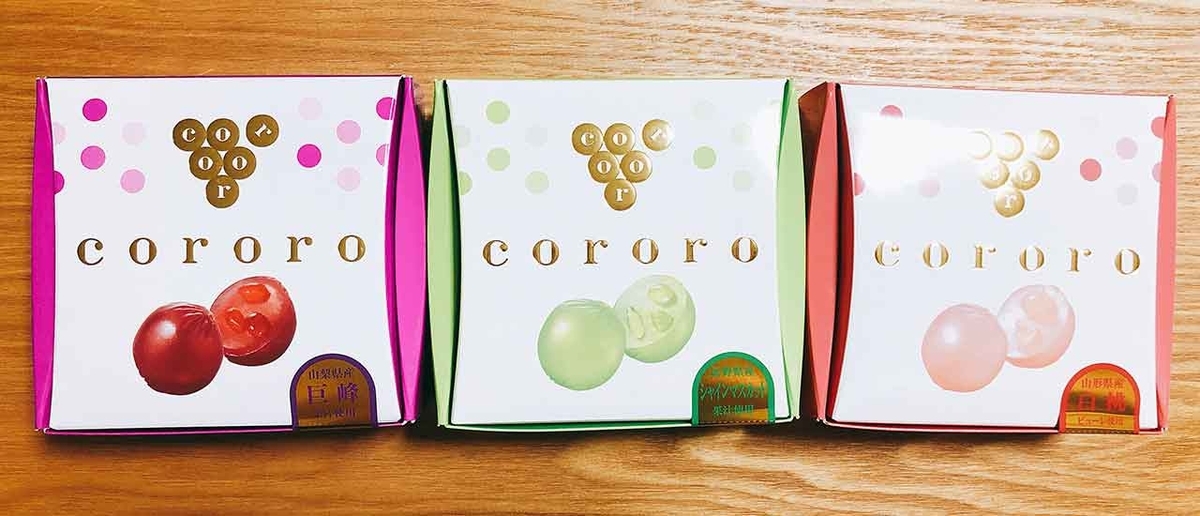
By 2016, tourism patterns accelerated Kororo from a domestic curiosity into an export juggernaut. Travelers from South Korea, Taiwan, and mainland China cleared out duty-free racks at Narita and Kansai International airports, purchasing multi-pack cartons by the dozen. On Korean social media platforms, the candy earned the moniker "real fruit jelly." The domestic Japanese market quickly followed suit, pushing UHA Mikakuto to expand the lineup from basic Concord grape into Yamanashi peach, Shine Muscat, strawberry, and seasonal citrus varieties.
Mapping the Dupes: Candies That Mirror the Bursting Fruit Sensation
As international distribution struggled to keep pace with viral visibility, confectioners scrambled to fill the void. Shoppers hunting for the signature casing pop quickly discovered that very few candies on Western grocery shelves behave like Kororo. Traditional Western gummies, from Haribo Goldbears to Swedish Fish, focus strictly on tensile chew rather than structural fragmentation.
This market gap sparked a wave of alternative products. Some match the thin-skin burst, while others approach the multi-texture problem from an entirely different manufacturing angle.
| Candy / Brand | Structural Mechanism | Mouthfeel Profile | Average Price Range |
|---|---|---|---|
| UHA Mikakuto Kororo | Co-extruded edible collagen casing over high-moisture fruit gel | Tense outer snap, rapid burst, melting pulp core | $1.80, $3.50 (Import) |
| Meiji Kaju Gummy | Homogeneous gelatin and pectin matrix (no casing) | Consistent, springy chew throughout; zero popping | $1.50, $2.50 |
| Amos 4D Peelable Fruit | Dual-poured gelatin layers with varied moisture content | Rubbery exterior skin meant to be physically peeled away | $2.00, $4.00 |
| Popping Boba Pearls | Sodium alginate and calcium lactate chemical spherification | Instant liquid rupture; no substantive interior gel body | $0.50, $1.50 (Per serving) |
| Chinese Private-Label Dupes | Carrageenan casing over concentrated syrup paste | Softer skin pop, noticeably stickier, lower structural integrity | $1.00, $2.00 |
The differences are immediately apparent on the palate. Popping boba offers the instantaneous rupture of an alginate membrane, but it houses pure liquid. Once the bubble bursts, the sensory experience ends. Peelable gummies, which swept global snack channels between 2023 and 2025, operate on a mechanical novelty: they let users peel an outer gummy sheath to reveal a softer core. But they lack Kororo's seamless, integrated mouth-snap. Kororo requires no manual peeling; your teeth perform the work of stripping the fruit.
Viral Customization: The Frozen Kororo Phenomenon
Consumer interaction with Kororo shifted dramatically when social media creators began hacking the candy's physical state. In mid-2022, videos showing creators freezing Kororo packets for 4 to 6 hours went viral across South Korea and North America. Under sub-zero temperatures, the physical properties of the snack transform completely.
Because the interior fruit puree maintains roughly 30% water content alongside natural fruit sugars, it resists freezing into an unyielding block of ice. Instead, it undergoes a slush-like phase transition, adopting the density of a firm, smooth sorbet. The external collagen casing, meanwhile, turns brittle. Biting into a frozen Kororo elevates the initial snap, immediately followed by the slow, chilled thaw of fruit puree directly on the tongue.
This user-generated trend provided UHA Mikakuto with free, high-engagement marketing. Millions of views turned a regional Japanese grocery staple into an aesthetic centerpiece for food influencers. It also reinforced why generic gelatin gummies fail when consumers try to freeze them: a frozen Haribo or Meiji gummy simply turns rock-hard, threatening dental work rather than delivering a refined dessert texture.
Hydrocolloids and the New Wave of Edible Membranes
The commercial victory of Kororo revealed a structural blind spot in Western confectionery manufacturing. For decades, major brands treated candy as a monolithic delivery vehicle: one texture, one flavor profile, uniform mastication. Kororo proved that consumers crave textural friction. They want composite mouthfeels that combine brittle boundaries with yielding interiors.
Confectionery laboratories are leaning heavily on hydrocolloid chemistry to replicate this phenomenon without stepping on UHA Mikakuto’s proprietary patents. By pairing gellan gum, sodium alginate, and agar-agar, food chemists are building plant-based membranes that replicate the snap of animal collagen casings. This shift is critical. Because Kororo uses bovine collagen, it remains off-limits to vegetarian, vegan, and certain halal or kosher consumers. The race to construct an authentic plant-based, snapping fruit membrane has become a high-stakes corner of the industrial ingredients sector.
Simultaneously, the trend has opened doors for sensory cross-pollination. Beverage brands now bottle drinks featuring suspension jellies wrapped in micro-membranes, while freeze-dried candy manufacturers use the distinct moisture differential inside Kororo-style snacks to produce brittle outer shells surrounding hollowed-out honeycomb fruit cores.
Frequently Asked Questions (FAQ)
Q1: What gives Kororo gummies their unique popping texture?
A1: The mouthfeel comes from an ultra-thin edible collagen casing wrapped around a high-moisture fruit puree gel. The outer membrane creates surface tension that resists bite pressure for a fraction of a second before popping open, mimicking the skin of a fresh grape.
Q2: Are there direct Western alternatives that match the Kororo mouthfeel?
A2: Exact Western matches are rare due to the proprietary collagen co-extrusion process used by UHA Mikakuto. While peelable gummies like Amos 4D offer multiple textural layers, and popping boba delivers an initial skin rupture, neither combines a snapping edible casing with a dense, pulpy fruit gel interior.
Q3: Are Kororo gummies vegetarian or halal-friendly?
A3: Standard Kororo gummies are not vegetarian or vegan. The popping outer membrane is manufactured using bovine-derived collagen, and the internal matrix contains standard gelatin. Halal certification varies by specific regional export packaging, so consumers must check the manufacturing origin label on imported packages.
Q4: Why do food creators freeze Kororo gummies before eating them?
A4: Freezing Kororo alters its physical state without turning the candy into solid ice. The high sugar and moisture content turns the interior gel into a smooth, sorbet-like paste, while the cold temperatures make the outer collagen casing crunchier and snappier upon biting.
The Next Phase of Sensory Confectionery
Confectionery design has permanently moved past the era of flat, unvarying chewiness. What began in 2014 as an experimental application of sausage-casing hardware has established an entirely new expectation for how fruit-flavored snacks should perform between your teeth. As food technologists refine plant-based hydrocolloids and fine-tune continuous co-extrusion methods, the border between engineered sweets and natural fruit tissue continues to narrow.
Kororo's enduring popularity proves that flavor is only half the battle on modern grocery shelves. In a snacking landscape saturated with standard fruit purees, tactile shock value is what commands consumer loyalty. The snap of an edible membrane may have started as an acquired taste, but it now defines the cutting edge of industrial confectionery design.
