The Forest Glamping vs Traditional Camping: 5 Crucial Comfort Differences
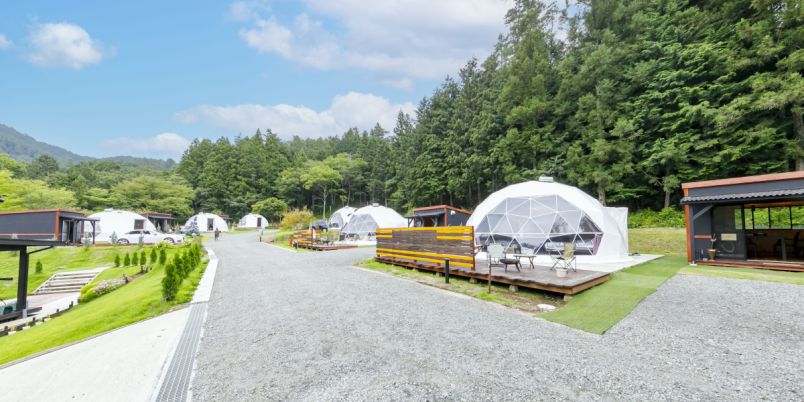
Travelers seeking forest immersion across Japan and North America are walking away from aluminum tent stakes and sub-zero sleeping bags. Over the past three seasons, the Japanese outdoor hospitality sector witnessed a dramatic pivot toward all weather outdoor lodging, spearheaded by boutique forest retreats like The Forest (ザ フォレスト) in Yamanashi Prefecture and sprawling dome resorts flanking Mount Fuji. These developments trade wet canvas and communal wash houses for geo-insulated structures, high-output heat pumps, and five-star culinary service.
The core tension no longer centers on whether glamping offers comfort, it undeniably does. The critical question facing travelers in 2026 is whether dome resorts preserve the restorative friction of wild spaces, or whether they simply transplant urban hotel economics into pine woods under the banner of outdoor recreation. A granular comparison across acoustics, sleep systems, food preparation, and sanitary logistics reveals five definitive operational gaps between a managed dome escape and an unassisted backcountry pitch.
📌 Key Takeaways:
- Climate Reliability: Luxury dome tents with dual-inverter climate control AC and heating eliminate condensation issues and retain internal temperatures between 68°F and 72°F (20°C, 22°C) regardless of external freezing conditions.
- Acoustic Realities: Heavy multi-layer architectural PVC dampens wind gusts effectively, yet high-density resort layouts frequently expose guests to neighboring patio noise and gravel path footsteps.
- Logistical Shift: Eliminating the exhaustive camp gear packing checklist saves roughly 6 to 10 hours of weekend staging time, replacing gear maintenance with scheduled dining seatings and communal rules.
Thermal Realities: Climate Control AC and Heating vs Nylon Condensation
Pitching a three-season nylon tent during autumn in mountain valleys like Yamanashi means entering a constant battle against physics. When night temperatures drop to 35°F (2°C), human breath inevitably strikes cold flysheet fabric, condensing into icy beads that drip onto your sleeping bag by dawn. Managing that humidity requires precise venting, which directly pulls freezing mountain drafts into your shelter.
Engineered luxury dome tents solve this thermal equation through architectural mass. Most modern facilities utilize heavy structural membranes layered with high-density thermal insulation and vapor barriers. Paired with high-efficiency climate control AC and heating systems, these interiors maintain consistent ambient temperatures year-round. Guests step inside from sub-zero pine forests into dry, evenly circulated warmth without touching a single damp draft collar.
This thermal stability transforms all weather outdoor lodging into a viable reality for winter travelers. Heavy snowfalls or driving spring squalls that typically flood vestibules and buckle standard fiberglass poles slide off tensioned geodetic frameworks. You trade the active stove-tending of a hot tent for a digital wall thermostat.
Acoustic Profiles: Heavy Membrane Shells vs Thin Canvas Flapping
Campers often describe the psychological fatigue caused by midnight wind gusts. In a conventional tent, 40-denier ripstop nylon acts as an amplifier, snapping violently in 25 mph winds and shaking internal support poles. The forest sounds immediate, visceral, and occasionally unsettling.
Architectural domes alter this soundscape completely. Multi-layer PVC skins weigh upwards of 850 g/m², deadening high-frequency ambient noise and cutting out fabric flutter. Rain does not rattle like tin; it registers as a muted, low-frequency hum. The dome acts as an acoustic baffle, providing the quiet shelter of a permanent cabin while retaining panoramic structural bay windows that keep the canopy visually close.
That isolation comes with an unexpected caveat. While nature’s volume gets dialled down, human activity outside amplifies. Gravel walkways, car doors shutting in adjacent parking bays, and late chatter from a neighboring private bonfire lounge travel directly across cleared forest floor clearings. In a crowded glamping village with 12 to 20 units spaced 30 feet apart, you hear your human neighbors far more clearly than you would in dispersed backcountry wilderness.
Sleep Architecture: Hotel Grade Plush Bedding vs Ground Sleeping Pads
Backcountry rest hinges on mechanical compromise. Even a premium 4-inch self-inflating mattress with an R-value of 5.2 limits movement and isolates you from rocky terrain through compressed air cells. Rolling off your sleeping pad exposes your shoulders to the cold ground, disrupting circadian recovery cycles.
Forest dome accommodations replace portable pads with structural bedframes, pocket-sprung mattresses, and hotel grade plush bedding. Guests sleep under high-thread-count cotton duvets treated with hypoallergenic coatings, mirroring luxury metropolitan hotels. The physical strain of clearing rocks, sweeping pine cones, and staking guylines disappears entirely.
For parents traveling with young children or professionals carrying lower back pain, this distinction determines whether a trip provides genuine rest. The luxury setup delivers nature immersion without hassle, letting travelers wake up fully restored without the physical stiffness associated with sleeping on roots or uneven turf.
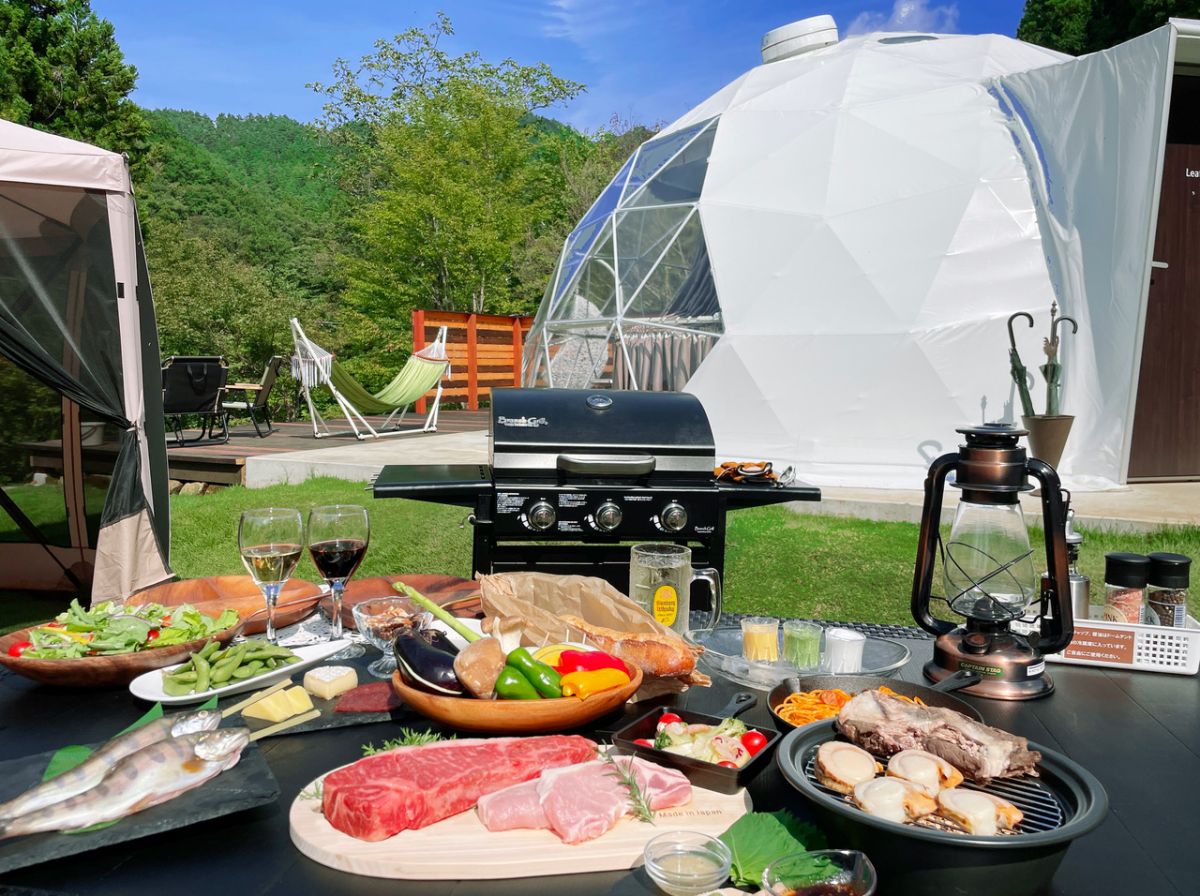
The Supply Line: Gourmet BBQ Catering Packages vs Campsite Camp Cooking
Traditional camp cooking demands extensive staging. Meals require coolers packed with ice, raw meat temperature checks, portable dual-burner butane stoves, dish tubs, and gray water management. Preparing dinner after a four-hour mountain drive takes at least two hours of site prep, followed by meticulous bear-safe cleanup.
Forest glamping properties systematically eliminate this operational burden through gourmet BBQ catering packages. Guests arriving at properties like The Forest find prep stations stocked with pre-marinated cuts of local Koshu wine beef, fresh Yamanashi vegetables, prepped seafood skewers, and automated infrared gas grills. The kitchen staff delivers pre-measured ingredients, seasonal soups, and breakfast boxes directly to your adjoining dining gazebo.
Outdoor dining transforms from a survival chore into an entertainment experience. Properties integrate upscale eco luxury resort amenities, including an outdoor barrel sauna or an open air forest bath where you soak in cedar water while dinner cooks. The tradeoff is creative control: dining shifts from flexible trail improvisation to standardized menus with rigid serving windows.
Sanitation Logistics: Private Ensuite Bathrooms vs Communal Pit Latrines
Sanitation remains the sharpest divider between roughing it and resort glamping. Standard forest campgrounds rely on shared toilet blocks located 150 to 300 feet from campsites, often unheated, bug-prone, and shared by dozens of parties. Stumbling across pitch-black forest trails with a headlamp in sub-freezing rain remains a camping staple.
Modern dome installations feature private ensuite bathrooms built directly into the dome footprint or accessible via an insulated covered breezeway. These washrooms include ceramic flush toilets with heated washlet seats, continuous-flow hot water, glass-enclosed shower stalls, and branded botanical toiletries. You wash off wood smoke under high-pressure showerheads instead of wet wipes.
For urban travelers who avoid the outdoors specifically due to sanitary friction, these facilities remove the single largest barrier to entry. The rustic elements remain strictly aesthetic, bounded by the safety glass of the shower door.
Side-by-Side Breakdown: Forest Dome Luxury vs Pitch-Your-Own Wilderness
The decision between booking a high-end dome and loading up a camp trailer comes down to time, physical tolerance, and privacy preferences. The structural specifications below show how daily logistics diverge across both lodging formats.
| Operational Dimension | Traditional Forest Camping | Forest Dome Glamping (Resort Model) |
|---|---|---|
| Pre-Trip Preparation | Extensive: 40-item camp gear packing checklist, grocery runs, ice tracking | Minimal: Standard weekend travel bag, personal garments, hiking boots |
| Climate Resilience | Vulnerable: Risk of canopy leaks, frozen stakes, canvas condensation | Total: Reinforced geodetic shells, automated AC/heating (68°F, 72°F) |
| Sanitary Facilities | Shared public facilities, pit latrines, or cold water camp sinks | Dedicated private ensuite bathrooms, continuous hot water, vanity sinks |
| Meal Management | Self-sourced, camp stove boiling, manual washup, gray water disposal | Full-service gourmet BBQ catering packages, delivered prepped meals |
| Average Nightly Cost (2026) | $25, $60 per site pitch fee | $280, $650 per dome (includes dinner, breakfast, sauna access) |
| Primary Wellness Amenity | Natural trail hiking, campfire contemplation, off-grid quiet | Private wood fired barrel sauna, open-air bath, custom fire hearth |
The Hidden Tradeoffs: Environmental Footprint and Authentic Solitude
The rise of high-density dome glamping carries clear environmental and experiential shifts. Building permanent concrete plinths, installing deep plumbing lines, and running commercial electrical cables through virgin forest soil fragments local flora. A dome village functions as a boutique resort scattered among trees rather than a low-impact campsite.
This layout alters the feeling of solitude. When you book a dome, you share the immediate tree line with multiple vacationing families, corporate groups, and social media content creators. Curfew rules, designated fire pit hours, and staff rounds replace the boundless autonomy of standard backcountry pitching.
Purists argue that eliminating dirt, smoke smell, and logistical risk strips nature of its grounding value. Yet data collected by Japanese leisure industry analysts shows that glamping properties attract demographics that previously avoided state parks entirely: 68% of reservations in 2025 were made by female groups and families with children under eight. The industry successfully introduced a wider public to mountain geography by eliminating unmanaged friction.
Frequently Asked Questions (FAQ)
Q1: Are luxury forest domes warm enough to visit during freezing midwinter months?
Yes. Unlike standard ground tents, commercial geodetic domes feature multi-layer insulated skins, raised structural wood subfloors, and commercial-grade climate control AC and heating. Internal temperatures reliably stay between 68°F and 72°F (20°C, 22°C), even when outside temperatures drop well below 25°F (-4°C).
Q2: Do glamping guests need to bring standard sleeping bags, towels, or flashlights?
No. Forest dome resorts supply all hospitality essentials. Accommodations feature hotel grade plush bedding, down comforters, bathrobes, towels, and organic toiletries. You only need standard weekend clothing, personal footwear, and basic rain gear for walking outside to common areas.
Q3: How private are forest dome sites compared to standard campground pitches?
While geodetic domes offer total visual privacy thanks to interior privacy curtains and structural positioning, audio privacy is moderate. Exterior activities around your private bonfire lounge or deck remain audible to adjacent domes spaced 30 to 50 feet apart. Those seeking absolute silence and zero human contact will find deeper solitude in dispersed backcountry wilderness sites.
Deciding Your Next Wilderness Stay in 2026
Choosing between forest dome glamping and pitching a tent is not a question of authenticity; it is an assessment of capacity. Traditional camping is an active skill, requiring physical resilience, gear maintenance, weather navigation, and hours of setup. The reward is complete self-reliance, silence, and genuine solitude away from commercial property lines.
Forest dome resorts like The Forest fulfill a different brief. They offer an architectural retreat that pairs the visual beauty of mountain pine woods with the physical security of a boutique hotel. When you want the scent of cedar needles, a crackling fire, and a wood fired barrel sauna without spending your weekend scrubbing grill grates or shivering in a damp sleeping bag, the managed forest dome provides a seamless escape.
