The Golden Miracle Bath: Why Kansai Travelers Swear by Hanayama Onsen
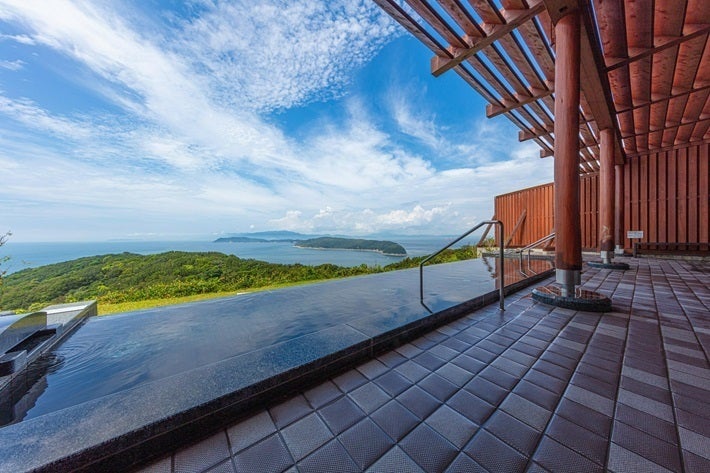
Tucked behind the suburban sprawl of Narukami in Wakayama City sits a low-slung, unassuming bathhouse that defies modern resort aesthetics. Hanayama Onsen Yakushi no Yu does not market itself with panoramic mountain vistas or polished cedar decks. Instead, bathers arrive for a geological spectacle: thick, calcified sediment shelves resembling subterranean limestone caverns, and dense, amber-tinted water that fizzes against bare skin. While Wakayama Prefecture commands national renown for coastal retreats like Shirahama among its more than 500 registered thermal sources, Hanayama operates in a tier of its own. It is widely considered by onsen purists to be the most concentrated carbonated iron bath in Western Japan.
Public interest in the site surged into early 2026 following a winter campaign launched by the Wakayama City Onsen Association alongside the Japan Automobile Federation, documented in an official PR TIMES Report promoting regional therapeutic baths for Kansai motorists. Word-of-mouth recommendations across regional travel forums and high-ranking user reviews on Google Maps consistently place Hanayama at the summit of Kansai day trip onsen itineraries. Visitors do not arrive for modern spa luxury. They come to soak in water so heavily saturated with minerals that the tubs steadily encrust themselves in stone.
📌 Key Takeaways:
- The Phenomenon: Hanayama Onsen Yakushi no Yu discharges an ultra-dense iron bicarbonate mineral spring naturally pressurized with free carbon dioxide.
- The Signature Visual: Exposure to atmospheric oxygen turns the clear groundwater into an opaque, golden-brown hue, leaving a thick brown spring sediment crust over every surface.
- The Ritual: Experienced bathers practice alternating immersion between the unheated 26°C raw spring well and heated soaking basins to maximize vasodilation.
Subterranean Pressures Beneath Narukami's Residential Streets
Hanayama Onsen does not sit in a volcanic crater. The bathhouse occupies a quiet neighborhood just off the Wakayama Interchange, surrounded by standard suburban residences and vegetable patches. Geologists trace its origin to deep tectonic fissures that squeeze ancient marine sediments and mineral veins beneath the Kii Peninsula. Unlike volcanic hot springs heated by shallow magma chambers, Hanayama draws from an artesian aquifer deep below ground, forced to the surface under massive dissolved gas pressure.
The facility was established in the mid-1960s after exploratory drilling tapped into an extraordinary high-pressure vein. What gushed forth was not clear, odorless water, but an effervescent mineral brine. Local folklore quickly attributed restorative properties to the site, dedicating the waters to Yakushi Nyorai, the Healing Buddha. Today, the facility operates both as a neighborhood bathhouse and an onsen ryokan accommodation, catering to chronic pain patients, day-trippers from Osaka, and mineral bath connoisseurs seeking raw chemical intensity over manicured hotel hospitality.
The Chemistry of the Effervescent Rust Waters
At the outflow pipe, the water emerges completely colorless at roughly 26°C (78.8°F). The transformation begins the second it hits the open air. High concentrations of ferrous iron (Fe²⁺) oxidize rapidly upon contact with atmospheric oxygen, converting into ferric iron (Fe³⁺) and turning the entire pool into a cloudy, yellowish-brown broth. To the uninitiated, the color looks alarming. Regulars know the rust-colored sheen is proof of chemical potency.
Simultaneously, dissolved bicarbonate and calcium ions react to form solid calcium carbonate deposits. Over decades, this constant precipitation has built heavy, undulating ridges across the lip of every pool. The bath edges feel like rough coral or travertine terraces. Tiny bubbles of free carbon dioxide cling directly to the skin when submerged, penetrating the outer skin layers to stimulate capillary dilation. Bathers routinely report an intense internal warmth that lingers for hours, a direct vascular reaction caused by the dual action of carbon dioxide absorption and thermal iron retention.
| Bath Characteristic | Hanayama Onsen (Raw Source) | Standard Resort Springs (Kansai) |
|---|---|---|
| Spring Classification | Magnesium-Sodium-Calcium Iron Bicarbonate | Simple Alkaline or Mild Sulfur |
| Natural Wellhead Temperature | Approx. 26.0°C (Cold Spring) | 42.0°C, 65.0°C |
| Free Carbon Dioxide (CO₂) | Extremely High (Natural Effervescence) | Negligible (Lost during geothermal heating) |
| Sedimentation & Mineral Crust | Heavy Travertine/Tufa formation on tubs | None (Filtered or diluted water) |
| Visual Appearance | Opaque golden-ochre to rusty amber | Clear, pale blue, or milky white |
Community Anchor and Medical Pilgrimage Site
Beyond casual weekend visitors, Hanayama occupies a functional position within regional health culture. The bathhouse has long hosted educational community gatherings and public lectures on physical recovery. In mid-2024, the facility drew regional coverage when blind public speaker Junko Asai led an emotional lecture on-site detailing resilience and adaptive living. Throughout that summer, medical researchers and holistic health advocates hosted informational seminars on radiation hormesis, cellular aging, and non-pharmacological pain management inside the ryokan’s multipurpose halls.
This intersection of medical curiosity and community support sets Hanayama apart from commercialized water parks. A broad demographic frequents the pools daily: elderly neighborhood regulars chatting about joint pain, athletes treating muscle stiffness, and long-distance drivers making a targeted stop off the highway. In local surveys and digital review aggregations, the facility repeatedly claims top spots across Wakayama Prefecture precisely because its physical results, deep thermal retention and muscle relaxation, are immediate and unmistakable.
Mastering the Contrast Bath Protocol
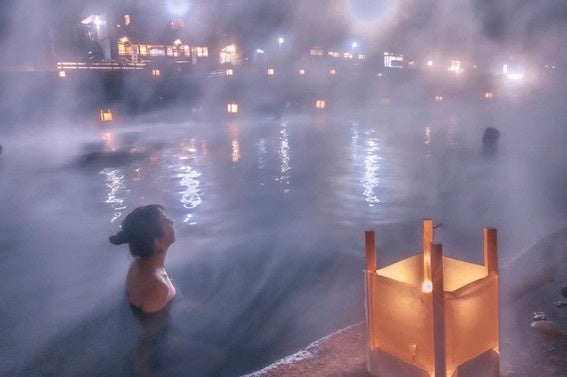
Entering Hanayama requires adjusting your standard bathing technique. The bathhouse layout provides three primary indoor pools: a hot basin maintained at roughly 41.5°C, a warm transition pool at 38°C, and the centerpiece cold-source basin resting at its natural 26°C. Because the raw underground source is cool, heating is necessary for comfort, but heating drives off dissolved carbon dioxide gas. The unheated raw basin is where the chemical concentration remains intact.
Veteran bathers utilize a rigorous alternating immersion protocol. You begin by warming your core in the 41.5°C tub for five to seven minutes. Once sufficiently heated, you transition straight into the 26°C raw mineral pool. The initial plunge feels brisk, but within sixty seconds, the high carbon dioxide content dilates peripheral blood vessels, generating a distinct tingling warmth beneath the skin. Tiny bubbles coat your arms and torso. Alternating between the hot heated pool and the effervescent raw basin three to four times produces an intense state of physical calm known in Japan as *totonoi*, a deep autonomic nervous reset.
Visitor Realities: Precautions and Practicalities
Hanayama Onsen is an unvarnished therapeutic bath, not a sterile day spa. First-time visitors should understand the practical constraints before traveling:
The sheer volume of suspended iron will permanently stain fabric. Any light-colored towel dipped into the water will emerge reddish-orange and cannot be washed clean. Bring an old towel or buy a cheap rental at the front desk. Walking surfaces around the bath hall are heavily crusted with uneven calcium ridges; stepping carefully is essential to avoid scraping bare feet. Due to the high mineral uptake, over-soaking can cause sudden fatigue or lightheadedness, known as *yuatari*. Limit your initial session to forty-five minutes and drink water before and after entering the baths.
Access from Osaka is straightforward. A direct drive down the Hanwa Expressway takes approximately one hour, with the facility located just three minutes from the Wakayama Interchange. Those using public transit can take the JR Kinokuni Line to Wakayama Station, followed by a ten-minute taxi ride or a local bus bound for Narukami. Day-use admission generally ranges between 800 and 1,100 yen depending on the time of day, with evening rates discounting slightly after 5:00 PM.
Frequently Asked Questions (FAQ)
Q1: Why does the water at Hanayama Onsen look reddish-brown instead of clear?
A1: The water contains extraordinarily high levels of dissolved ferrous iron and bicarbonate ions. While the spring runs crystal clear at the underground wellhead, coming into contact with atmospheric oxygen triggers rapid oxidation, converting the dissolved iron into iron oxide particles that suspend in the water and create a deep rust color.
Q2: Is Hanayama Onsen suitable for people with sensitive skin?
A2: The water is classified as a highly concentrated, hypertonic mineral spring. While the carbon dioxide and bicarbonate components are generally gentle and soften the skin, the dense salt and mineral concentration can cause mild irritation on broken skin, eczema, or freshly shaved areas. Rinsing with tap water before exiting is recommended for sensitive skin types.
Q3: Can visitors stay overnight, or is it strictly a day-use facility?
A3: Hanayama operates as both a day-use bathhouse and a functioning onsen ryokan. Overnight guests enjoy private Japanese-style tatami rooms, traditional Kaiseki dinners featuring local Wakayama ingredients, and exclusive late-night and early-morning bathing access when day-trip crowds have departed.
Preserving Wakayama's Raw Geological Heritage
today many Japanese hot spring resorts dilute their pools with municipal tap water to reduce maintenance costs, Hanayama Onsen Yakushi no Yu remains defiantly untouched. The facility demands relentless labor: staff must chip away accumulating mineral concrete from drains and valves daily to keep plumbing functional. That stubborn commitment preserves a rare physical phenomenon. For Kansai travelers seeking authenticity over polish, Hanayama provides an unfiltered encounter with the Earth's deep interior, leaving its mark in golden sediment, fizzing bubbles, and warmth that lingers long after you leave the bath.
