The Great Entrance Exam Debate: How Issei Nishioka's New Book Reignited Todai vs Harvard
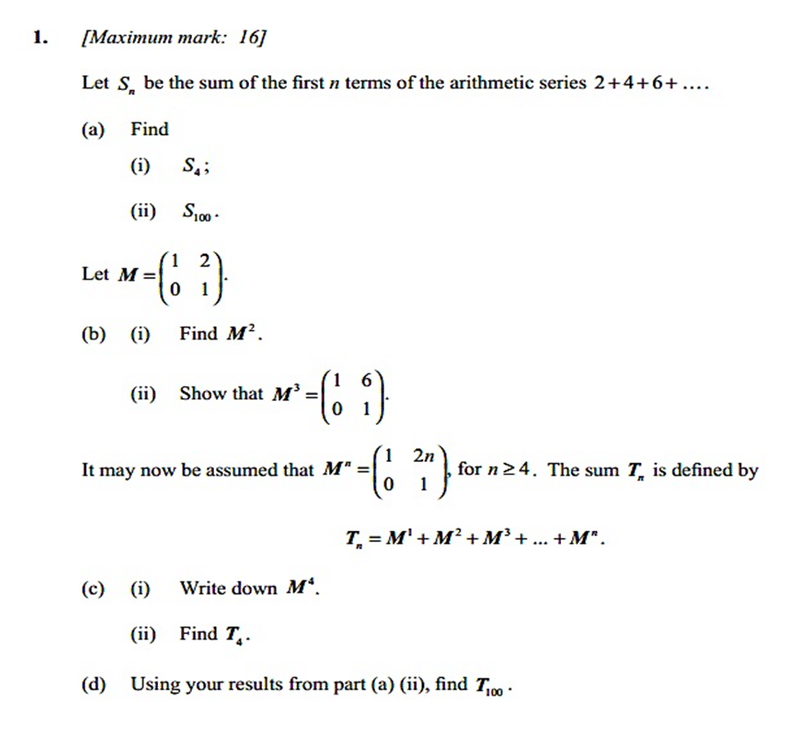
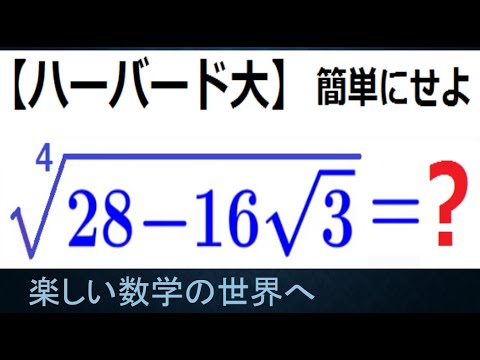
When author and educational researcher Issei Nishioka asked his readers which university is harder to get into, the University of Tokyo or Harvard, he touched a raw nerve across global education circles. The debate reignited in full force following the release of his book on building multidimensional thinking skills through Japanese entrance exams, as highlighted in a recent MSN Report. On social media, prospective applicants and academics seized on a glaring paradox: while thousands of American high schoolers achieve a perfect 800 on the standardized tests used for Ivy League admissions, even the sharpest math prodigies in Japan routinely score under 50% on the grueling University of Tokyo entrance examination.
(Source: MSN: "東大とハーバードはどちらが難しい? 東大合格者「ペーパー難易度 ...")
The core tension stems from a fundamental misunderstanding of how the two institutions screen talent. American observers frequently assume that because Harvard sits near the top of global university rankings, its academic testing must outstrip that of any national university abroad. Japanese test-takers know the opposite reality. Purely on paper, the University of Tokyo sets math problems of staggering difficulty, demanding hours of original algebraic proofs and spatial geometry. Harvard, by contrast, operates an opaque, multi-layered admissions apparatus where standardized testing serves merely as a threshold, not a decider.
📌 Key Takeaways:
- The Testing Divide: In raw written paper exam difficulty, the University of Tokyo entrance examination outpaces the standard tests submitted to Harvard by an enormous margin.
- The Admissions Barrier: Harvard relies on a holistic admissions process where a perfect 800 on the SAT math section guarantees nothing, forcing applicants to compete across international extracurriculars, social impact, and subjective evaluations.
- Undergraduate Realities: While Harvard does not give an impossible math test to enter, its notorious first-year undergraduate courses like Math 55 present theoretical rigor comparable to the toughest university competitions in the world.
How Issei Nishioka Sparked the Transpacific Admissions Controversy
Issei Nishioka, who rose to prominence after overcoming multiple academic failures to pass the University of Tokyo entrance examination, has spent years dissecting how elite exam structures train the human mind. His latest work focuses on how the entrance exams of Todai and Kyoto University instill multidimensional thinking skills. These tests do not measure rote memorization. They evaluate an applicant's ability to approach ambiguous, multi-step problems from unexpected structural angles.
When Nishioka argued that the physical paper test for Todai is substantially more difficult than anything Harvard asks high schoolers to solve, the observation quickly circulated across international student forums and tutoring networks. For domestic Japanese applicants, surviving 150 minutes of Todai secondary math requires composing original proofs on blank sheets, deriving formulas from first principles, and solving complex spatial geometry problems that exceed standard high school curricula. An American applicant to Harvard submits scores from the SAT math section or AP Calculus BC, assessments that rely heavily on multiple-choice formats or standardized response boxes.
The resulting conversation exposed two distinct cultural philosophies of merit. In Japan, academic fairness means a single, ruthlessly objective exam where an anonymous student's score dictates their future. In the United States, Ivy League admissions criteria intentionally decenter academic testing in favor of institutional priorities, leadership profiles, and socioeconomic balance.
Deconstructing the Mathematics: Todai Secondary Exams Against the SAT and AP Calculus
To understand why educators rate Todai's math exam as vastly harder, one must look at the mechanics of the questions. The second-stage University of Tokyo mathematics examination gives science applicants six open-ended proof problems to complete across two and a half hours. Humanities applicants face four problems across 100 minutes. There are no formula sheets. There are no multiple-choice alternatives to guess from. A typical question might present an integer sequence and require the candidate to prove whether a specific divisibility property holds true for all prime numbers, or ask for the precise volume of an intersection between two rotating 3D curves.
In contrast, the SAT math section tests foundational algebra, basic arithmetic modeling, and introductory data analysis. The difficulty ceiling on the digital SAT does not surpass high school intermediate algebra. While Advanced Placement exams like AP Calculus BC introduce integration techniques and Taylor series, the questions follow predictable templates. A high school junior with focused prep can achieve a score of 5 on AP Calculus BC through pattern recognition alone.
Scoring benchmarks highlight this gulf. On the SAT, roughly top 1% scorers earn a 780 to 800 in math, and tens of thousands of applicants submit near-perfect marks every admissions cycle. At Todai, scoring 60 out of 120 points on the science math paper is frequently enough to secure admission when paired with solid foreign language and natural science scores. The exam is engineered to induce partial credit calculations, separating those who understand mathematical architecture from those who merely memorize algorithms.
Admissions Architecture: A Side-by-Side Comparison
The divergent design of both systems reflects fundamentally opposing values regarding transparency and institutional autonomy. Below is how the selection pathways stack up against key structural metrics:
| Evaluation Category | University of Tokyo (Todai) | Harvard College |
|---|---|---|
| Primary Selection Tool | Two-stage written examinations (Common Test + Todai Secondary Exam) | Holistic dossier (Common App, essays, letters of recommendation, interviews) |
| Math Testing Requirement | Original free-response proofs in advanced calculus, probability, and geometry | SAT/ACT scores (test-required reinstated), optional AP/IB subject transcripts |
| Admissions Transparency | Extremely high; raw cutoff marks published annually down to the decimal point | Low; subjective personality ratings, institutional priorities, donor/legacy factors |
| Overall Acceptance Rate | Approx. 30%, 35% of secondary exam pool (after fierce pre-selection filtering) | Approx. 3.4%, 4.1% of total applicant pool |
| Core Cognitive Demand | Multidimensional thinking skills, deep endurance, absolute academic precision | Narrative positioning, leadership, distinct non-academic accomplishments |
Why Harvard's Holistic Admissions Process Feels More Brutal
If Todai's exam is objectively harder, why do many international applicants consider Harvard significantly more terrifying to crack? The answer lies in the shifting, subjective goalposts of holistic evaluation. For a Japanese student targeting Todai, the roadmap is punishing but unambiguous: solve past entrance problems for 12 to 14 hours a day, master proof writing, and cross the official scoring threshold. If you earn the marks, the university cannot reject you.
Harvard presents no such certainty. An applicant can score an unblemished 800 on the SAT math section, complete AP Calculus BC in ninth grade, finish top of their graduating class, and still receive an outright rejection letter. Harvard receives over 50,000 applications each year for roughly 1,900 seats. The admissions committee evaluates applicants using a four-pillar rating system covering academics, extracurricular activities, athletic prowess, and personal qualities. Personal ratings rely on counselor recommendations and alumni interviews, introducing subjective human assessments that students cannot control through sheer test prep.
The cruelty of the Ivy League system, as Nishioka noted in his commentary, is that competence is insufficient. Applicants must manufacture a compelling personal narrative, initiate nonprofits, produce peer-reviewed research, or win international humanities or science awards before age 18. This requirement shifts the competitive battlefield from exam halls to resource-heavy extracurricular pursuits, creating an environment where no amount of textbook mastery guarantees success.
The Real Crucible: Harvard's Math 55 and the Putnam Arena
While Harvard does not administer an impossible entrance exam to high schoolers, the institution saves its true mathematical gatekeeping for the undergraduate classroom. The most famous example is Math 55, officially titled "Honors Abstract Algebra and Real Analysis." Long described by undergraduates as the hardest freshman math class in the world, the course covers four years of undergraduate mathematics in two semesters.
Math 55 problem sets frequently require 25 to 40 hours of dedicated proof work per week. The course routinely begins with 40 to 60 ambitious first-year students, many of whom won medals at the International Mathematical Olympiad (IMO) or placed in the national top tier of the Putnam Mathematical Competition. Within six weeks, the drop-out rate routinely exceeds 50%, leaving only a core group of elite mathematicians capable of keeping pace with the theoretical workload.
This dynamic reveals the division between Japanese and American elite schooling. Todai filters students at the front door through state-administered papers. Harvard filters by personality, access, and broad aptitude at the entrance gate, but forces students to encounter intense mathematical rigor once they attempt specialized coursework on campus.
Frequently Asked Questions (FAQ)
Q1: Does Harvard have its own specific entrance examination for mathematics?
A1: No. Harvard College does not administer an internal written entrance exam. All applicants submit standard national tests such as the SAT or ACT, alongside high school transcripts, Advanced Placement or International Baccalaureate coursework, and personal application essays.
Q2: Could an average high-scoring SAT student pass the Todai math entrance exam?
A2: Almost certainly not without years of specialized Japanese curriculum study. The SAT math section covers basic algebra, geometry, and simple data analysis. Todai's secondary exam requires university-level proof writing, deep calculus manipulation, and original mathematical problem-solving written completely in free-response Japanese.
Q3: Why don't elite American universities use written entrance exams like Todai?
A3: American private universities favor holistic admissions to curate balanced cohorts of future leaders, researchers, athletes, artists, and legacy candidates. A single-day, score-only exam would eliminate institutional discretion over class composition, diversity metrics, and non-academic talent pipelines.
Q4: Is the acceptance rate at Todai higher than Harvard?
A4: Yes, in raw numbers. Todai's secondary exam acceptance rate hovers around 30% to 35%, whereas Harvard's acceptance rate typically stays below 4%. However, the Todai applicant pool is already heavily self-selected through the rigorous Common Test first stage, meaning almost all applicants are top-tier national students.
Examining the Future of Elite University Admissions
The persistent fascination with the Todai versus Harvard comparison exposes the trade-offs at the center of higher education worldwide. Todai provides complete structural clarity: an open competition where pen, paper, and logic determine social mobility without regard for wealth or charismatic charm. Yet this model can produce hyper-specialized exam performers who struggle when confronted with ambiguous, open-ended real-world initiatives.
Harvard produces dynamic, multi-talented graduates trained to navigate complex institutional environments from adolescence. Yet its opaque admissions system fosters relentless anxiety, invites legal challenges over fairness, and heavily rewards students who possess the social capital to package their youth into compelling college applications. As both universities adapt to changing educational demands, neither system offers an unblemished ideal. Todai tests what you can prove on paper; Harvard tests who you can convince in an admissions office.
