The Hidden Meaning of 'Let It Be': What Paul McCartney Really Meant
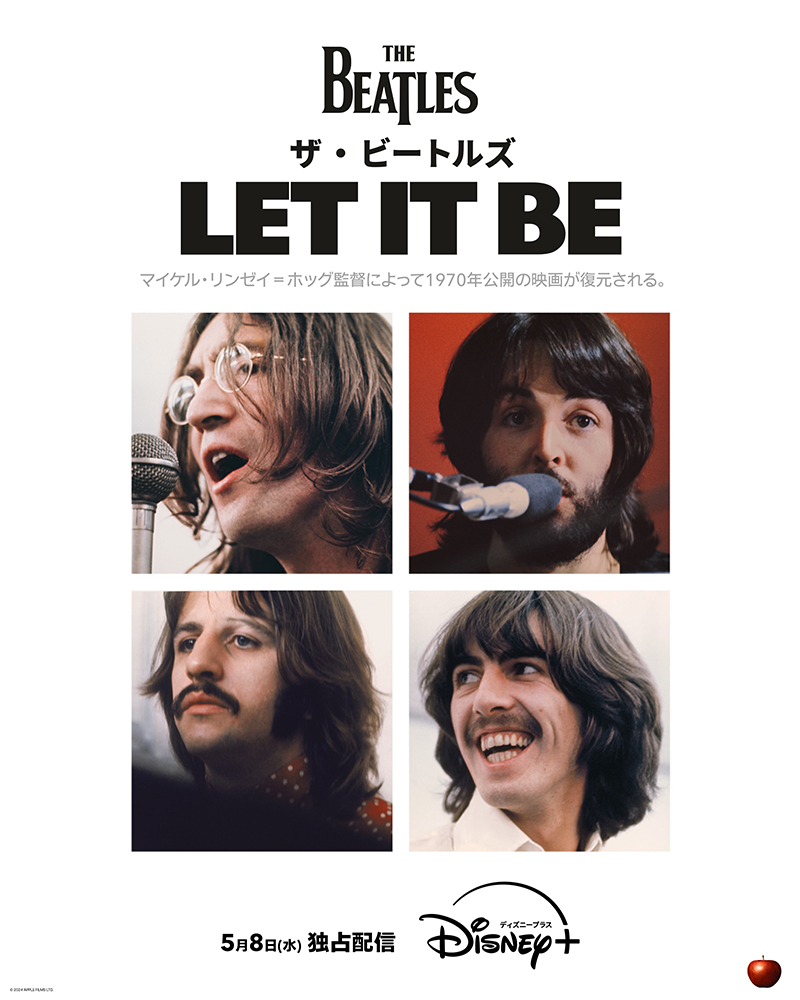
Few pop songs carry the cultural weight of "Let It Be," the title track of the final studio album released by The Beatles in May 1970. For over five decades, millions of casual listeners have heard its opening lines as a soaring Christian hymn, assuming the narrator was visited by the Virgin Mary during a dark night of the soul. That assumption shaped how radio stations programmed the record, how churches adopted the melody, and how the track embedded itself in global pop lore. Yet the true origin story is rooted in a much more intimate, vulnerable human experience: a late-night visitation in an exhausted musician's dream during the bitter, fracturing months of 1968.
As detailed in a retrospective by the Radio X Report, Paul McCartney did not write the ballad as a theological statement. He wrote it as an act of survival while watching his life's work disintegrate. Understanding what "Let It Be" actually means requires peeling back layers of studio conflict, linguistic idioms, and the profound grief of losing a mother at age fourteen.
📌 Key Takeaways:
- The Dream Origin: "Mother Mary" refers directly to Paul McCartney's mother, Mary Mohin McCartney, who died of breast cancer when he was 14 years old.
- The Idiomatic Meaning: The phrase "let it be" functions as an English idiom meaning to stop interfering, accept the present reality, and let events unfold without panic.
- The Creative Crucible: The song took shape during the tense, demoralizing January 1969 sessions at Twickenham Film Studios as the Beatles edged toward an acrimonious breakup.
The Midnight Dream: Mary Mohin McCartney’s Reappearance
By the autumn of 1968, Apple Corps business meetings had turned toxic. Allen Klein and John Eastman were locked in a managerial tug-of-war for control of The Beatles' business empire. John Lennon had detached himself from band governance, aligning completely with Yoko Ono, while George Harrison felt sidelined as a songwriter. McCartney attempted to lead the group, only to earn resentment from his bandmates. He spent his nights drinking heavily, self-medicating, and worrying about the collapse of the only professional identity he had ever known.
During one particularly restless night at his St John's Wood home, McCartney drifted off and experienced a vivid, luminous dream. His mother, Mary Mohin McCartney, appeared before him. A quiet, reassuring nurse who died in 1956 from breast cancer, she had left a void that bonded the young Paul to John Lennon, who lost his own mother, Julia, two years later. In the dream, Mary looked calm and steady. She noticed her son’s panicked state, stepped forward, and told him gently: "It will be all right. Just let it be."
McCartney woke with a sudden, overwhelming sense of relief. He sat down at the piano in his bedroom and began hammering out the chord progression in C major. The dream did not fix the financial or interpersonal chaos tearing The Beatles apart, but it gave McCartney a psychological anchor. The phrase became his personal mantra of surrender.
Deconstructing the Idiom: What "Let It Be" Actually Communicates
To fully grasp the track's lyricism, listeners must look at the English idiom "let it be." In everyday conversation, the phrase tells someone to leave a situation undisturbed, stop meddling, or refrain from trying to force an outcome. It is closely related to the phrase "leave well enough alone," but with a softer, meditative edge.
McCartney did not use the phrase as an admission of defeat. He used it as an embrace of non-resistance. In psychology, acceptance does not mean endorsement; it means acknowledging current reality without expending energy on futile resistance. When McCartney sings of "broken hearted people living in the world" who must agree that "there will be an answer," he is describing emotional endurance. He is advising that the pain of the present does not require a desperate countermeasure, only patience and the courage to wait out the storm.
Biblical Imagery Versus Intimate Mourning
When "Let It Be" reached radio stations in March 1970, audiences universally heard "Mother Mary" as a Marian apparition. The Catholic iconography felt unmistakable: "When I find myself in times of trouble, Mother Mary comes to me / Speaking words of wisdom, let it be." The hymn-like cadences, paired with gospel-infused piano voicings, cemented the track in religious spaces across the globe.
Lennon reacted with open cynicism. Long uncomfortable with McCartney’s penchant for traditional pop balladry, Lennon reportedly scoffed at the track's piety during studio playback. He even insisted on sequencing a cheeky Cockney rhyme right before the track on the album: "Hark! The angels come!" Lennon viewed the song as sanctimonious, missing, or perhaps intentionally ignoring, the childhood wound that birthed it.
McCartney has addressed the dual interpretation dozens of times across his six-decade career. He never fought the public's religious reading. Instead, he welcomed it, acknowledging that if people found solace through their own spiritual frameworks, the song had done its job. Still, the autobiographical reality remains grounded in a Liverpool council flat and a teenager’s unhealed grief.

Studio Friction: From Twickenham Tension to Billy Preston's Soul
The musical journey of "Let It Be" was fraught with discord. In January 1969, director Michael Lindsay-Hogg set up cameras inside the cold, cavernous Twickenham Film Studios for what was originally conceived as the *Get Back* television special. The environment was miserable. Harrison walked out of the band on January 10 after a passive-aggressive squabble with McCartney, returning days later only after the band agreed to abandon Twickenham and move to the basement studio of Apple HQ on Savile Row.
The track’s sonic warmth arrived on January 22, 1969, when McCartney invited American keyboardist Billy Preston into the room. Preston’s presence immediately forced the four Beatles on their best behavior, but more importantly, his Hammond organ lines transformed the song from a standard pop lament into a deep, soulful spiritual. Preston’s understated fills provided the harmonic glue that held McCartney’s rolling piano chords together.
| Phase & Date | Key Production Event | Emotional & Sonic Impact |
|---|---|---|
| Late 1968 | McCartney's dream of his mother Mary in London | Sparks the initial composition; McCartney finds solace amidst Apple Corps collapse |
| January 1969 | Rehearsals at Twickenham Studios; move to Savile Row | Marred by band hostility; Billy Preston joins on Hammond organ to elevate the arrangement |
| April 1969 & Jan 1970 | George Harrison records two contrasting guitar solos | Gentle Leslie-speaker take used on the single; aggressive fuzz solo used on Phil Spector's LP |
| March 1970 | Single released; Phil Spector applies "Wall of Sound" strings to LP | Reaches #1 in US; McCartney publicly denounces Spector's lavish orchestral overdubs |
The conflict did not end on the studio floor. George Martin oversaw the March 1970 single mix, which showcased Harrison's subdued, Leslie-speaker guitar solo. Meanwhile, American producer Phil Spector was brought in by Lennon and Klein to rescue the unreleased session tapes for the LP. Spector coated the master with sweeping brass, cellos, and Harrison’s biting, high-gain guitar solo. McCartney despised Spector's heavy-handed production, citing it in court documents when he filed to dissolve The Beatles' legal partnership on December 31, 1970.
Lyrical Breakdown: The Anatomy of Solace
A closer look at the lyrics reveals why the track works across diverse emotional spectrums. Every stanza operates on an oscillation between distress and release:
The opening verse establishes total vulnerability. McCartney admits to being lost in "times of trouble." He makes no attempt to present the rock-star swagger that dominated late-1960s counterculture. The entry of Mary is quiet and restorative, offering not a complex strategic solution, but rather permission to stop struggling.
In the second verse, McCartney zooms out from his private agony to address the collective human condition: "And when the broken hearted people living in the world agree / There will be an answer, let it be." This is the universal pivot of the song. McCartney connects his childhood trauma and the Beatles' dissolution to ordinary domestic sorrow. Even when parted by death or estrangement, hope remains intact if one stops fighting the inevitable.
The final verses introduce visual imagery: "And when the night is cloudy, there is still a light that shines on me / Shine until tomorrow, let it be." It echoes traditional folk hymns, reinforcing the idea of endurance through dark cycles. The music swells beneath these words, mirroring the feeling of finding steady ground after vertigo.
Why the Message Resonates Stronger Today
Modern listeners navigate a world saturated with digital noise, hyper-connectivity, and relentless urgency. When people turn to search engines to decipher the meaning of "Let It Be," they are rarely looking for dry discographical details. They are looking for an antidote to anxiety.
The song endures because it offers an alternative to the modern instinct to control every outcome. In situations of grief, divorce, career failure, or systemic strain, people exhaust themselves attempting to rewrite reality in real time. McCartney's ballad delivers a counter-intuitive piece of wisdom: sometimes the most productive action is to step back, unclench, and let events run their course.
Frequently Asked Questions (FAQ)
Q1: Is "Let It Be" a religious or Christian song?
A1: Formally, no. Paul McCartney wrote the song after dreaming of his real mother, Mary Mohin McCartney, who passed away when he was 14. However, McCartney has stated he is delighted that listeners find personal spiritual or religious meaning in the track.
Q2: Why did John Lennon dislike "Let It Be"?
A2: Lennon found the song overly sentimental, traditional, and out of step with rock music's sharper edges. He also suspected the lyrics leaned too heavily into faux-religious piety, mocking it during the 1969 recording sessions.
Q3: What is the difference between the single version and the album version?
A3: The March 1970 single mix produced by George Martin features Billy Preston's organ prominently and a softer guitar solo by George Harrison. The May 1970 album version, remixed by Phil Spector, includes sweeping orchestral strings, choral backing, and a heavier, distorted rock guitar solo by Harrison.
Q4: What does the idiom "let it be" mean in English?
A4: In English, "let it be" means to stop interfering, leave a matter alone, or accept circumstances as they currently exist without trying to force a change.
The Lasting Legacy of McCartney’s Ballad
Half a century after The Beatles scattered into four solo careers, "Let It Be" stands as McCartney’s definitive meditation on endurance. What began as a desperate nighttime comfort whispered by a lost mother evolved into a global anthem of reassurance. It remains a fixture in McCartney's live sets, generating singalongs that bridge generations of listeners who have faced their own moments of despair. By choosing emotional honesty over technical complexity, McCartney captured something permanent about the human heart: peace rarely comes from forcing an outcome, but from having the grace to stand still and let the answer find you.
