The Hidden Pitfalls of Getting from Tokyo Station to Tokyo DisneySea
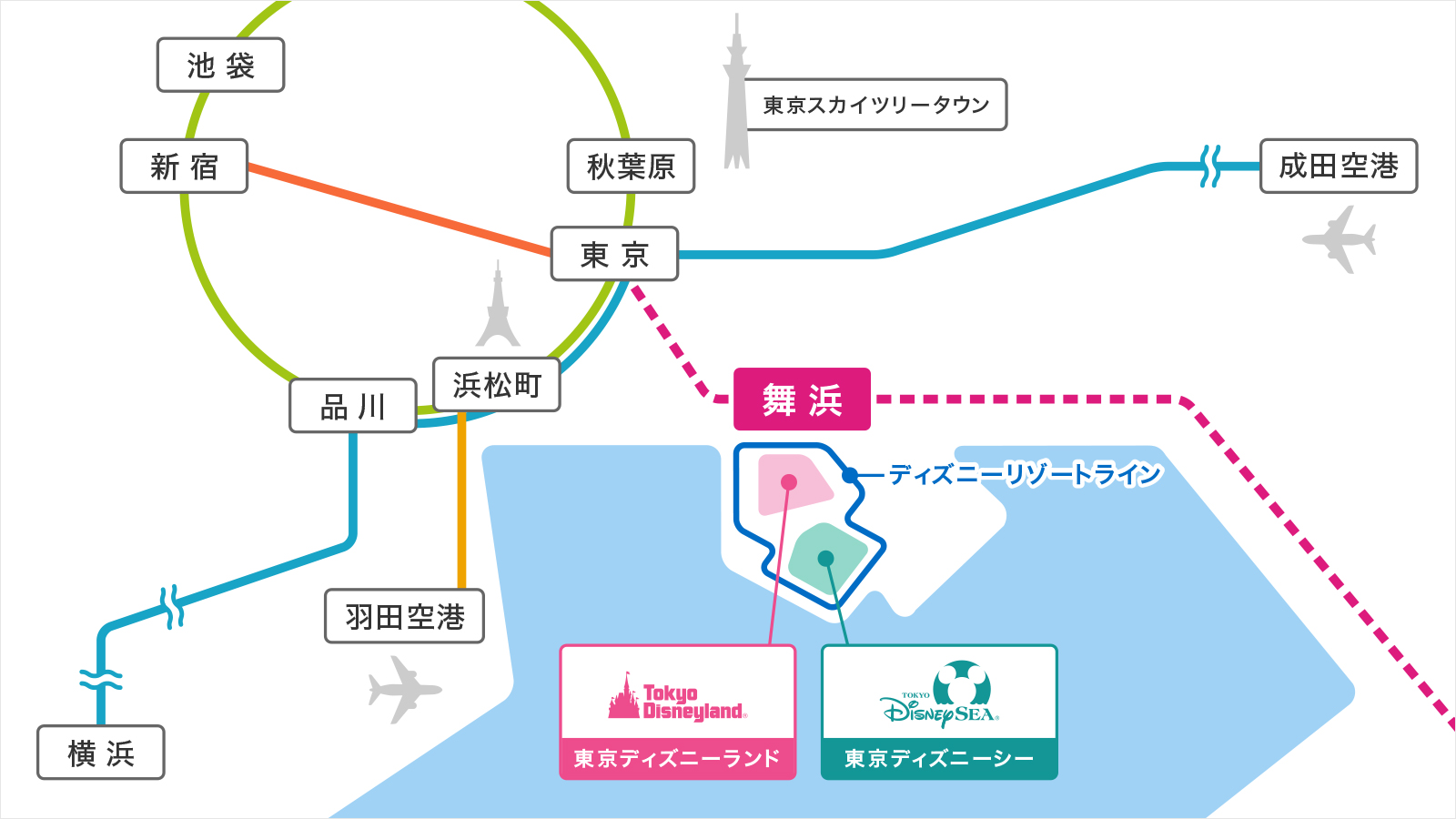
Most first-time visitors heading to Tokyo Disney Resort make the same mistake before they even clear the city center. Guided by standard transit apps that treat Tokyo Station as a uniform dot on a digital map, thousands of travelers follow digital prompts straight into the JR Keiyo Line underground transfer. What these apps omit is the physical reality: reaching platforms 9 and 10 requires a grueling 600-meter underground march through multi-level tunnels, moving walkways, and descending escalators that easily consumes 15 to 20 minutes before a train even arrives.
With Tokyo DisneySea's Fantasy Springs expansion commanding massive early-morning crowds in 2026, every lost minute outside the turnstiles carries a steep cost. Missing a train or stalling out in transit bottlenecks directly threatens your morning rope drop strategy, pushing back entry times and squandering chances at premier access passes. Navigating this corridor smoothly demands understanding alternative surface exits, precise rail alternatives, and direct highway bus options that bypass the station's deepest subterranean trenches entirely.
📌 Key Takeaways:
- The Platform Trap: The JR Keiyo and Musashino platforms sit four basement levels below ground level near Yurakucho, requiring a grueling 15-minute concourse trek from the Shinkansen gates.
- The Seamless Surface Route: The direct highway express bus departing from Tokyo Station Yaesu South Exit drops passengers directly at the Tokyo DisneySea entrance plaza, bypassing Maihama Station entirely.
- Transit Realities: Train travel costs roughly ¥530 (JR fare plus Disney Resort Line monorail) and takes 35 to 45 minutes total, while highway buses run ¥1,000 and eliminate all transfer walking.
The Physical Toll of the JR Keiyo Line Underground Transfer
Tokyo Station functions less like a unified building and more like several distinct transit hubs spliced together across Chiyoda Ward. The JR Keiyo Line tracks, which carry both standard Keiyo commuter services and the JR Musashino Line route directly to Maihama Station, were built within the sub-basement bedrock originally prepared for the canceled Narita Shinkansen project. As a result, the Keiyo platforms occupy an isolated quadrant roughly 500 meters south of the main Yamanote, Chuo, and Tokaido Shinkansen concourses.
Traversing this distance requires descending four levels through a long subterranean corridor equipped with three sets of moving walkways. For solo commuters traveling light, the trek takes roughly 10 minutes at a brisk pace. For families pushing double strollers, travelers rolling oversized luggage, or visitors navigating dense morning rush-hour crowds, that transfer time stretches past 18 minutes. Signage marked with red Keiyo icons lines the ceilings, but no visual indicators warn passengers of the sheer physical distance involved before they clear the turnstiles.
Once passengers finally reach the platform, boarding an express train is not always an option. Keiyo rapid services skip several stops along Tokyo Bay, reaching Maihama in approximately 13 minutes, whereas local trains require 16 to 18 minutes. Boarding the wrong train or hesitating on platform stairs compounds transit delays, eroding critical buffer time ahead of park opening.
The Direct Highway Express Bus from Yaesu South Exit
Travelers looking to avoid underground pedestrian marathons have a reliable street-level alternative: the direct highway express bus. Operated jointly by Keisei Bus and JR Bus Kanto, these coaches depart from the surface-level bus terminal directly outside the Tokyo Station Yaesu South Exit at Platform 5. Passengers exit the bullet train or central concourse, step across a single covered sidewalk, and board the bus at curb level.
The express coach costs ¥1,000 for adults and ¥500 for children, payable via Suica and Pasmo IC cards or cash boarding vouchers. Departures begin early in the morning, running at 10- to 15-minute intervals between 6:30 AM and 8:30 AM to accommodate Disney parkgoers. The bus navigates the Shuto Expressway's Bayshore Route, completing the transit run to the resort in 35 to 40 minutes under normal conditions.
The major logistical advantage lies at the destination. While trains deliver passengers to Maihama Station, requiring an extra transfer, the express bus makes its final stop directly at the Tokyo DisneySea bus terminal, situated mere footsteps from the main ticket turnstiles. Eliminating intermediate station stairs and platform transfers makes this route ideal for visitors traveling with heavy gear or small children.
Transit Travel Time and Cost: Train vs. Highway Express
Choosing the right transit method between central Tokyo and DisneySea requires balancing physical strain against morning traffic unpredictability. Rail remains immune to highway gridlock, while buses protect physical energy before an exhausting park day.
| Transit Route | Total Travel Time | One-Way Cost | Physical Transfer Burden |
|---|---|---|---|
| JR Keiyo/Musashino Line to Maihama + Monorail | 35, 45 minutes | ¥530 (¥230 JR + ¥300 Monorail) | High; 600m internal walk at Tokyo Station plus monorail transfer at Maihama. |
| Direct Highway Express Bus (Yaesu South) | 35, 50 minutes | ¥1,000 | Low; curb-to-bus loading; drops off directly at DisneySea entry turnstiles. |
| Yurakucho Station Shortcut to JR Keiyo Line | 30, 35 minutes | ¥530 (¥230 JR + ¥300 Monorail) | Moderate; surface street walk from Yurakucho into Keiyo Underground B4F entrance. |
| Taxi or Private Rideshare | 25, 40 minutes | ¥7,500, ¥11,000 | Negligible; trunk luggage loading directly to park vehicle drop-off zone. |
The Maihama Chokepoint and Disney Resort Line Monorail
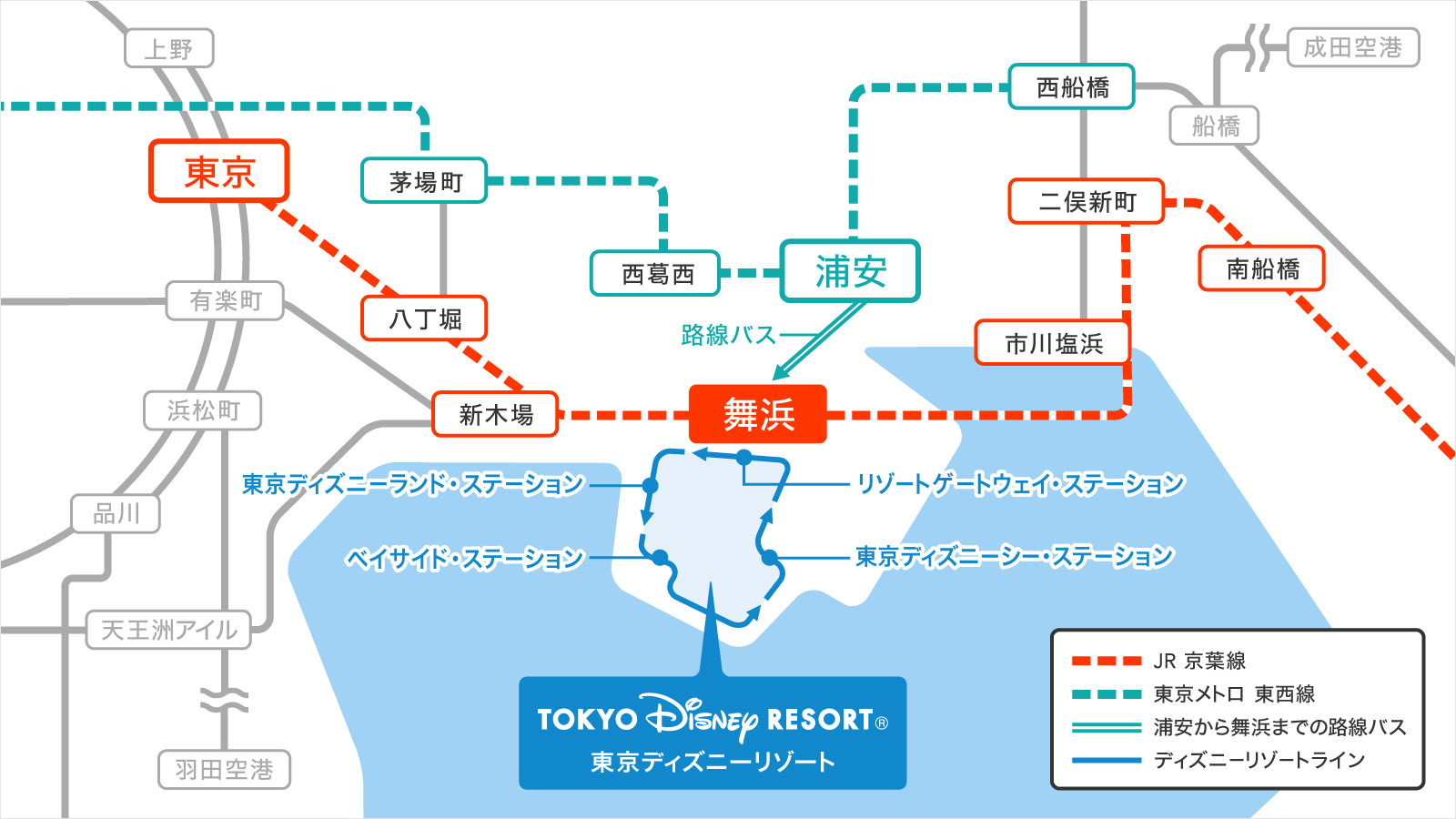
Taking the train introduces a secondary bottleneck at Maihama Station. Maihama serves both Tokyo Disneyland and Tokyo DisneySea, but Disneyland sits within immediate walking distance of the station exit. DisneySea does not. Reaching DisneySea's front gates requires navigating the Disney Resort Line monorail, an elevated loop track operating independently from the JR rail network.
After exiting Maihama's South Gate turnstiles, passengers turn left and walk roughly 100 meters to Resort Gateway Station inside Ikspiari. Monorail single-ride tickets cost ¥300 for adults and can be purchased at automated kiosks or tapped through using Suica and Pasmo IC cards. The monorail runs clockwise around the resort boundary. Tokyo DisneySea Station is the third stop along the circuit, taking approximately 9 minutes from boarding to arrival.
Walking from Maihama to DisneySea on foot along the public road is physically possible, covering roughly 1.2 kilometers. However, that walk consumes 15 to 20 minutes across exposed coastal concrete buffeted by sea winds. Spending ¥300 for the monorail ride saves steps for the park itself, where average guests log between 18,000 and 26,000 steps across the hillside terrain of Mysterious Island and the Mediterranean Harbor.
Morning Rope Drop Strategy and Early Concourse Navigation
Entering Tokyo DisneySea early requires disciplined scheduling. The park often opens its security perimeter 30 to 45 minutes ahead of its published operating hours (often opening gates by 8:15 AM or 8:30 AM rather than the official 9:00 AM calendar stamp). Securing access to Fantasy Springs attractions through Standby Pass or Disney Premier Access demands clearing security scanners no later than 7:30 AM.
To reach the security plaza by 7:15 AM via rail, you must board the JR Keiyo Line at Tokyo Station by 6:35 AM. Factor in the station concourse navigation: if coming from a hotel near Tokyo Station's Marunouchi side, step through the ticket wickets by 6:15 AM to navigate the corridors without running. Missing that window pushes your arrival into the primary wave of regional commuters packing onto inbound and outbound Chiba trains between 7:00 AM and 8:00 AM.
A lesser-known tactical shortcut exists for travelers staying near Ginza or Hibiya. Because the Keiyo Line platforms sit physically closer to Yurakucho Station than to central Tokyo Station, walking to JR Yurakucho Station and entering through its underground passages allows direct descent into the Keiyo tunnels. This maneuver bypasses the crowded Tokyo Station central concourse entirely.
Managing Baggage: Delivery Services and Station Lockers
Dragging rolling suitcases onto morning transit runs causes instant friction. Coin lockers at Tokyo Station fill rapidly by 8:00 AM, and lockers outside Maihama Station and DisneySea frequently reach full capacity before mid-morning. Navigating the Keiyo moving walkways with large baggage also slows down your pace and obstructs rush-hour pedestrian traffic.
Travelers transferring between central Tokyo hotels and resort properties should utilize dedicated luggage delivery services. The Tokyo Disney Resort Welcome Center, located immediately to the left of Maihama Station’s South Exit, operates a dedicated luggage transfer counter on its lower level for guests staying at Disney Hotel properties and Official Partner Hotels. Staff tag your luggage and deliver it directly to your hotel room while you head straight into the parks.
If you stay at a standard hotel in Urayasu without Welcome Center delivery privileges, utilize same-day transport through Yamato Transport's Tokyo Station Service Centers. Shipping baggage directly from Tokyo Station to your evening hotel costs roughly ¥1,800 to ¥2,500 per bag, freeing both hands for frictionless monorail boarding and gate entry.
Frequently Asked Questions (FAQ)
Q1: Can I use my Apple Wallet Suica or Pasmo on both the train and the monorail?
A1: Yes. Digital Suica, Pasmo, and ICOCA cards stored in smartphone mobile wallets tap seamlessly through JR ticket gates at Tokyo and Maihama stations, as well as the turnstiles on the Disney Resort Line monorail and express buses.
Q2: Is the direct express bus vulnerable to morning traffic gridlock?
A2: Weekday traffic along the Bayshore Route can encounter congestion between 7:30 AM and 8:30 AM near Kasai Rinkai Park. Buses departing Tokyo Station before 7:15 AM rarely face major delays, but travelers prioritizing fixed schedules should opt for the train.
Q3: How early do trains on the JR Keiyo Line start running from Tokyo Station?
A3: Keiyo Line local services begin operating out of Tokyo Station shortly after 5:00 AM daily, providing ample time for park visitors attempting to reach DisneySea before 6:30 AM for early standby queuing.
Q4: Why does Google Maps recommend walking through Tokyo Station instead of taking a bus?
A4: Navigation engines prioritize scheduled frequency and theoretical rail velocity over human physical walking distance. They calculate rail transit as the fastest option on paper, ignoring the 15-minute underground transfer time inside the station.
Selecting the Ideal Route for Your Disney Commute
The best route between Tokyo Station and DisneySea depends entirely on group mobility and target arrival times. Dedicated rope-drop strategists targeting 7:00 AM security arrival should prioritize the JR Keiyo Line, starting their underground walk inside Tokyo Station by 6:15 AM to ensure zero risk from highway traffic. Rail guarantees absolute timetable precision.
Families managing toddlers, pushchairs, or senior travelers should bypass the underground platforms completely and head to Yaesu South Exit Platform 5 for the direct express bus. Eliminating the 600-meter underground march and the secondary transfer at Maihama preserves critical energy for the long walking miles waiting inside Tokyo DisneySea.
