The Hidden Regret in back number's 'Tsunagida Te Kara': What the Lyrics Truly Reveal
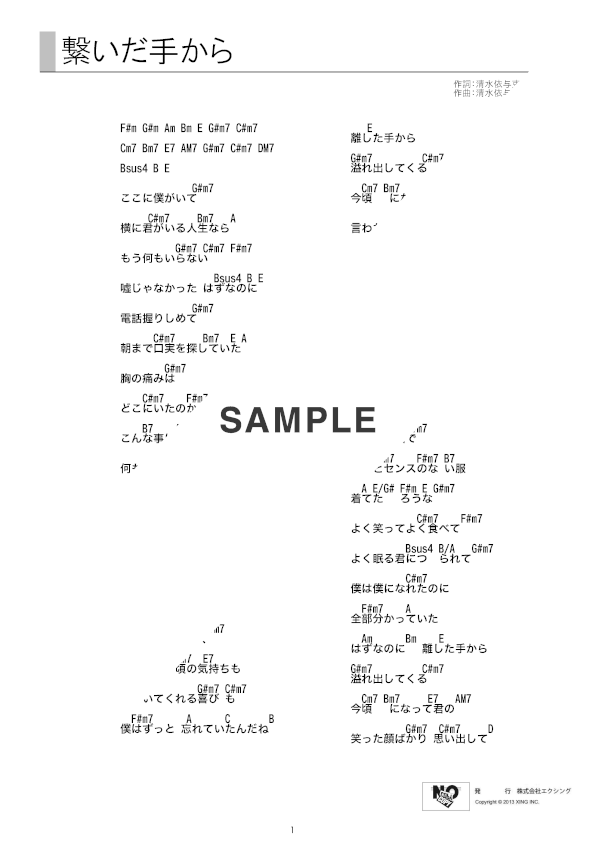
When back number released their tenth commercial single, "Tsunagida Te Kara" (繋いだ手から), in March 2014, casual listeners heard a brisk, guitar-driven pop-rock anthem tailored for spring radio rotation. Beneath the shimmering tempo and driving rhythm section, frontman and principal songwriter Iyori Shimizu embedded one of the most ruthless post-mortems of a failed relationship in modern Japanese rock. As catalog consumption surged across streaming ecosystems through the early 2020s, a trend documented in comprehensive industry logs such as this Wikipedia (en) Report, the track found a secondary life among younger listeners discovering its stinging emotional weight.
Unlike conventional breakup ballads that place the singer in the sympathetic role of the wounded party, this track operates on unflinching self-incrimination. The lyrics do not mourn an unavoidable parting or an external tragedy. They document the slow, careless decay of love caused by mundane complacency, capturing the exact second a lover realizes that tenderness, once dismissed as routine, is gone forever.
📌 Key Takeaways:
- Core Theme: The song explores self-inflicted heartbreak, detailing how taking ordinary affection for granted leads directly to irrevocable loss.
- The Central Metaphor: Holding hands shifts from an emblem of casual domestic security to an image of sand or water slipping irrevocably through careless fingers.
- Songwriting Persona: Iyori Shimizu subverts romantic clichés by framing the male protagonist as emotionally immature, passive, and entirely at fault.
How Iyori Shimizu Turned Everyday Complacency Into Art
Japanese rock ballads frequently rely on cinematic drama: sudden departures at train stations, dramatic unspoken confessions, or tears shed under cherry blossoms. Shimizu rejected those tropes early in his career. His writing anchors itself in the embarrassing domestic reality of Japanese romance songs, where relationships collapse through silence, lazy habits, and small ego trips.
In "Tsunagida Te Kara," the conflict stems from everyday habituation. The narrator was comfortable. He assumed the person walking next to him would stay indefinitely, mistaking patience for permanence. When the rupture arrives, it brings no dramatic explosion. It arrives as an abrupt void. The genius of Shimizu’s writing lies in exposing the narrator’s self-absorption. The protagonist admits he only appreciated his partner’s warmth when the temperature dropped, turning the song into an indictment of the ego rather than a tribute to lost romance.
Decoding the Metaphor: Why Holding Hands Became a Symbol of Loss
The title phrase translates roughly to "From the Hands We Held." In J-pop lyric traditions, hand-holding routinely serves as a sweet, baseline marker of budding intimacy. Shimizu upends this image immediately in the chorus: "Tsunagida te kara kobore ochite yuku" (Spilling and falling away from the hand I held).
Hands are meant to grasp, support, and secure. Here, they fail completely. Shimizu uses the verb kobore ochiru, typically reserved for liquids, grains of sand, or tears overflowing a vessel. The tactile sensation shifts from a warm grip to an uncontrollable leak. The lover’s presence was slipping away while their fingers were physically intertwined, yet the narrator was too distracted by his own trivial concerns to notice the tightening strain. The song exposes a psychological blind spot: physical proximity does not guarantee emotional presence.
Narrative Shift Across Verses: A Lyrical Breakdown
The song moves chronologically through the realization of fault, building from morning apathy to late-night panic. Shimizu structures the text so the narrator’s justifications steadily crumble as the track advances toward its climax.
| Song Section | Key Japanese Line | Literal Translation Context | Narrative Realization |
|---|---|---|---|
| Verse 1 | 何重もの偶然を 僕らは潜り抜けて | Slipping past layers of sheer coincidence | Acknowledges the miracle of meeting, contrasting it with how cheaply he treated the result. |
| Pre-Chorus | 当たり前だと 思っていたんだ | I assumed it was simply natural | Direct admission of entitlement; treating kindness as an unearned default condition. |
| Chorus | 繋いだ手から こぼれ落ちてゆく | Spilling away through the hand I held | The central image: love leaking away through negligence despite physical closeness. |
| Bridge | 君の優しさに 甘えすぎていた | I indulged far too much in your kindness | Total stripping away of defenses; acknowledges his own emotional parasitism. |
The progression reveals how back number constructs emotional tension. Shimizu does not offer redemption in the bridge. He offers clarity, which hurts far more. By the time the final chorus explodes with brass flourishes and layered guitars, the narrator knows the door is closed. The repetition of the central refrain sounds less like a plea for reconciliation and more like an echo bouncing off an empty apartment wall.

The Unflattering Protagonist: Why back number Rejects Romantic Heroics
Most commercial love songs smooth out their characters. Songwriters polish away petty jealousies, indifference, and cowardice so listeners can project themselves comfortably onto the narrator. Shimizu works in the opposite direction. He highlights the unglamorous, pathetic edges of young men who fail at emotional intimacy.
In "Tsunagida Te Kara," the singer admits to sulking, taking his partner's smiles for granted, and prioritizing his pride over simple communication. There is no chivalry here. He describes a dynamic where one person carried the entire emotional weight of the relationship until their stamina gave out. The narrator is forced to confront that he was exhausting to love.
This willingness to look small sets back number apart within Japanese rock balladry. Listeners do not revere Shimizu's protagonists as archetypes of devotion. They recognize them as reflections of their worst, most neglectful impulses. That recognition creates a distinct brand of catharsis: you do not listen to feel validated; you listen to feel caught.
Musical Contrast: Upbeat Melodies Masking Melancholic Despair
A striking aspect of the track is its sonic brightness. Arranged alongside long-time collaborator Seiji Kameda, the instrumentation features punchy drums, clean electric guitar arpeggios, and an open, major-key melodic line. On a surface listen, it could accompany a commercial for spring train travel.
This sonic dissonance is deliberate. By pairing grief with an energetic tempo, back number mirrors the dissonance of everyday life following a split. The city outside remains bright, strangers go about their routines, and the sun shines on the commute, regardless of internal devastation. The fast tempo also drives home the speed with which the relationship slipped away. Time does not pause for the narrator to process his mistakes; it rushes forward, leaving him stranded with his overdue insights.
Frequently Asked Questions (FAQ)
Q1: What is the main message behind back number’s "Tsunagida Te Kara"?
A1: The song serves as an unsparing reflection on how complacency and emotional negligence destroy relationships. It highlights the regret of realizing a partner's value only after taking their everyday affection for granted and losing them permanently.
Q2: Who wrote the music and lyrics for the track?
A2: The lyrics and music were composed by Iyori Shimizu, lead vocalist and guitarist of back number. The track was arranged by the band in collaboration with renowned producer and bassist Seiji Kameda.
Q3: How does this song fit into back number’s broader discography?
A3: Released as their 10th single and featured on the 2014 studio album Love Story, the song represents a foundational milestone in back number’s signature style: pairing bright, melodic J-pop rock hooks with self-critical, emotionally raw lyricism.
Why Shimizu’s Unresolved Grief Still Resonates in 2026
More than a decade after its release, "Tsunagida Te Kara" retains its bite because the flaw it describes is timeless. Technologies change, dating apps reconfigure social rituals, and communication styles evolve, but human indifference remains constant. People still convince themselves that the quiet presence beside them will tolerate bad moods, careless silences, and deferred affection forever.
Shimizu built a career documenting the wreckage left by that specific brand of hubris. "Tsunagida Te Kara" remains an essential entry in his catalog precisely because it offers no easy reconciliation. The hand is empty, the water has spilled, and the song leaves the listener holding nothing except the quiet weight of their own accountability.
