The Rise of Ginza Karen: How Tokyo's Unassuming Luggage Shop Became a Global Travel Sensation
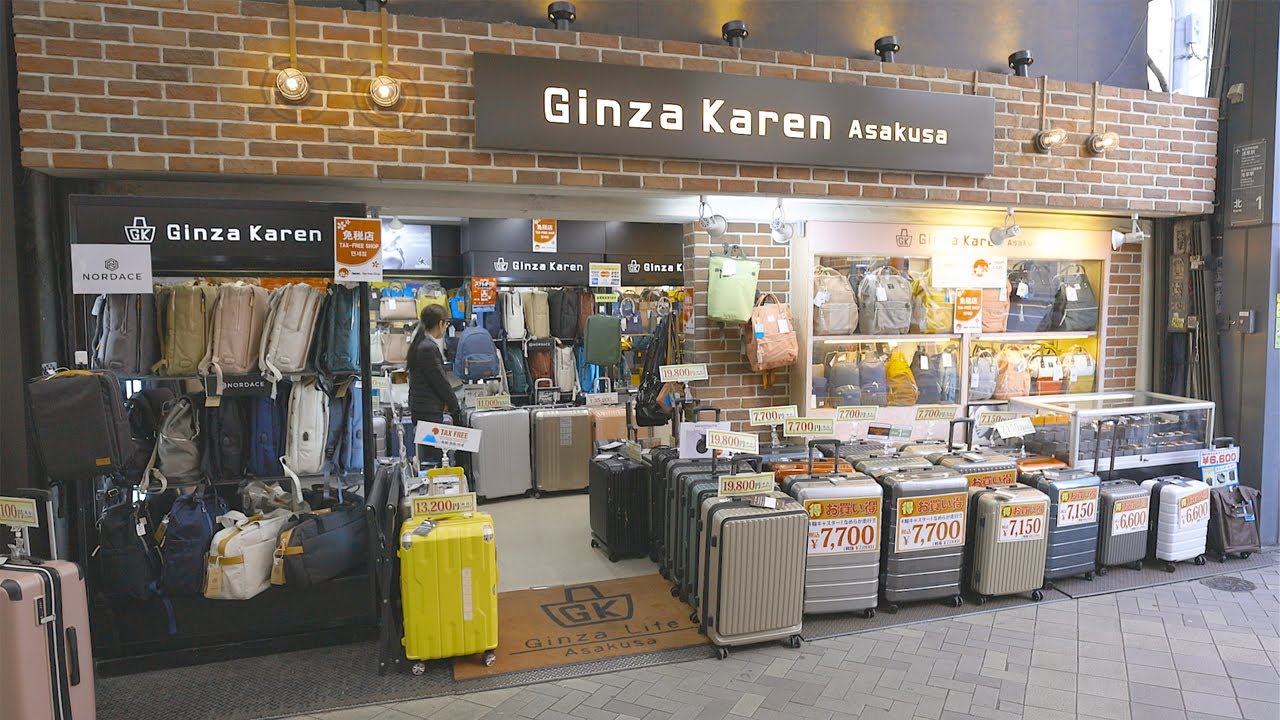
A quiet street corner in Tokyo’s wholesale district does not look like the epicenter of an international travel craze, yet the sidewalk outside Ginza Karen frequently resembles an international departures terminal. Travelers from Singapore, Sydney, Los Angeles, and Taipei cluster on the pavement, hefting stackable polycarbonate shells into taxis or rolling freshly unboxed suitcases straight toward the nearest subway station. Recent travel gear tracking, including analysis published in the FullCleared Report, shows that tourist behavior is increasingly defined by radical inventory management, travelers optimize every cubic inch of packing space to absorb overseas shopping hauls. In Tokyo, that obsession has turned an unassuming merchant into an unexpected pilgrimage site.
The shop’s proposition is shockingly simple: an entire showroom of suitcases sold at a flat price of ¥5,500 (tax included, roughly $35 to $38 USD depending on exchange rates). While designer luggage brands command hundreds of dollars for basic spinners, Ginza Karen thrives by serving a specific, desperate demographic: tourists who entered Japan with one suitcase and realized on day five that their tax-free shopping hauls would never fit inside it.
📌 Key Takeaways:
- The Core Model: Ginza Karen charges a fixed price of ¥5,500 for nearly all standard hardshell suitcases across carry-on and check-in sizes.
- The Behavioral Driver: Weak yen exchange rates and aggressive Tokyo shopping sprees drive tourists to buy secondary luggage rather than paying expensive international parcel shipping fees.
- The Durability Reality: The bags survive typical long-haul flights well, though lightweight ABS plastic shells and entry-level spinner casters sacrifice high-end finish for disposable utility.
The Bakurocho Storefront That Broke Tourist Packing Routines
Despite its brand name, Ginza Karen is not located amid the luxury boutiques of Ginza’s Chuo Dori. The storefront sits in Nihombashi-Bakurocho, a historic textile and wholesale quarter in Chuo City known more for garment distributors than high-end retail. For decades, wholesale shops here serviced domestic merchants with volume discounts. Ginza Karen operated quietly within this network until social media travelers caught on to its flat-pricing formula.
Inside the compact, multi-level shop, the sales floor is stripped of retail pretense. Rows of brightly colored hardshell cases line every wall from floor to ceiling. Pastel pinks, deep navy tones, brushed metallics, and textured blacks are stacked four units high. There are no commission-hungry sales pitches and no tiered pricing charts based on aesthetic trim. You pick a size, choose a color, pay ¥5,500 at the counter, peel off the protective plastic film, and wheel it out onto the street.
The business model bypasses conventional luxury retail margins. By sourcing unbranded or house-branded ABS and polycarbonate-blend shells directly from overseas manufacturers in immense volume, the shop operates on razor-thin wholesale margins offset by rapid inventory turnover. During peak cherry blossom and autumn foliage travel seasons, store clerks routinely unpack fresh shipping crates directly onto the sidewalk to meet customer lines before the stock even reaches display shelves.
How the 5,500 Yen Suitcase Solved Tokyo's Souvenir Crisis
Anyone who spends a week in Tokyo knows the souvenir trap. A walk through Don Quijote, an afternoon browsing character goods in Akihabara, and three stops at departmental food halls yield boxes of Tokyo Banana, skin-care serums, limited-edition sneakers, and anime figures. By mid-trip, standard luggage compartments reach maximum density.
Shipping packages home via Japan Post or international private couriers can run between ¥12,000 and ¥25,000 for a single medium-sized box, with delivery times stretching weeks. Meanwhile, most international transpacific and European carriers permit two free checked bags per economy passenger, or charge between $75 and $100 for an additional piece. Purchasing a ¥5,500 suitcase and checking it as a second piece of baggage saves travelers hundreds of dollars while delivering items home on the same flight.
Travelers now plan their itineraries around this specific hack. Forums on Reddit's r/JapanTravel and travel TikTok feeds document visitors packing half-empty bags upon arrival at Narita or Haneda, intentionally scheduling a mid-vacation trip to Bakurocho to secure a dedicated "souvenir trunk." The transaction functions less like a permanent luxury purchase and more like an ultra-cheap, wheeled shipping container that you happen to keep.
Field Testing Durability: Wheels, Zippers, and TSA Locks Under Stress
Low prices naturally breed skepticism. Can an overseas flight survive an unbranded bag bought for the price of a mid-tier izakaya dinner? Real-world testing reveals clear boundaries between where Ginza Karen suitcases excel and where budget components show their limits.
The exterior shells are composed primarily of vacuum-formed ABS plastic, occasionally blended with a thin polycarbonate veneer. ABS provides solid rigidity and resists punctures, though it lacks the flex-recovery of pure virgin polycarbonate seen on premium Rimowa or Samsonite cases. In airport baggage handling tests, involving a typical 12-hour route from Tokyo Narita through US customs, the shells endure standard conveyor belt impacts and tarmac drops without cracking. Deep surface scuffs and cosmetic friction marks do appear quickly on high-gloss finishes, making textured matte models the smarter pick.
The hardware presents a mixed picture:
- Hardshell Spinner Wheels: The dual-wheel casters glide smoothly across polished airport linoleum and paved Japanese sidewalks. However, rough asphalt and cobblestones expose their lack of rubberized shock absorption. Heavy loads exceeding 23 kg (50 lbs) cause slight caster drag, though failures mid-transit remain surprisingly rare.
- TSA Lock Durability: The integrated combination locks carry standard TSA certification. The dials are plastic and feel lightweight, but they latch cleanly. Travelers report reliable mechanism retention across multi-leg flights, provided the zipper pulls are fully seated before resetting codes.
- Zippers and Seams: The primary failure risk stems not from drops, but from overpacking. The zipper tape is standard gauge nylon rather than heavy-duty puncture-resistant coil. Forcing a bulging suitcase shut strains the teeth; keeping volume within reasonable limits prevents seam blowouts.

Ginza Karen Versus Don Quijote: The Budget Luggage Showdown
The primary alternative for budget luggage in Tokyo is Don Quijote, the sprawling discount chain found in nearly every major tourist district. While "Donki" offers immense convenience with 24-hour locations in Shinjuku and Shibuya, its pricing structure differs markedly from Ginza Karen's flat-rate model.
| Feature / Metric | Ginza Karen (Nihombashi) | Don Quijote (House Brands) |
|---|---|---|
| Base Price Range | ¥5,500 flat (most models) | ¥8,000, ¥16,000 (entry tier) |
| Shell Construction | Standard ABS / light polycarbonate | ABS, PC blends, or softside polyester |
| Size Availability | 20-inch carry-on to 28-inch check-in | Full range, including expandable models |
| Wheel Quality | 360-degree dual plastic spinners | Hinomoto quiet wheels on select trims |
| Store Experience | Wholesale room, fast counter sales | Crowded mega-store, long tax-free lines |
| Warranty Support | None (final sale) | 1-year domestic manufacturer warranty |
For travelers who demand silent Hinomoto wheel bearings, interior compression dividers, and dedicated laptop sleeves, Don Quijote’s mid-range options make sense. But for raw cargo capacity per yen spent, Ginza Karen undercuts the competition by roughly 40% to 60%.
Carry-On Versus Check-In Sizes on Japan’s Major International Carriers
Choosing the right size at Ginza Karen requires matching the floor stock against airline baggage parameters. The shop typically categorizes its inventory into small (carry-on), medium (mid-check), and large (heavy-check).
The small cases match international cabin dimensions: roughly 55 cm x 35 cm x 25 cm, including wheels and handles. These fit cleanly into overhead bins on All Nippon Airways (ANA), Japan Airlines (JAL), and major US or European carriers. Weighing roughly 2.6 kg (5.7 lbs) empty, they leave ample allowance beneath common 7 kg or 10 kg cabin limits.
The large models measure roughly 75 cm to 78 cm in total linear dimensions, yielding approximately 75 to 85 liters of packable volume. This size sits safely below the standard 158 cm (62 linear inches) oversized baggage threshold enforced by international airlines. Because the bare shell weighs around 3.8 kg (8.4 lbs), travelers can pack roughly 18 to 19 kg of purchases before triggering standard 23 kg (50 lb) economy overweight penalties. Adding basic Japanese travel accessories, such as luggage scales and external strap belts, completes an effective, low-cost transit setup.
Navigating Stock Depletion and Purchasing Realities in Nihombashi
Shopping at Ginza Karen requires adjusting to practical storefront realities. The shop's viral notoriety means stock rotates fast, and popular muted colors like matte sage, slate gray, and cream often sell out by early afternoon. Bold hues, neon pastels, and bright metallics tend to remain in stock longer.
The business primarily operates during standard day hours, typically opening around 10:00 AM and closing by early evening. While payment terminals accept major credit cards (Visa, Mastercard, and JCB) along with transit IC cards, travelers should verify terminal connectivity during peak rush periods. The staff speaks functional retail English, tailored to answering basic dimension queries, unboxing pieces, and completing payment quickly.
Purchases are final. There is no international warranty network, no return desk, and no component repair service. If a wheel cracks two years later during a trip through Chicago, replacing the suitcase is on you. Buyers treat the transaction as an affordable travel utility rather than a lifetime heirloom.
Frequently Asked Questions (FAQ)
Q1: Where exactly is the Ginza Karen store located?
A1: Despite the name "Ginza," the primary storefront is situated in Nihombashi-Bakurocho (Chuo City, Tokyo), near Bakurocho Station (JR Sobu Rapid Line) and Bakuroyokoyama Station (Toei Shinjuku Line). It is not in the luxury Ginza shopping district.
Q2: Is every single suitcase in the store 5,500 yen?
A2: The vast majority of standard hardshell suitcases across carry-on, medium, and large dimensions sell for a flat ¥5,500. Occasional specialty designs, oversized trunks, or premium hardware trims may carry slightly higher price tags, clearly marked on the floor.
Q3: Will airlines accept these suitcases as checked luggage without breaking them?
A3: Yes. Hundreds of international travelers check these bags daily on long-haul routes. While cosmetic scuffs occur quickly, the ABS/polycarbonate blend withstands normal baggage transit. To avoid structural failure, do not force zippers over capacity.
Q4: Does Ginza Karen offer tax-free shopping for tourists?
A4: Ginza Karen operates primarily on a straight flat-rate model that includes local Japanese consumption tax in the advertised ¥5,500 sticker price. Inquire at the register with your passport regarding current tax-free processing status, but the baseline pricing remains fixed.
The True Cost-Benefit Equation for Global Travelers
Ginza Karen’s enduring popularity highlights a shift in modern travel habits. High baggage fees, favorable tourist exchange rates, and hyper-dense retail environments create unique luggage demands. Travelers increasingly view luggage through a utilitarian lens: a suitcase is not a status symbol, but a tool for transit.
For frequent business flyers who log 100,000 miles annually, investing in aluminum-magnesium frames and precision ball-bearing wheels remains sensible. But for tourists standing on a Tokyo street corner with three shopping bags of snacks and no room left in their luggage, Ginza Karen provides the fastest, most economical exit route from souvenir overload. For ¥5,500, it solves an immediate, practical problem, and rolls all the way home.
