The Secret Mistake Ruining Your Simmered Black Cod and the Chef Fix
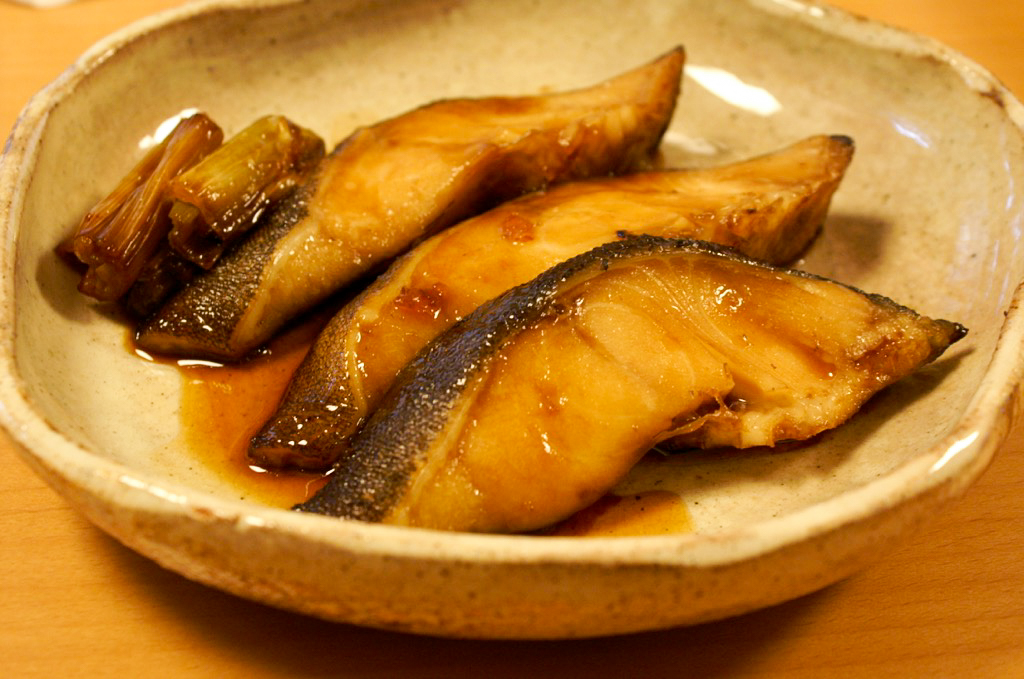
Home cooks often buy pristine sablefish, drown it in soy sauce and sugar, and wonder why the result tastes cloudy, muddy, or disintegrates into oily mush. Sablefish, known across Japan as gindara, carries one of the highest fat profiles in the marine world, clocking in at roughly 15 to 20 grams of lipids per 100-gram fillet. When treated like lean whitefish such as cod or sea bass, those delicate omega-3 fats rapidly oxidize over heat, while surface proteins bleed out into the braising liquor, turning what should be a shimmering jewel of Japanese gastronomy into a lackluster stew.
The secret behind the velvety, lacquer-glazed gindara nitsuke served in Tokyo kappo counters lies not in rare pantry ingredients, but in a precise 10-second preliminary thermal shock combined with calculated fluid dynamics. Once you understand the physical chemistry of simmered black cod, producing an authentic izakaya style preparation in a domestic kitchen requires less than 20 minutes from cutting board to table.
📌 Key Takeaways:
- The Fatal Prep Error: Skipping shimofuri parboiling leaves oxidized surface fats, slime, and denatured blood proteins intact, contaminating the sauce with fishy notes.
- The Master Broth Formula: Professional kitchens build sweet soy simmer sauce around a balanced 1:1:1:2 volumetric baseline of soy sauce, mirin, sake, and traditional dashi broth or water.
- Mechanical Heat Control: A wooden drop lid (*otoshibuta*) forces the braising liquid into rolling convection currents, basting the fish without requiring damaging spatula turns.
The Critical Prep Step Almost Every Home Cook Skips
The fatal flaw in Western sablefish recipe executions happens before the fish ever touches the pan. Sablefish skins harbor thick layers of mucin, microscopic scales, and residual surface hemoglobin that breaks down into trimethylamine during storage. When home cooks place cold, raw fillets directly into simmering broth, these compounds dissolve directly into the cooking medium, permanently locking in off-flavors.
Japanese chefs resolve this through shimofuri (frosting), a brief thermal blanched shock that clarifies the protein. The technique takes its name from the way the fish surface instantly turns opaque and white, resembling winter frost.
To execute it properly, bring a pot of water to roughly 85°C to 90°C (just below a rolling boil). Submerge the fish slices for exactly 5 to 8 seconds, then instantly plunge them into a bowl of ice water. The rapid temperature delta contracts the skin and solidifies coagulated surface albumin. Using your fingertips or the soft edge of a damp paper towel, gently scrape away the grey film, trapped blood along the spine, and stubborn micro-scales under cold running water. This leaves behind pristine flesh that absorbs seasonings cleanly without shedding grey froth into the sauce.
Decoding the Master Broth Ratio: Sake, Mirin, and Soy
Simmered fish, or nitsuke, relies on a reductive broth that walks a knife-edge between savory depth and clean sweetness. Unlike long-simmered Western braises, a Japanese braised fish requires aggressive, rapid cooking in a minimal volume of liquid. If there is too much liquid, the fish boils and turns waterlogged; if there is too little, the sugars scorch before the core hits temperature.
The golden foundation of high-end nitsuke rests on four essential components: Japanese dark soy sauce (koikuchi), pure fermented mirin (avoiding corn syrup substitutes labeled mirin-fu), dry cooking sake, and filtered water or traditional dashi broth. Kombu dashi lends umami without competing against the fish, though many legacy kitchens in Kanagawa and Hokkaido rely solely on water and sake to let the sablefish's natural sweetness lead.
| Component | Standard Izakaya Ratio | Functional Culinary Role |
|---|---|---|
| Sake (Dry Rice Wine) | 2 Parts (100 ml) | Evaporates volatile odorants; softens muscle fibers. |
| Water or Kombu Dashi | 2 Parts (100 ml) | Controls salinity and regulates rapid evaporation rates. |
| Hon-Mirin | 1 Part (50 ml) | Provides complex glucose sweetness; tightens outer flaking. |
| Koikuchi Soy Sauce | 1 Part (50 ml) | Provides primary salinity, deep color, and amino acids. |
| Granulated Sugar | 0.5 Part (15, 20 g) | Creates gloss and promotes early sauce caramelization. |
Add 4 to 6 fresh ginger slices directly into this mixture. Ginger serves as more than an aromatic accent; gingerols bind to sulfur compounds released during heating, keeping the braise bright and clean.
The Physics of the Otoshibuta Drop Lid
Cooking fish in a standard pan with an ordinary high-domed lid causes condensation to drip back down, diluting the sauce and steaming the fish unevenly. Cooking with no lid at all leaves the top half of the fillet exposed and dry while the bottom overcooks. Flipping the fish with a spatula is out of the question; tender sablefish flakes along intramuscular septa lines at the slightest touch.
The solution is the drop lid otoshibuta. A traditional wooden disc sized roughly one inch smaller than the pan's inner diameter, the drop lid rests directly against the surface of the simmering broth and fillets.
As the liquids hit a lively boil, the underside of the lid traps rising steam bubbles. This forces the liquid to circulate upward, washing over the top of the fish in continuous foaming cascades. The result is total heat coverage and steady seasoning transfer without disturbing the structural integrity of the fish.
If a traditional cedar lid is not in your cabinet, cut a parchment paper circle to match your skillet diameter, cut a small vent hole in the center, and press it directly on top of the bubbling liquid.
Achieving Silky Fish Texture Through Controlled Reduction
Sablefish possesses high concentrations of collagen between its myotome muscle sheets. Cooking it too gently over extended periods dissolves this connective structure entirely, leaving an oily puddle. Simmering it too violently scorches the sugars before the heat penetrates the center.
The master workflow follows a strict two-stage heat profile across roughly 12 to 14 minutes:
- The Primary Simmer (8 to 9 minutes): Bring the sake, water, sugar, and half of the soy sauce to a boil over medium-high heat. Lay the parboiled sablefish cutlets skin-side up in a single layer. Add the ginger slices. Drop the otoshibuta into place. The liquid should bubble actively, throwing foam against the edges of the lid.
- The Glaze Reduction (4 to 5 minutes): Remove the drop lid. Add the remaining soy sauce and mirin. Adding these finishing liquids in the second half protects their delicate aromatic compounds from cooking off and introduces fresh sugars right as reduction accelerates.
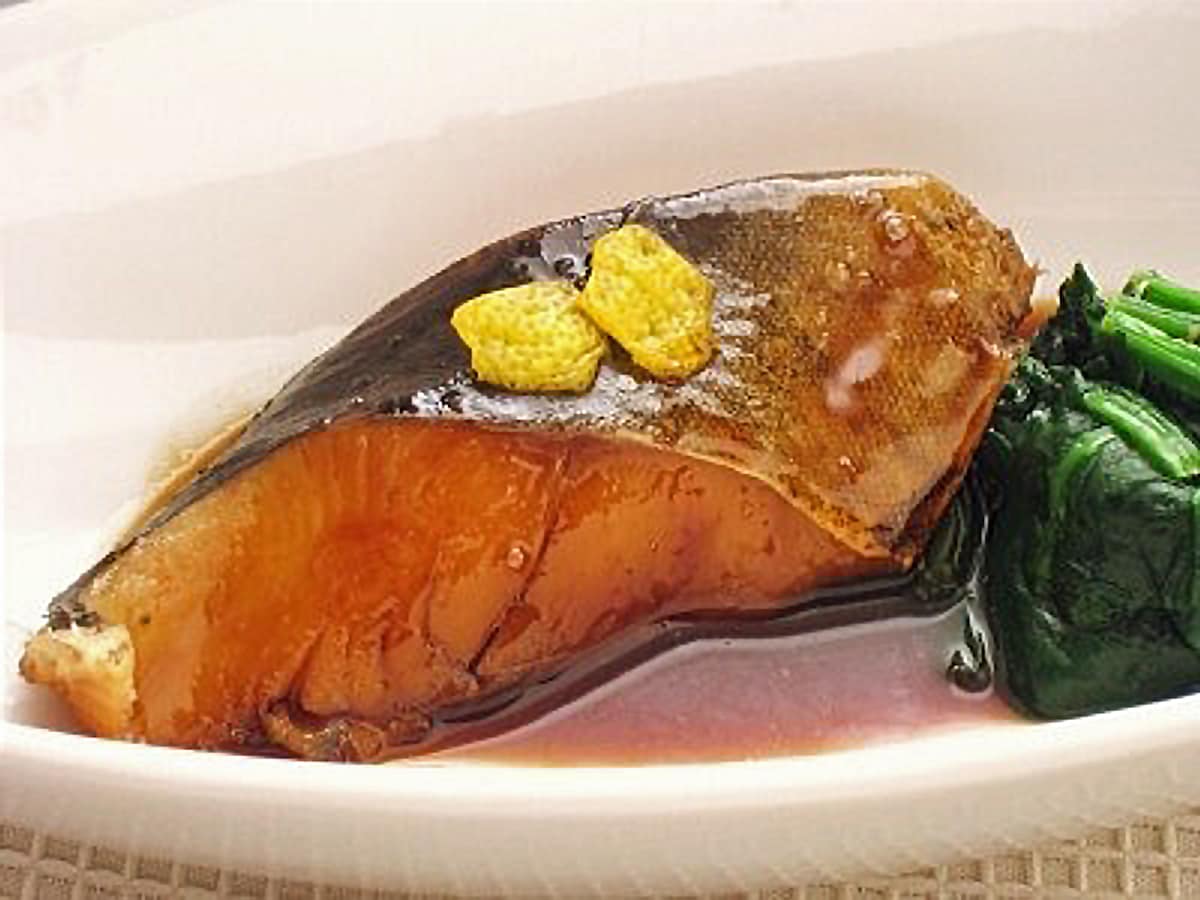
- Basting Finish: Tilt the skillet slightly. Use a large spoon to baste the thickening syrup over the exposed skin. When the reduction glaze technique produces tight, viscous bubbles and the sauce coats the back of a spoon, cut the flame immediately.
Residual heat will carry the internal temperature of the fish to its optimal range of 52°C to 55°C, yielding that prized, buttery, silky fish texture that separates restaurant-grade gindara from rushed weeknight attempts.
Plate Presentation and Serving Traditions
Transfer the sablefish to wide, shallow ceramic bowls using an offset spatula supporting the fillet from underneath. Spoon a pool of the reduced glaze over the dark skin until it gleams under ambient light.
Top the fillet with shiraga negi, scallion whites sliced lengthwise into gossamer silk threads and soaked in ice water to curl. The sharp, crisp bite of raw scallion cuts through the rich subcutaneous fat of the fish. Pair it alongside steamed short-grain rice and a dry, acidic sake like a Junmai or Karakuchi to reset the palate between bites.
Frequently Asked Questions (FAQ)
Q1: Can I use frozen sablefish fillets for this recipe?
A1: Yes, provided they are thawed slowly in the refrigerator overnight. Pat them thoroughly dry before performing the 5-second shimofuri blanch. Avoid rapid microwave defrosting, which destroys the delicate fat pockets in sablefish flesh.
Q2: Why not add all the soy sauce and mirin at the beginning?
A2: High early concentrations of sodium draw out moisture too quickly through osmotic pressure, drying out the fish interior. Staggering the soy sauce ensures gentle seasoning early on, while the late addition of mirin provides an unburned, glossy sheen.
Q3: What can I substitute for sablefish if it is unavailable?
A3: Halibut, Chilean sea bass, or thick cuts of black rockfish work well. If substituting leaner whitefish like Pacific cod, reduce the simmering time by 3 to 4 minutes, as lower fat contents leave lean fish prone to drying out quickly.
Mastering Traditional Nitsuke in the Modern Kitchen
Simmering black cod to izakaya standards does not require decades of apprenticeship or esoteric tools. It demands respect for fish physiology and basic culinary mechanics.
By executing a brief, deliberate thermal blanch to purge surface impurities, maintaining the balanced 1:1:1:2 braising foundation, and letting a parchment drop lid circulate the heat, you eliminate every common point of failure. The result is sablefish that holds its shape on the plate yet separates into melting, savory flakes at the touch of a chopstick.
