The Secrets Behind Starts Publishing Bunko's Formula for Maximum Emotional Impact
Walk through any major bookstore chain in Tokyo, Nagoya, or Osaka, and the displays targeting secondary school students share an unmistakable visual code: pastel skies, silhouettes of uniform-clad teenagers standing beneath cherry blossoms or twilight clouds, and bold belly-band wraps declaring how many minutes into reading tears will fall. At the center of this cultural wave sits Starts Publishing Bunko, an imprint that turned teenage sorrow into one of Japanese publishing's most dependable commercial engines. As detailed in a recent PR TIMES Report detailing their literary contest expansions, the publisher continually retools its talent pipeline to capture the exact anxieties keeping modern adolescents awake at night.
The label does not treat tearjerkers as accidental lightning strikes. Instead, it runs an editorial operation tuned to the digital reading habits of Generation Z, turning mobile-first melodrama into physical paperbacks that dominate Japanese youth bestseller lists.
📌 Key Takeaways:
- The Editorial Formula: Starts Publishing Bunko structures its pacing around rapid emotional hooks developed on mobile web-novel platforms like Noichigo and Berry's Cafe.
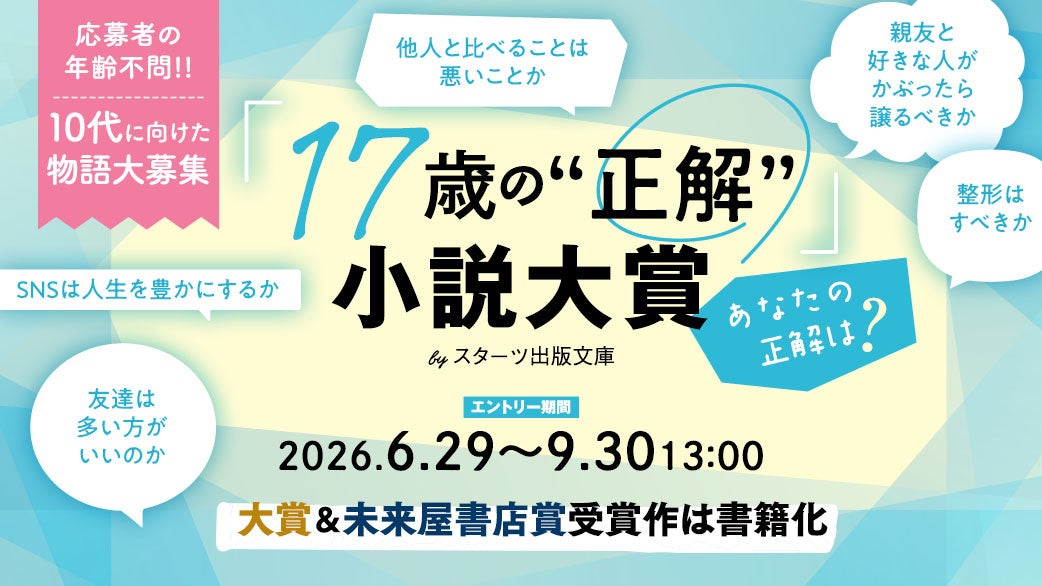
- The Talent Pipeline: Rather than relying entirely on established authors, the label extracts grassroots writers through curated competitions like the Starts Publishing Bunko Grand Prize and themed contests like "The 17-Year-Old's 'Correct Answer'" award.
- Retail Strategy: Aggressive cross-publisher campaigns with houses like Poplar Publishing and bookstore chains such as Miraiya Bookstore sustain retail shelf visibility against digital entertainment alternatives.
The Architecture of Teen Resonance in Tokyo Bookstores
The term *nakeru* (泣ける), meaning "makes you cry", functions as more than a casual reader review in Japan. In youth marketing, it is a primary product classification. Walk into a Miraiya Bookstore or Kinokuniya, and entire gondolas are designated specifically for emotional YA fiction. Starts Publishing Bunko mastered this retail shelf presence by addressing a specific demographic: junior high and high school readers who feel alienated by dense literary fiction yet seek heavier emotional weight than conventional school-comedy light novels provide.
The label's hits rely on clear, high-stakes premises. Protagonists often navigate terminal illness, supernatural time slips that prevent tragic accidents, or unspoken feelings that surface right before graduation. The dialogue avoids archaic phrasing, matching the direct, unadorned cadence of modern Japanese teenage speech. Sentences stay brief. Chapters rarely exceed ten pages, allowing students to finish full scenes during short train commutes between cram school sessions. By packaging grief in clean, accessible prose, the label offers adolescent readers an emotional release valve within a rigid academic culture.
From Web Platforms to Print: The Editorial Blueprint
Starts Publishing did not enter the literary market as a legacy house. Its foundation rests on digital user communities, notably mobile novel platforms Noichigo and Berry's Cafe. Long before an editor greenlights a manuscript for print, thousands of digital readers have already road-tested its core emotional beats.
Online readership metrics inform editorial decisions. When readers drop off at chapter three, authors adjust pacing. When a specific confession scene triggers spikes in user comments and bookmarking, editors know that dynamic belongs on the back-cover blurb. The physical paperback becomes an upgraded souvenir of a verified viral hit. This dynamic separates the imprint from traditional publishers who commission books on instinct and hope the market responds. Starts Publishing Bunko prints stories whose emotional resonance has already been mathematically validated on digital screens.
A Decade of Growth: Milestones Across the Bunko Line
Celebrating its tenth anniversary across 2025 and 2026, Starts Publishing Bunko has shifted from a scrappy web-to-print experiment into an established institution within Japanese light literature. The imprint's operational timeline reflects sustained adaptation to shifting teen media consumption.
| Timeframe | Milestone Event | Industry Impact |
|---|---|---|
| 2015, 2016 | Founding of Starts Publishing Bunko imprint | Bridged the gap between mobile web romances and conventional light literature for female teens. |
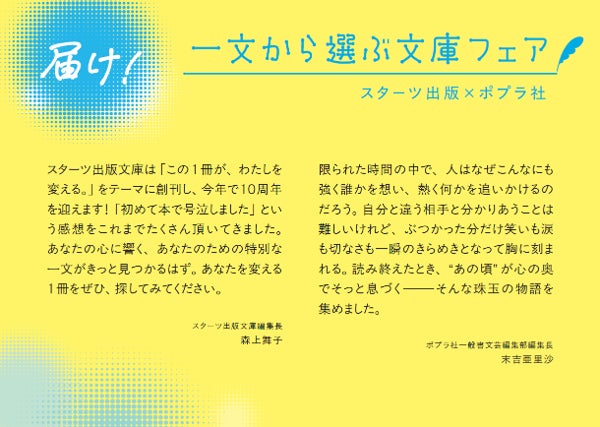
| October 2025 | Joint fair with Poplar Publishing ("Deliver! Choose a Bunko from One Sentence") | Co-marketing initiative under CEOs Shuichi Kikuchi and Hiroki Kato placed youth paperbacks across nationwide physical stores. |
| December 2025 | 10th Anniversary cross-promotional tie-in with manga hit *Blue Period* | Expanded reader crossover between mainstream art manga enthusiasts and YA melodrama paperbacks. |
| May 28, 2026 | Release of double-award winner Ketsumatsu wa Kimi no Mono | Secured top honors at the 10th Starts Publishing Bunko Grand Prize and the Miraiya Bookstore Award under President Yukiharu Sekine. |
| June 29, 2026 | Launch of "The 17-Year-Old's 'Correct Answer'" Novel Grand Prize | Offered a ¥300,000 cash prize to surface stories exploring late-adolescent moral dilemmas and existential pressure. |
The Retail Frontlines: From Miraiya Bookstores to Poplar Collaborations
Paperback imprints cannot survive on digital goodwill alone. In Japan, physical distribution remains critical for students who lack credit cards and purchase entertainment using cash allowances. Starts Publishing systematically coordinates with retail chains to dominate floor space.
The double-award victory of Ketsumatsu wa Kimi no Mono: Subete ga Tsunagaru Itsutsu no Monogatari in May 2026 demonstrated this distribution synergy. By earning both the in-house Grand Prize and the Miraiya Bookstore Award, the title received automatic prime placement across hundreds of mall-anchored Miraiya locations. Clerks hand-lettered recommendation cards detailing personal reactions to the plot, a grassroots merchandising style that Japanese teen shoppers trust far more than standard promotional posters.
Cross-publisher alliances add further distribution weight. In late 2025, Starts Publishing paired with rival house Poplar Publishing for a nationwide retail initiative titled "Deliver! Choose a Bunko from One Sentence." Rather than displaying book covers, stores presented wrapped volumes featuring only a single evocative sentence on the display jacket. Shoppers selected books based strictly on the emotional tone of that lone line. The project cut through promotional clutter, driving strong sell-through rates among adolescent browsers who normally bypass conventional book racks.
Why Modern Adolescents Gravitate Toward High-Stakes Catharsis
The runaway popularity of Japanese crying novels reflects real social realities. Contemporary Japanese high schoolers navigate intense academic testing, school peer dynamics, and constant social media monitoring. Spaces where they can openly express vulnerability remain rare.
Tearjerker fiction provides an authorized, private space for crying. In psychology, voluntary exposure to tragic fiction functions as controlled emotional processing. By experiencing grief alongside characters confronting mortality or separation, readers experience catharsis without personal danger. The grief has a clear beginning, middle, and end within 250 pocket-sized pages. When the reader closes the volume, the crisis resolves, leaving behind a clean slate.
Who Should Read Starts Publishing Bunko (And Who Should Pass)
Understanding whether these books fit your reading preferences comes down to narrative expectations:
Ideal Profiles:
- Japanese language learners at upper-intermediate levels (JLPT N3, N2): The clean syntax, modern everyday vocabulary, and conversational cadence make these books accessible entry points into unadapted native reading.
- Fans of focused emotional melodrama: Readers who appreciate titles like I Want to Eat Your Pancreas or Makoto Shinkai films will appreciate the pacing and emotional focus.
- Commuters wanting low-friction reads: Short chapter divisions and compact physical trim sizes fit urban travel routines effortlessly.
Risk Flags (Who Should Skip):
- Readers looking for complex literary prose: If you seek dense figurative language, intricate subtext, or classic literary weight along the lines of Osamu Dazai or Yukio Mishima, the straightforward style will feel repetitive.
- Skeptics of high-concept romance tropes: Narratives frequently lean on incurable illnesses, magical realism resets, and sudden separations. Those who dislike overt sentimentality will find the story beats predictable.
Frequently Asked Questions (FAQ)
Q1: What does "bunko" mean in the context of Japanese publishing?
A1: Bunko refers to A6-sized paperback books (roughly 4.1 x 5.8 inches). Designed to be portable and affordable, they typically retail between ¥600 and ¥850, making them cheap enough for middle school and high school students to purchase using monthly allowances.
Q2: Are Starts Publishing Bunko titles available in English translation?
A2: A small selection of mega-hits receive official manga or light novel adaptations licensed by Western publishers, but the vast majority of the imprint's library remains available only in original Japanese. However, their straightforward syntax makes them common recommendations in online Japanese language-learning communities.
Q3: How does Starts Publishing Bunko differ from mainstream light novel labels like Dengeki Bunko?
A3: Mainstream light novel labels traditionally emphasize fantasy, science fiction, anime-style illustrations, and male demographics. Starts Publishing Bunko emphasizes contemporary real-world settings, emotional relationship drama, subdued watercolor cover art, and narratives aimed primarily at young female and general teenage audiences.
The Next Chapter for Japanese Light Literature
The label's newest competition, "The 17-Year-Old's 'Correct Answer'" Novel Grand Prize, shows how the editorial desk intends to evolve through 2026 and beyond. Launched under President Yukiharu Sekine, the contest focuses on adolescent uncertainty and the search for identity rather than basic romantic tragedy. By steering emerging writers toward internal moral conflict, the house is widening its thematic range while preserving its signature emotional punch.
Adolescent readers may change their digital apps and media habits, but the hunger for an uninhibited, private cry remains steady. As long as teenagers face the quiet stresses of growing up, the pastel paperbacks of Starts Publishing Bunko will continue flying off bookstore shelves.
