The Stephan Jost Era Fact-Check: How the AGO Shifted from Civic Museum to Cultural Flashpoint
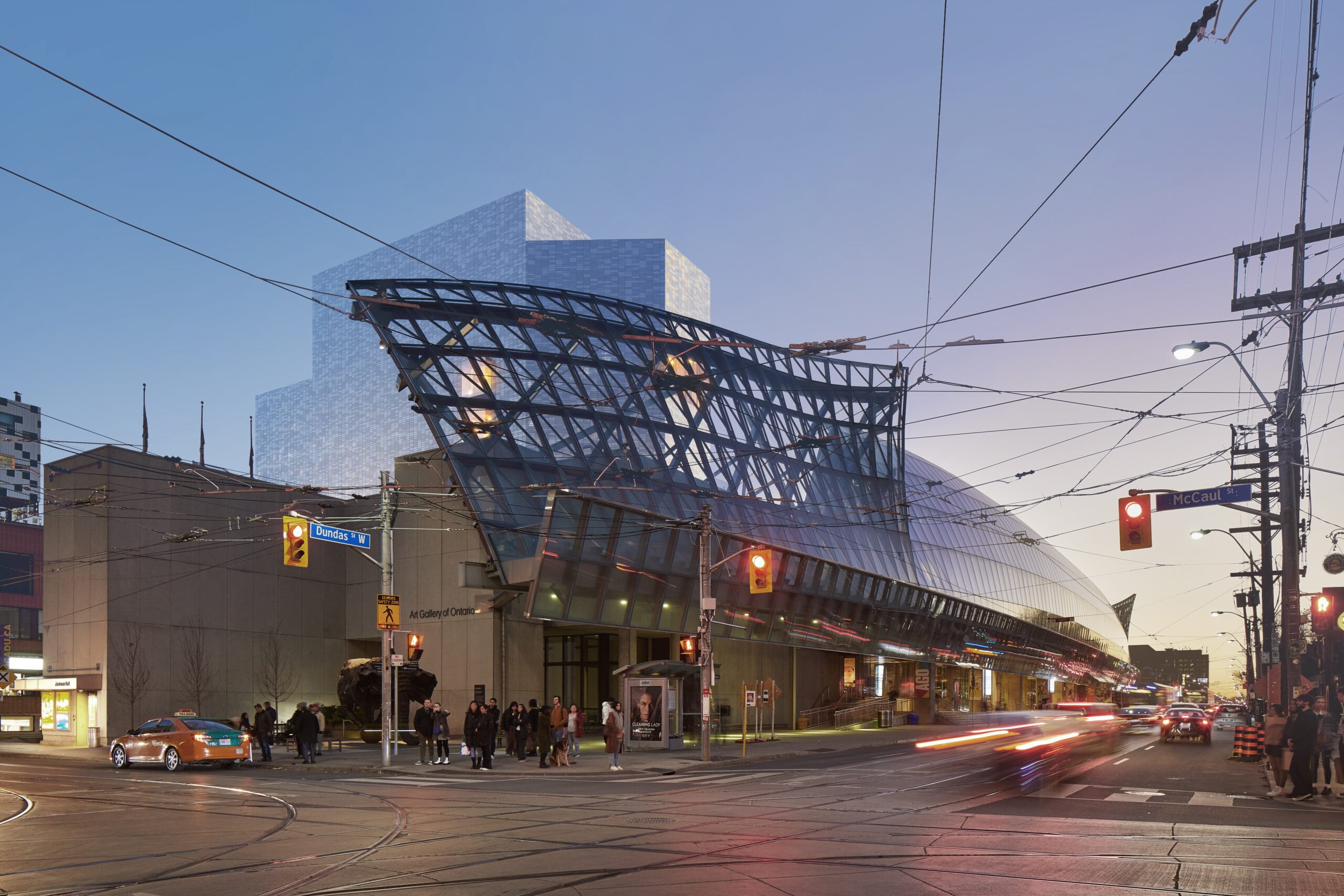
When Stephan Jost announced on September 1, 2026, that he would step down as director and chief executive of the Art Gallery of Ontario, the news arrived less as a routine executive departure and more as the culmination of an escalating institutional crisis. Over his ten-year tenure, Jost reshaped the gallery on Dundas Street into a high-throughput, populist powerhouse, driving annual attendance north of one million visitors through aggressively priced annual passes and international blockbuster exhibitions. Yet behind the record-breaking foot traffic, tensions between box-office populism, curatorial autonomy, and board governance were steadily compounding.
The fracture point arrived earlier in the year. In January 2026, an internal rebellion spilled into public view when a senior curator resigned following the board's refusal to acquire a major work by renowned artist and activist Nan Goldin. Within weeks, an open letter signed by hundreds of cultural workers demanded the removal of the trustee who orchestrated the rejection, as documented in The Art Newspaper Report. Jost's subsequent resignation marked the end of an ambitious experiment in civic accessibility that ultimately collided with the fraught politics of cultural governance.
📌 Key Takeaways:
- Leadership Transition: Stephan Jost announced his departure on September 1, 2026, concluding a decade defined by rapid capital expansion and mounting workplace disputes.
- The Governance Crisis: A closed-door board veto against acquiring Nan Goldin’s work triggered a curator resignation and an open letter demanding the ousting of a prominent trustee.
- The Accessibility Paradox: The AGO’s signature $35 annual pass democratized visitor access, but critics argue it compromised institutional curatorial prestige in favor of populist spectacles.
How the Nan Goldin Acquisition Shattered AGO Board Consensus
For decades, major acquisitions at the Art Gallery of Ontario followed a predictable path: curators evaluated the scholarly and historical value of a work, presented it to an acquisitions committee, and secured board ratification as a standard procedure. That unwritten pact broke down in late 2025 during discussions over a proposed acquisition of Nan Goldin's recent work. Goldin, celebrated globally for documenting queer subcultures, the HIV/AIDS epidemic, and the pharmaceutical roots of the opioid crisis, has long stood at the sharp edge of institutional activism. Her recent advocacy surrounding Palestinian rights and her public critiques of museum sponsors made her an uneasy candidate for conservative members of the AGO board of trustees.
When the acquisition vote reached the committee level, several influential trustees pushed back. In a break from traditional deference to curatorial expertise, a voting bloc led by a high-profile trustee rejected the purchase. The response from curatorial staff was swift and severe. In January 2026, the curator who championed the acquisition submitted an abrupt resignation, explicitly naming board interference as an untenable violation of professional standards.
By February, the dispute had exploded into an international scandal. More than 1,000 artists, curators, and institutional patrons signed an open letter calling for the immediate removal of the trustee who spearheaded the rejection. The letter argued that private donors had overstepped their advisory boundaries, using ideological filtering to overrule trained professionals. The controversy laid bare an uncomfortable truth: while the institution publicly promoted progressive civic values, its final decision-making power remained concentrated in the hands of real estate executives and private wealth managers.
The $35 Annual Pass: Cultural Democratization Versus Curatorial Value
To understand how the AGO reached this impasse, one must examine the economic engine Stephan Jost built after taking the helm in 2016. Arriving from the Honolulu Museum of Art, Jost recognized that traditional civic art museums faced an aging donor pool and stagnant general admission figures. His answer was structural and aggressive: in 2019, the AGO abolished standard ticket tiers and introduced a radical $35 annual pass, alongside completely free admission for visitors aged 25 and under.
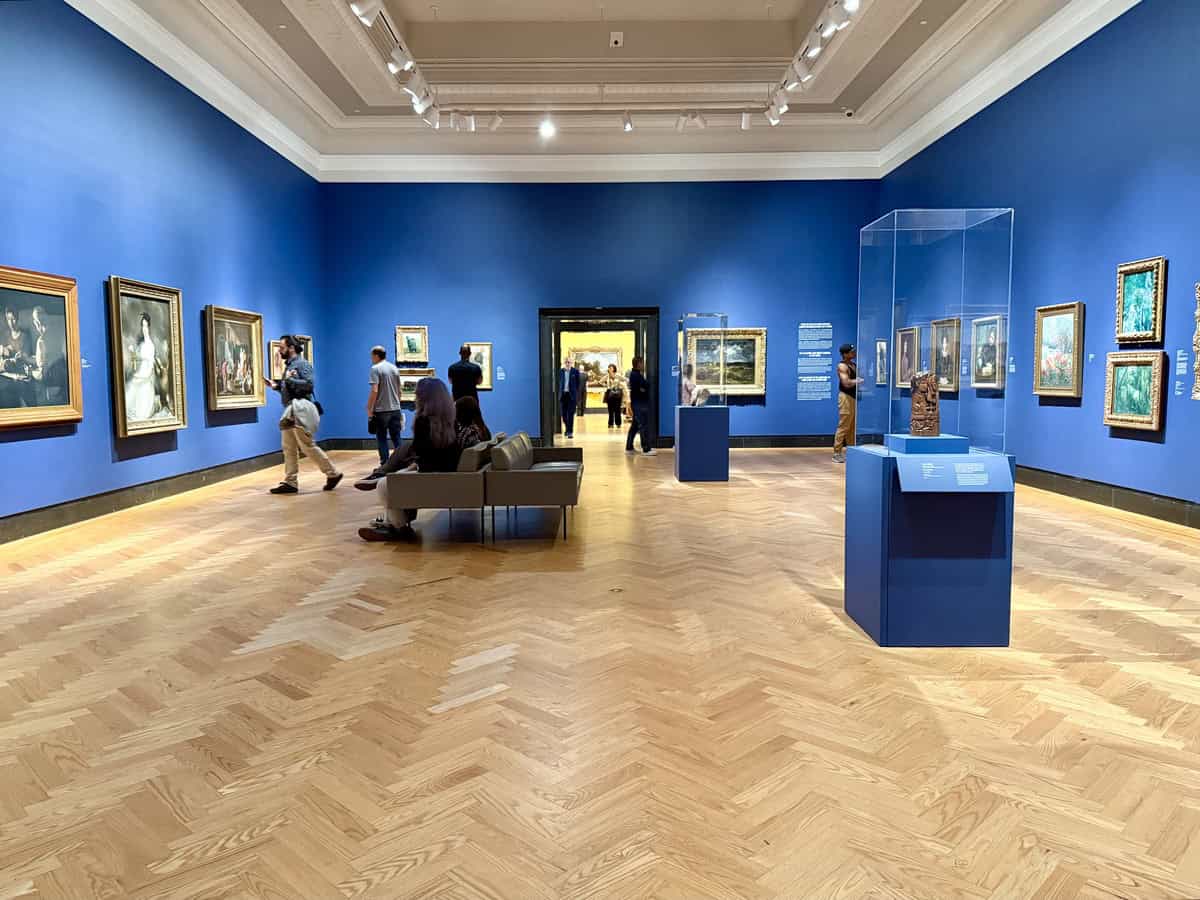
The pricing disruption worked instantly. Within the first year, passholders surged past 100,000, transforming the museum floor from an elite enclave into a vibrant community thoroughfare. Crowds queued along Dundas Street for Yayoi Kusama’s immersive mirror rooms, Guillermo del Toro’s cabinet of curiosities, and massive retrospective surveys of Keith Haring and KAWS. For public advocates, Jost had cracked the code of museum relevance, dismantling the economic barriers that kept younger, more diverse Torontonians outside civic institutions.
Yet inside the gallery's curatorial offices, anxiety deepened. Sustaining the annual pass model required continuous foot traffic, driving a reliance on crowd-pleasing, social-media-friendly exhibitions. Scholarly research projects and acquisitions of politically demanding contemporary works took a backseat to accessible crowd-pullers. Several internal staff members voiced concern that curatorial research was being displaced by experiential marketing designed solely to maintain quarterly subscription renewals.
The Stephan Jost Decade: Financial and Governance Milestones
The transformation of the AGO between 2016 and 2026 produced distinct structural achievements alongside sharp institutional fractures. The following timeline outlines the major inflection points of Jost's administration:
| Timeframe | Policy or Milestone | Institutional Impact |
|---|---|---|
| 2016, 2017 | Appointment of Stephan Jost; Department Restructuring | Realigned staff priorities toward public engagement and digital integration. |
| 2018, 2019 | Launch of $35 Annual Pass & Free Under-25 Entry | Membership doubled; younger demographics spiked, increasing reliance on retail and volume. |
| 2022, 2023 | Announcement of Dani Reiss Modern and Contemporary Gallery | Secured $35 million anchor gift from Canada Goose CEO; added 40,000 square feet of gallery space. |
| March, April 2024 | OPSEU Local 535 Worker Strike | 400+ gallery staff struck for a month, highlighting wage disparities against executive compensation. |
| January, February 2026 | Nan Goldin Acquisition Veto and Open Letter | Curator resignation triggered severe public backlash; artist boycott threats against the board. |
| September 2026 | Stephan Jost Resignation Announced | Search committee initiated for new CEO amid widespread calls for governance reform. |
Labor Battles and the Dani Reiss Expansion
Physical expansion was the crown jewel of Jost’s vision. In 2022, the gallery announced the Dani Reiss Modern and Contemporary Gallery, a 40,000-square-foot extension funded in part by a $35 million gift from Canada Goose chairman Dani Reiss. Designed collaboratively by Diamond Schmitt Architects, Selldorf Architects, and Two Row Architect, the project promised to dramatically increase display space for contemporary art, Indigenous works, and global modernism. Jost pitched the expansion as the definitive completion of Frank Gehry's 2008 redesign.
Yet the physical grandeur clashed with internal labor unrest. In March 2024, more than 400 gallery employees represented by OPSEU Local 535 went on a month-long strike. The union targeted the growing disparity between executive packages and front-line compensation, pointing out that many educators, technicians, and floor staff earned wages below Toronto’s basic cost of living while top executives received significant performance bonuses. The strike forced the museum to shutter its physical doors for weeks, fracturing internal morale.
The strike underscored the financial tightrope walked by major cultural organizations. While capital campaigns for physical structures routinely attract tens of millions from philanthropists seeking naming rights, operating funds to sustain livable wages and specialized curatorial roles remain chronically underfunded. By tying the institution's public image to high-profile real estate growth, leadership alienated the very workers responsible for staging exhibitions.
The Fragile Boundary of Canadian Arts Administration
The governance breakdown at the AGO reflects systemic vulnerabilities across North American arts institutions. Canadian museums operate on a hybrid funding model: they receive substantial public funding from the Ontario Arts Council and the Canada Council for the Arts, but depend heavily on private donors to balance their operating ledgers and build their permanent collections. This structure creates an inherent tension between public accountability and private patronage.
When the board overrode curatorial recommendation on the Nan Goldin acquisition, it crossed a line long considered sacred in Canadian arts administration. Curatorial independence is designed to insulate public institutions from the personal or political preferences of individual donors. Once trustees begin vetoing art based on contentious geopolitical or social issues, the museum ceases to act as an open civic forum.
The open letter from February 2026 was not merely about a single artwork. It questioned the ethical framework of museum governance in Toronto. Artists and cultural organizers across Canada pointed out that as public subsidies remain flat against inflation, board seats have increasingly been filled by real estate titans, venture capitalists, and corporate lawyers whose priorities often run counter to experimental or politically challenging artistic production.
Frequently Asked Questions (FAQ)
Q1: Why did Stephan Jost step down as director of the Art Gallery of Ontario?
A1: Jost announced his resignation in September 2026 after ten years at the helm. His departure followed mounting internal labor unrest, the 2024 OPSEU strike, and public fallout over the board of trustees' decision to veto an acquisition of work by Nan Goldin, which sparked curator resignations and an international open letter demanding trustee ousters.
Q2: What was the controversy surrounding the Nan Goldin acquisition vote?
A2: In early 2026, members of the AGO board of trustees overrode curatorial recommendations and voted against acquiring a major work by Nan Goldin. The decision was widely perceived as political censorship stemming from Goldin’s activism, prompting the resigning curator to cite unacceptable donor interference in institutional decisions.
Q3: How did the $35 annual pass change the Art Gallery of Ontario?
A3: Introduced in 2019, the pass replaced high single-entry tickets with an accessible $35 annual subscription and made entry free for anyone aged 25 and under. It rapidly swelled visitor numbers past one million annually, but curatorial staff argued it shifted the gallery's focus toward commercial, social-media-driven spectacles to keep membership numbers high.
Rebuilding Trust at the Corner of Dundas and McCaul
The Art Gallery of Ontario stands at an institutional crossroads as its board searches for a successor to Stephan Jost. The next director will inherit a physically expanded footprint, modern exhibition galleries, and a sizable base of young passholders. Yet they will also inherit a curatorial department protective of its autonomy, an active union mindful of compensation inequities, and an arts community that will no longer tolerate opaque board interference.
Populism and scholarship need not be mutually exclusive, but reconciling them requires clear boundaries between financial oversight and creative direction. Trustees exist to safeguard institutional solvency, not to function as ideological gatekeepers over permanent collections. As cranes construct the new Dani Reiss wing along Dundas Street, the true challenge facing the AGO lies within its boardroom: proving that a civic museum can welcome the broader public without sacrificing its intellectual integrity.
