The Ultimate Acchonburike Guide: Meaning, Pose, Voice Acting, and Black Jack Lore
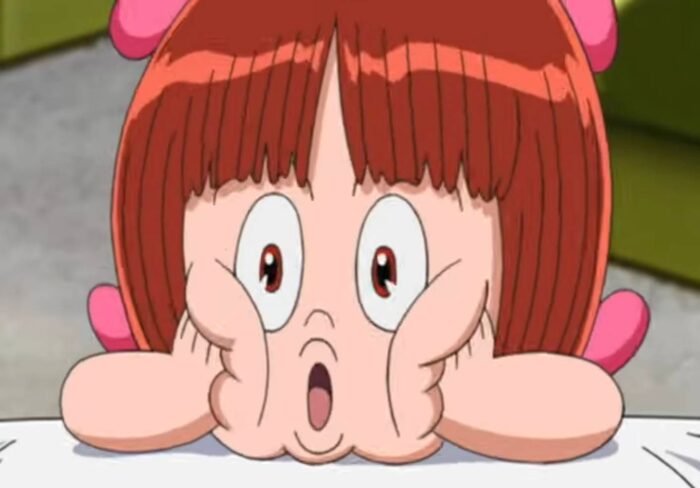
Few hand gestures in Japanese pop culture carry the instant recognition of two tiny palms squishing round cheeks together while a child yells, "Acchonburike!" Born in the pages of Osamu Tezuka’s legendary medical manga Black Jack, this bizarre exclamation has spent over five decades baffling translators and delighting fans. Even in 2026, the phrase refuses to fade. From VTuber reaction streams and social media cosplay poses to gamer memes, exemplified by creative homages in titles like Final Fantasy XIV tracked in community broadcasts like this YouTube Report, the quirky outburst remains a universally understood shorthand for pure, theatrical shock.
📌 Quick Summary:
- The Signature Gesture: A comedic reaction where a character flattens both palms against their cheeks, bulging their mouth outward in exaggerated surprise.
- The Canon Origin: Invented by Osamu Tezuka in 1974 for Pinoko, the miraculous child-companion in the *Weekly Shonen Champion* manga serial *Black Jack*.
- The Linguistic Reality: Despite decades of urban legends alleging German surgical terminology or obscure dialects, the phrase is pure, deliberate nonsense.
The Bizarre Birth of Pinoko in Weekly Shonen Champion
To understand the catchphrase, you have to understand the grotesque miracle of Pinoko herself. Tezuka introduced her in Chapter 12 of Black Jack ("The Teratoma"), published in 1974 within the pages of Akita Shoten's Weekly Shonen Champion.
Pinoko did not begin life as a normal infant. She originated as a teratoid cyst, a parasitic twin residing inside an older patient's body for 18 years, consisting of disorganized organs, teeth, and hair. When other surgeons fled from the horrifying growth, the rogue unlicensed surgeon Black Jack extracted the tissues, built a synthetic frame of artificial bone and soft skin, and assembled a living, walking human girl.
Because her vocal cords and muscular coordination resembled those of an infant despite her inner 18-year-old self-image, Pinoko developed a severe lisp. She routinely swapped her s-sounds for rounded consonants. Tezuka gave her a petulant, explosive personality, insisting she was Black Jack’s legal wife rather than his adopted daughter. Whenever Black Jack dismissed her romantic advances, brought home an attractive female patient, or caught her making an outrageous blunder, Pinoko unleashed her defense mechanism: the cheek-squishing pose paired with a guttural, joyous screech of "Acchonburike!"
| Era & Medium | Key Milestone | Cultural Footprint |
|---|---|---|
| 1973, 1983 (Manga) | Serialization in Weekly Shonen Champion | Pinoko debuts in Chapter 12; readers adopt the gag across schools. |
| 1993, 2000 (OVA Series) | Directed by Osamu Dezaki; Yuko Mizutani cast | Transforms the comic phrase into a gritty, cinematic voice-performance. |
| 2004, 2006 (TV Anime) | 61-episode mainstream television broadcast | Mainstream revival; enters modern internet culture and digital memes. |
| 2010, 2026 (Digital Era) | Cross-media homages, gaming emotes, VTubers | Adopted as an enduring gaming emote archetype and cosplay staple. |
What Does Acchonburike Actually Mean?
Online forums and casual manga readers have spent decades hunting for a hidden linguistic code behind the word. The most persistent theory suggested it was corrupted German medical jargon. Given Tezuka’s background as a licensed physician who wrote detailed surgical procedures, amateur sleuths insisted that "Acchonburike" sprang from German phrases like Ach, so ein Brücke or corrupted Latin anatomical terms.
Tezuka Productions debunked this repeatedly. The phrase possesses no real-world etymology.
According to memoirs and documentation published by Tezuka's editorial peers, the creator invented the sound out of whole cloth. Tezuka wanted an expression that sounded distinctly juvenile, elastic, and physically uncomfortable to pronounce without stretching your lips. The sound mimics an infant attempting to swear or express outrage before mastering adult syntax. The phonetic sequence, combining a sharp glottal stop (Ah), a hard affricate (cchon), and a buoyant finish (burike), forces the speaker's tongue against the palate. Try shouting it while compressing your cheeks with both palms; your facial mechanics naturally produce the warped tone Pinoko made famous.
Busting the Regional Japanese Dialect Myth
Another stubborn rumor claimed the phrase belonged to a regional dialect from Hakata, Nagoya, or northern Tohoku. Japanese television variety programs investigated this claim multiple times, sending film crews to rural prefectures to see if elderly residents recognized the phrase.
The results were completely negative. Dialectologists verified that no linguistic lineage for the term exists in any known Japanese dialect dictionary.
The confusion stems from Pinoko’s broader speech pattern. She regularly swaps standard Japanese sentence-ending particles for childish variations like ~sa or ~yo ne, combined with heavy baby-talk phonology. Non-native speakers and casual Japanese viewers frequently misidentify this manufactured baby-talk idiolect as an actual rural dialect. Tezuka designed her language exclusively to highlight the tragic, comedic irony of her condition: a fully conscious 18-year-old intellect trapped in a voice box that refuses to pronounce adult words.

Yuko Mizutani: The Voice That Immortalized the Cry
While Tezuka put the letters on the printed page, legendary voice actress Yuko Mizutani turned the exclamation into an indelible auditory memory.
Mizutani first took on the role of Pinoko in the acclaimed 1993 OVA series directed by anime auteur Osamu Dezaki. She reprised the character across the massive 2004, 2006 television anime adaptation, cementing how two generations of fans heard Pinoko. Mizutani did not treat the line as an ordinary comedic squeak. She delivered it with an abrasive, rasping cuteness that balanced humor with sheer desperation.
Her delivery required sharp vocal gymnastics: an abrupt intake of air, a harsh snap on the double consonant, and an elongated tail that dropped an entire octave. When Mizutani passed away in May 2016, tributes from manga artists, animation directors, and fans across the world singled out her "Acchonburike" as an irreplaceable piece of anime history. Subsequent voice performers tackling the character for radio dramas and commercial shorts have deliberately modeled their delivery on Mizutani’s exact acoustic rhythm.
Why the Cheek-Squishing Gesture Endures Today
Anime catchphrases usually burn bright during their broadcast season and vanish within three years. "Acchonburike" survived for half a century because it is kinesthetic. It is an action as much as a word.
The gesture predates the viral photo-booth trends of the 1990s and modern smartphone selfie poses. Pressing the palms against the jawline changes the speaker’s facial geometry, turning anyone into an instant caricature. Animators outside Tezuka Productions have paid tribute to the pose across countless franchises:
- Gintama parodied the sequence during medical skits to mock serious medical drama tropes.
- Nichijou and Lucky Star incorporated the hand placement into slapstick visual gags.
- Contemporary video game developers frequently slip the cheek-squish into character idle animations and screenshot poses.
The expression works because it captures raw emotional overload. It is the visual equivalent of an engine blowing its gasket. In an internet culture that trades in exaggerated reaction GIFs and expressive Discord emojis, Pinoko’s manic, cheek-pinching meltdown remains visually unmatched.
Frequently Asked Questions
Is "Acchonburike" an actual word in the Japanese dictionary?
No. The term is completely fictional, created by Osamu Tezuka specifically for Pinoko in his manga *Black Jack*. It does not appear in standard Japanese dictionaries or regional dialect lexicons.
How do you correctly perform the physical gesture?
Place the palms or lower heels of both hands firmly against the sides of your cheeks. Press inward until your lips and cheeks pucker forward, then yell the phrase while widening your eyes in shock.
Why does Pinoko speak with such an unusual voice?
Because she was constructed from a teratoma and given a synthetic body, her muscles and vocal anatomy match that of a toddler, forcing her to speak in extreme baby-talk despite possessing the mind and memories of an 18-year-old.
The Legacy of Tezuka's Comedic Masterstroke
Osamu Tezuka built his reputation on sprawling historical epics and groundbreaking philosophical science fiction, but his survival instinct as a commercial cartoonist always relied on pure character craft. He understood that a medical drama dealing with terminal illness, astronomical surgical fees, and moral corruption needed an emotional pressure valve.
Pinoko was that valve. Her bizarre cry broke the heavy tension of life-or-death operating rooms, humanizing the cold, scarred surgeon who protected her. More than fifty years after her debut in Weekly Shonen Champion, every time a reader, gamer, or cosplayer smashes their cheeks flat and shrieks those four nonsensical syllables, Tezuka's mischievous spirit pulls off another successful operation.
