The Ultimate All-Generations Pokémon Starter Guide: Types, Stats, and Lore
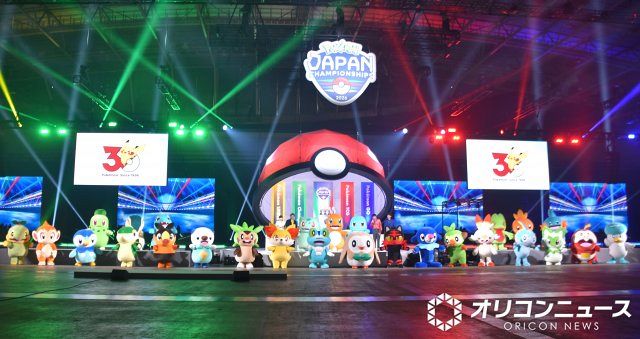
When the competitive community gathered at Pacifico Yokohama for the Pokémon Japan Championships 2026 (PJCS2026), the spectacle outside the tournament hall commanded just as much attention as the double battles on stage. For the first time in the franchise's history, all 27 primary partner Pokémon from nine distinct regions stood assembled side-by-side to mark the Pokémon 30th anniversary celebration. As detailed in the official event coverage from the Yahoo!ニュース Report, this massive retrospective highlighted how a mechanical choice conceived on the original Game Boy in 1996 grew into an enduring gaming tradition.
Every mainline campaign begins with the same choice: Grass, Fire, or Water. That triadic balance establishes game tempo, teaches elemental affinities, and shapes the competitive landscape for years after a cartridge hits shelves. From the simplicity of the early Kanto campaigns to the hyper-specialized toolkit seen across Paldea, evaluating the complete legacy of starter Pokémon requires breaking down base stats, mechanical innovations, and three decades of high-level tournament viability.
📌 Key Takeaways:
- The Historic Gathering: The Pokémon 30th anniversary celebration at the Pokémon Japan Championships 2026 brought all 27 mainline starters together for the first official showcase of its kind.
- Mechanical Evolution: Starter design shifted from straightforward stat sticks in early generations toward specialized role-players driven by custom Hidden Abilities and signature moves.
- VGC Dominance: Tournament play continues to favor utility monsters like Incineroar and Rillaboom over pure offensive powerhouses.
The Fire-Water-Grass Foundation and the 30-Year Design Philosophy
Game Freak built the original RPG loop around rock-paper-scissors clarity. Fire burns Grass, Grass absorbs Water, and Water douses Fire. This elementary dynamic created an immediate tactical baseline that every newcomer could grasp within five minutes of boot-up. Yet beneath that straightforward framework sits an intricate statistical architecture.
In Generation 1, starters functioned as difficulty toggles. Choosing Bulbasaur guaranteed a smooth early game against Brock and Misty. Selecting Charmander forced players into an uphill grind through Mt. Moon. Over three decades, that uneven regional onboarding smoothed out, replaced by refined stat distributions and distinct secondary typings. By the time players stepped into Paldea in Generation 9, the starters were no longer basic training wheels. They arrived out of the box with signature mechanics tailored for competitive play.
Gen 1 to Gen 4: The Blueprint of Competitive Staples
The early eras established the standard benchmarks for what a starter trio should accomplish. Kanto starters Charizard, Blastoise, and Venusaur remain cultural royalty, but their competitive trajectories diverged wildly over the years.
Venusaur established an early blueprint for tactical flexibility. Its Grass/Poison typing provided key defensive resistances, while the introduction of the Chlorophyll ability turned it into a sun-swept offensive menace. Charizard struggled for years under a debilitating quadruple weakness to Stealth Rock before alternate forms breathed new life into its kit. Blastoise took longer to find a distinct niche, ultimately carving out utility through rapid spin and specialized support.
Generation 2 opted for balanced, defensively inclined profiles in Meganium, Typhlosion, and Feraligatr. While beloved for nostalgia, their pure single-typing historically limited their versatility in high-stakes play. Generation 3 fixed this instantly by introducing high-speed dual typings. Swampert emerged as an immediate powerhouse, its Water/Ground typing leaving it with only a single weakness to Grass. Sceptile delivered blistering speed, while Blaziken shattered competitive balance once its Speed Boost ability dropped in Generation 5, getting the Fire/Fighting bird banned from standard tier singles.
Generation 4 refined the formula with Torterra, Infernape, and Empoleon. Infernape combined mixed attacking stats with an exceptional 108 Base Speed, defining the Sinnoh era as the premier fast pivot and wallbreaker.
Gen 5 to Gen 9: Hidden Abilities, Signature Moves, and Power Creep
As the competitive scene formalized, starter design adapted to modern tournament realities. The introduction of Hidden Abilities in Generation 5 altered baseline evaluations overnight. Serperior went from an underwhelming mono-Grass snake to a terrifying setup sweeper courtesy of Contrary Leaf Storm.
Generation 6 doubled down on mechanical disruption. Greninja gained Protean, allowing it to swap typing on every move selection and dominate competitive ladders. Generation 7 introduced Incineroar, which swiftly became the most picked creature in the history of the Pokémon Video Game Championships (VGC). Armed with Intimidate, Fake Out, Parting Shot, and exceptional defensive bulk, Incineroar remains the undisputed king of team positioning.
Generation 8 leaned heavily into battlefield control. Rillaboom received Grassy Surge and the priority attack Grassy Glide, warping tournament playrooms instantly. Cinderace mirrored Greninja's dominance through Libero and Court Change, while Inteleon carved out specialized critical-hit niches.
The Paldea starter evolutions Meowscarada, Skeledirge, and Quaquaval brought this specialized design ethos to its logical peak. Meowscarada possesses Flower Trick, an unmissable physical Grass attack that always results in a critical hit, bypassing defensive stat boosts completely. Skeledirge uses Torch Song to deal heavy special Fire damage while automatically gaining a Special Attack boost with every strike. Quaquaval cycles Aqua Step to deal physical Water damage and boost its Speed consecutively. The era of generic starter moves has fully disappeared.
Final Evolution Base Stat Totals Across All Nine Generations
Examining final evolution base stat totals (BST) reveals consistent design guardrails. Most fully evolved starters land within the 525 to 535 BST window, ensuring baseline parity before abilities, movepools, and typing enter the equation.
| Generation & Region | Final Evolutions | Primary Typing | Base Stat Total (BST) |
|---|---|---|---|
| Gen 1 (Kanto) | Venusaur / Charizard / Blastoise | Grass-Poison / Fire-Flying / Water | 525 / 534 / 530 |
| Gen 2 (Johto) | Meganium / Typhlosion / Feraligatr | Grass / Fire / Water | 525 / 534 / 530 |
| Gen 3 (Hoenn) | Sceptile / Blaziken / Swampert | Grass / Fire-Fighting / Water-Ground | 530 / 530 / 535 |
| Gen 4 (Sinnoh) | Torterra / Infernape / Empoleon | Grass-Ground / Fire-Fighting / Water-Steel | 525 / 534 / 530 |
| Gen 5 (Unova) | Serperior / Emboar / Samurott | Grass / Fire-Fighting / Water | 528 / 528 / 528 |
| Gen 6 (Kalos) | Chesnaught / Delphox / Greninja | Grass-Fighting / Fire-Psychic / Water-Dark | 530 / 534 / 530 |
| Gen 7 (Alola) | Decidueye / Incineroar / Primarina | Grass-Ghost / Fire-Dark / Water-Fairy | 530 / 530 / 530 |
| Gen 8 (Galar) | Rillaboom / Cinderace / Inteleon | Grass / Fire / Water | 530 / 530 / 530 |
| Gen 9 (Paldea) | Meowscarada / Skeledirge / Quaquaval | Grass-Dark / Fire-Ghost / Water-Fighting | 530 / 530 / 530 |
Base stats tell only half the story. The emergence of Hisuian regional starter variants in Pokémon Legends: Arceus reshuffled historical typings completely. Hisuian Decidueye traded Ghost for Fighting, Hisuian Typhlosion gained Ghost coverage, and Hisuian Samurott took on a Dark sub-typing alongside Ceaseless Edge, a signature attack that sets Spikes directly on the opposing field while dealing damage.
Generational Battle Mechanics: Megas, Gigantamax, and Terastallization
Every era introduced temporary power multipliers that upended competitive balance. Mega Evolutions pushed Kanto and Hoenn starters into a 630 to 635 BST bracket. Mega Charizard Y became an instant weather setter with Drought, while Mega Charizard X eliminated its Water weakness by converting into Fire/Dragon with Tough Claws. Mega Venusaur gained Thick Fat, neutralizing two of its primary defensive vulnerabilities.
Generation 8 introduced Gigantamax forms, giving starters devastating secondary effects through G-Max moves. G-Max Wildfire from Charizard and G-Max Vine Lash from Venusaur placed damaging residual field traps that stripped away one-sixth of the opponent's maximum health at the end of every turn for four turns. These residual effects fundamentally reshaped VGC tournament play during the Sword and Shield circuit.
In the current competitive environment, the Terastallization mechanic provides defensive insurance rather than raw statistical boosts. Skeledirge sheds its Dark and Ground weaknesses by Terastallizing into pure Fairy or Normal typing while firing off Unaware-boosted attacks that ignore opposing stat changes. Meowscarada frequently pivots into Grass Tera to turn Flower Trick into an overwhelming single-target nuclear option.
Competitive VGC Tier List and Tournament Meta
Tournament viability rarely correlates with simple personal preference. In the high-stakes doubles format recognized by Play! Pokémon and the Pokémon Japan Championships meta, consistency and utility dictate selection rates.
S-Tier (Meta Defining): Incineroar and Rillaboom occupy an echelon of their own. Incineroar reshapes the speed and damage cadence of every turn via Intimidate and Fake Out cycle resets. Rillaboom dictates field conditions by overwriting rival terrains while providing instant offensive priority via Grassy Glide.
A-Tier (Tournament Proven): Meowscarada, Skeledirge, Primarina, Venusaur, and Charizard remain staple roster picks depending on rule regulations. Primarina's Water/Fairy defensive profile resists dominant Dragon and Fighting threats. Skeledirge functions as the premier answer to setup-heavy archetypes like Dondozo thanks to its Unaware ability.
B-Tier (Situational Specialists): Blaziken, Greninja, Hisuian Samurott, Swampert, and Empoleon operate effectively within specific team architectures. Empoleon's Competitive ability turns opponent Intimidate drops into offensive boosts, giving it sharp anti-meta value against Incineroar.
C-Tier (Struggling in Modern Play): Meganium, Sceptile, and Emboar struggle to keep pace with modern stat allocation and utility thresholds. Without priority moves, standout defensive abilities, or disruptive field control tools, their opportunities in premier tournaments remain severely constrained.
Frequently Asked Questions (FAQ)
Q1: Which starter Pokémon has the highest base stat total without battle gimmicks?
A1: Swampert holds the highest standalone base stat total among fully evolved starters at 535 BST. While Mega Evolutions and battle forms temporarily pushed older starters to 630+ BST, Swampert remains the highest in standard form.
Q2: Why is Incineroar considered the best competitive starter in Pokémon history?
A2: Incineroar combines exceptional defensive stats with an unmatched support toolkit. The combination of the Intimidate ability (lowering opponent Attack on entry), Fake Out (first-turn flinch control), and Parting Shot (stat reduction with tactical switching) allows it to disrupt enemy momentum repeatedly throughout a match.
Q3: How do Hisuian starter variants differ from their standard regional forms?
A3: Hisuian variants feature altered secondary typings, unique stat spreads, and exclusive signature moves. For example, Hisuian Samurott gains Dark typing and Ceaseless Edge, an offensive attack that simultaneously deposits entry hazard Spikes on the opponent's side of the field.
Strategic Takeaways for the Competitive Circuit
Starter evaluation has transformed permanently over thirty years of competitive play. Raw offensive stats no longer guarantee a spot on serious tournament rosters. As demonstrated across recent regional championships, success requires defensive flexibility, entry hazard manipulation, and active board disruption.
For collectors and casual players, the gathering of all 27 starters during the 30th anniversary celebrations offers a reminder of the franchise's creative consistency. For tournament competitors preparing for high-level events, the lesson is far more pragmatic. The viability of any partner Pokémon depends on the utility it brings to the team the moment it hits the field.
