The Ultimate Shrimp Tomato Cream Pasta Guide: Ingredients, Variations, and Common Mistakes
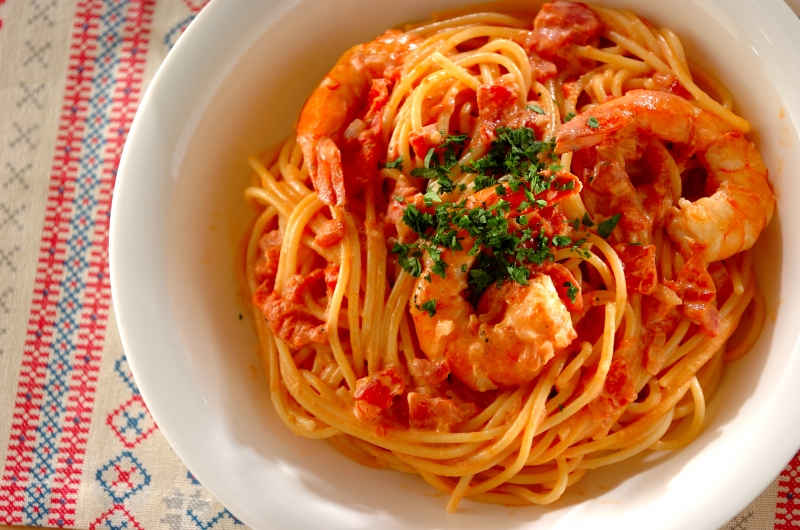
Home cooks often view seafood pasta as a restaurant-only indulgence, intimidated by rubbery crustaceans or split dairy sauces. Yet rising grocery bills and a cultural shift toward elevated home cooking have sparked widespread interest in streamlined gourmet recipes. As highlighted in a [Yahoo!ニュース Report](https://news.yahoo.co.jp/expert/articles/bfde9eaec063cee3201b3741df7705147180bf3d), culinary expert Yukari recently highlighted how home cooks can craft rich, restaurant-caliber shrimp tomato cream pasta without heavy cream by using a streamlined one-pan method. The dish bridges traditional Italian flavors and practical weeknight cooking, delivering velvet textures without professional kitchen complexity.
Mastering this dish requires understanding how heat, acid, and fats interact in the pan. A luscious pink sauce, traditionally known as sugo rosa or salsa rosa, demands precise acid balance and emulsification. When executed correctly, the natural sweetness of shellfish cuts through the tartness of stewed tomatoes, while dairy rounds out sharp edges. Achieving that balance takes minutes once you understand the basic mechanics.
📌 Key Takeaways:
- The Protein Rule: Sear peeled shrimp on high heat for 90 seconds per side, then immediately remove them from the skillet to prevent a rubbery texture.
- The Emulsion Secret: Acidic canned San Marzano tomatoes curdle low-fat dairy unless tempered slowly into a simmering garlic and olive oil base.
- The Weeknight Pivot: A one-pan pasta method concentrates pasta starches directly inside the sauce, allowing lighter milk blends to coat fettuccine like heavy cream.
Why Home Cooks Struggle with Shrimp and Dairy Emulsions
The pink sauce looks deceptively straightforward: combine red sauce with white dairy, add shrimp, toss with pasta. In practice, home kitchens frequently encounter two catastrophic failures: dry, chalky seafood and a grainy, curdled sauce.
Shrimp consist mostly of delicate muscle fibers and water. Overcook them by thirty seconds, and those proteins contract tightly, wringing out internal moisture and leaving behind an unyielding texture. Dumping raw seafood straight into a simmering tomato bath guarantees uneven cooking. The exterior turns fibrous long before the core reaches a safe internal temperature of 145°F (63°C).
The dairy side presents chemical vulnerabilities. Milk proteins (specifically casein) remain suspended in liquid until confronted with high heat or low pH levels. Canned tomatoes sit at an acidic pH between 4.2 and 4.6. Pour cold cream or low-fat milk straight into boiling tomato puree, and the casein proteins immediately destabilize and clump together. The result is an unappealing, broken puddle of separated oils and white specks instead of a glossy sauce.
The High-Heat Seared Shrimp Technique That Locks in Sweetness
To keep seafood plump and juicy, cook the shrimp completely separate from the sauce reduction. Start by patting raw, shelled shrimp thoroughly dry with paper towels. Excess surface moisture creates steam in the pan, preventing the Maillard reaction that yields deep, savory flavor.
Set a heavy skillet or stainless steel sauté pan over medium-high heat. Add a tablespoon of neutral oil alongside a generous slick of your garlic and olive oil base. Once the pan shimmers, lay the shrimp in a single layer with ample space between each piece. Let them sear undisturbed for roughly 75 to 90 seconds until the bottom edges turn coral pink and show slight golden browning. Flip once, cook for another 60 seconds, and transfer them immediately to a clean plate.
The shrimp will remain slightly translucent in the absolute center, which is intentional. Residual carryover heat finishes the cooking process while you construct the sauce. Crucially, this searing process leaves behind browned seafood sugars and juices, known as fond, on the bottom of the pan. Pouring 2 to 3 tablespoons of dry Italian white wine (like Pinot Grigio or Sauvignon Blanc) creates a white wine deglaze that lifts those concentrated caramelized drippings directly into your sauce base.
Building the Creamy Tomato Sauce Base with San Marzano Tomatoes
A mediocre canned tomato will ruin an otherwise sound pasta dish. Cheap canned varieties are often packed with excessive citric acid to artificially extend shelf life, producing a sharp, metallic bite that clashes violently with dairy. Invest in certified canned San Marzano tomatoes (D.O.P. designation) grown in the volcanic soil around Mount Vesuvius. They possess thinner skins, fewer seeds, and a higher natural fructose content that softens overall acidity.
Crush whole peeled tomatoes by hand into rough, rustic chunks rather than blending them into baby food. Once your deglazed pan is warm, lower the heat to medium-low. Sauté minced garlic until fragrant, never browned, then pour in the crushed tomatoes. Let the mixture simmer uncovered for 8 to 10 minutes.
This reduction window concentrates natural sugars and reduces excess water. You will observe the tomato oil separating slightly along the perimeter of the pan, an unmistakable visual sign that the liquid has reduced enough to accept dairy without thinning out your finished sauce.
Cream Substitutes Compared: Texture, Fat Content, and Curdling Risk
While heavy cream yields traditional decadence, it is far from mandatory. Home cooks frequently swap heavy whipping cream for lighter refrigerator staples, plant-based alternatives, or pantry fats to suit dietary needs or slash grocery costs. The table below outlines how common cream bases compare in fat content, flavor profile, and curdling vulnerability:
| Dairy / Substitute Base | Average Fat Content | Curdling Vulnerability | Sauce Body & Thickness |
|---|---|---|---|
| Heavy Cream (Standard) | 36%, 40% | Very Low | Ultra-velvety, thick coating |
| Whole Milk + Melted Butter | 18%, 22% | Moderate | Medium body; requires reduction |
| Half-and-Half | 10.5%, 18% | High | Light; requires starch stabilization |
| Raw Cashew Cream | 25%, 30% | Extremely Low (Non-dairy) | Dense, glossy, neutral sweetness |
| Full-Fat Coconut Milk | 20%, 24% | Low | Silky; carries mild coconut aroma |
When swapping heavy cream for whole milk or half-and-half, practice active temperature tempering. Whisk two ladlefuls of warm tomato puree into your room-temperature milk mixture before dumping the dairy into the skillet. Bringing the dairy close to the pan's temperature prevents the thermal shock that splits casein clusters.
Pasta Pairings and the Precision of Al Dente Fettuccine
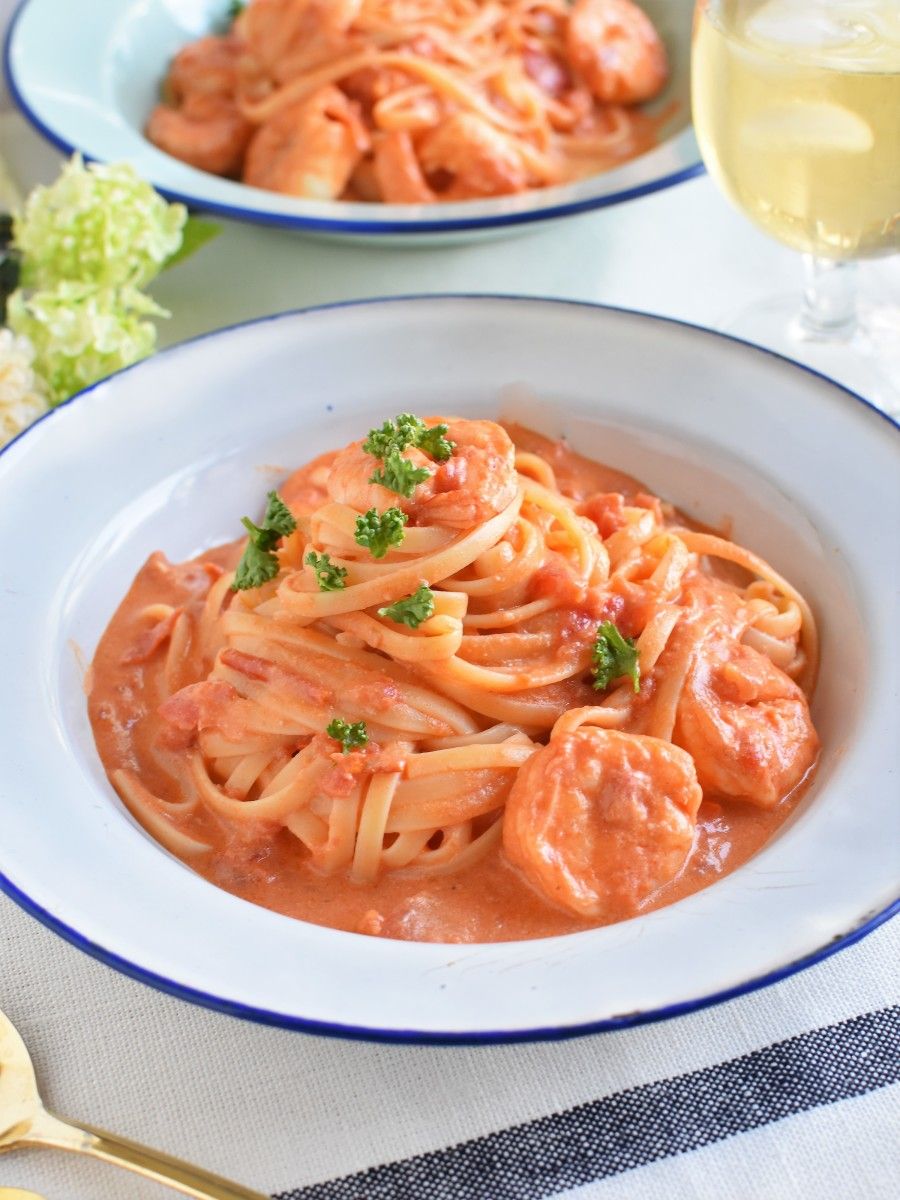
Delicate angel hair dissolves beneath a hearty tomato cream, whereas heavy tubes like paccheri can dwarf small bay shrimp. Wide, flat pasta ribbons offer the best geometry for pink seafood sauces. Cooked al dente fettuccine provides sufficient surface area for emulsified fats to cling securely without drowning the palate.
If ribbon pasta is unavailable, reach for ridged shapes like penne rigate or cavatappi. The exterior grooves capture tomato fragments while the hollow centers trap silky sauce pockets.
Always pull your pasta from the boiling water one to two minutes before the package's declared cooking time. The pasta must finish cooking directly inside the bubbling skillet of sauce. This step allows the pasta core to absorb seasoned tomato juices rather than plain salted water, while the exterior releases vital surface amylose starches that bind fat and water molecules together.
The One-Pan Pasta Method for Quick Weeknight Dinners
Standard pasta recipes require two large burners: a massive pot of salted boiling water and a separate skillet for sauce. The one-pan pasta method collapses this workflow into a single vessel, transforming a labor-intensive dinner into a manageable 25-minute weeknight meal with minimal cleanup.
In this streamlined setup, you sear your shrimp first and set them aside. Next, build your aromatics and tomato sauce directly in the pan. Instead of boiling pasta separately, add dry pasta noodles along with measured chicken or vegetable broth, typically 2 cups of liquid per 8 ounces of dry pasta.
Simmer the mixture gently, stirring frequently so the noodles submerge and soften evenly. Because the cooking liquid never drains into the sink, every milligram of dissolved pasta starch remains locked inside the skillet. This starch-dense liquid acts as an internal emulsifier, making it possible to swirl in ordinary whole milk and a handful of freshly grated Parmigiano-Reggiano at the final stage without any sauce separation. Fold the reserved shrimp back into the pasta during the final sixty seconds of cooking just to warm them through.
Frequently Asked Questions (FAQ)
Q1: Why did my tomato cream sauce turn orange and greasy instead of pink and creamy?
A1: An orange, oily separation indicates that the sauce broke due to excessive heat. Simmering dairy at rolling boiling temperatures destabilizes fat globules, forcing them to leak clear oil. Keep your heat on low when adding dairy, stir constantly, and fold in finely grated Parmigiano-Reggiano off the heat.
Q2: Can I use pre-cooked cocktail shrimp for this recipe?
A2: Avoid pre-cooked shrimp if possible. They are already cooked to their maximum protein threshold; searing them again makes them tough, rubbery, and flavorless. If pre-cooked shrimp are your only option, skip the initial sear completely and gently fold them into the finished sauce for 30 seconds just before serving.
Q3: How do I fix a sauce that tastes overly sour?
A3: Avoid dumping spoonfuls of white sugar into the pan, which creates an artificial sweetness. Instead, whisk in a tablespoon of cold unsalted butter, an extra splash of heavy cream, or two tablespoons of grated Parmigiano-Reggiano. The extra milk fat and savory glutamates naturally suppress perceived acidity and balance the profile.
Elevating Everyday Seafood Pasta in 2026 Kitchens
Cooking exceptional seafood pasta at home does not require expensive culinary machinery or exotic additives. It relies entirely on understanding protein heat tolerance and maintaining stable dairy emulsions. By searing shrimp swiftly over intense heat, extracting aromatics through deglazing, and harnessing pasta starches to bridge tomatoes with cream, home cooks can consistently create meals that rival high-end trattorias on ordinary weeknights.
