Through the Balcony Glass: Key Moments and Attire of Empress Masako at the Public Greetings
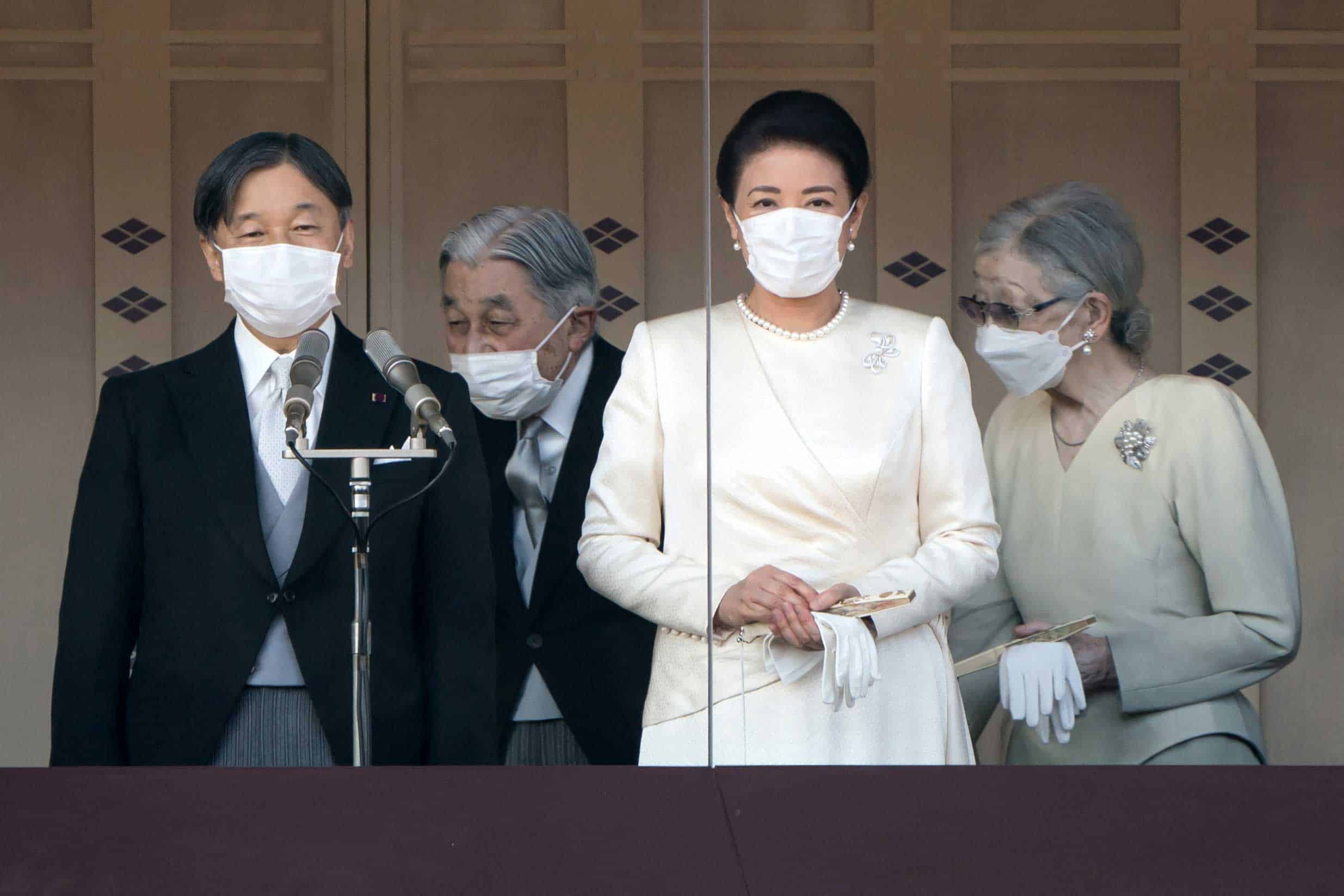
Tens of thousands of well-wishers waved small paper flags across the gravel plaza of the Tokyo Imperial Palace on February 23, 2026, greeting Emperor Naruhito on his 66th birthday. Standing beside him behind the thick, bulletproof balcony glass of the Chowaden Reception Hall, Empress Masako offered measured bows and a radiant smile. Her soft-toned, impeccably tailored ensemble and lustrous pearls caught the winter light, carrying deliberate visual weight. As detailed in The Court Jeweller Report tracking recent imperial appearances, the classic brooches and structured garments worn by the imperial women serve as a quiet, powerful language of continuity.
Every gesture on the Chowaden balcony is observed with intense interest across Japan. For years, public discourse centered on Masako's battle with stress-induced adjustment disorder and her prolonged absences from official duties. Today, her steady presence alongside Emperor Naruhito and their daughter, Princess Aiko, signals a settled, confident phase of the Reiwa era. The biannual public greetings, the New Year Ippan Sanga and the Emperor's Birthday address, provide ordinary citizens with an unfiltered view of the sovereign family, framed by glass, silk, and century-old protocol.
📌 Key Takeaways:
- Visual Statecraft: Empress Masako uses monochromatic pastel tailoring, paired with historic diamond-and-pearl brooches, to project stability and accessibility without violating imperial restraint.
- A Shared Presence: Princess Aiko's balcony appearances since her coming of age show close sartorial harmony with her mother, strengthening public affection for the direct imperial line.
- Protocol and Precision: Managed under rigid Imperial Household Agency rules, these brief balcony appearances remain the primary conduit connecting modern Japanese citizens with the ancient Chrysanthemum Throne.
The Choreography of Japan's Imperial Balcony at Chowaden Hall
The public greetings follow a rhythm virtually unchanged across generations. Several times throughout the morning, Emperor Naruhito, Empress Masako, and senior imperial family members step out onto the long veranda of the Chowaden Reception Hall. The bulletproof balcony glass separates the family from the sprawling Kyuden courtyard below, where security officers organize public well-wishers into rotating blocks to manage crowd density.
When the glass doors slide open, the courtyard erupts in cries of "Banzai!" Emperor Naruhito approaches the microphone to deliver brief, unscripted remarks expressing hope for peace, recovery from natural disasters, and prosperity for the public. Standing just half a step behind his left shoulder, Empress Masako maintains an upright, composed stance. She synchronizes her bows to match the Emperor’s, yet her warm eye contact acknowledges individual sections of the cheering crowd.
These appearances carry immense civic weight. The Ippan Sanga on January 2 and the Emperor's Birthday in February are the only occasions when everyday citizens can enter the inner palace grounds without prior security clearance. Following the pandemic hiatus that kept the palace closed between 2020 and 2022, the resumption of these gatherings drew massive lottery applications. The Imperial Household Agency reported that over 60,000 applicants vied for limited viewing slots during recent cycles, underscoring the enduring appetite to see Empress Masako and the Emperor in person.
Sartorial Harmony: The Quiet Dialogue Between Masako and Princess Aiko
Royal watchers focus intensely on the coordination between Empress Masako and Princess Aiko. Since turning 20 and assuming official adult duties, Aiko has joined her parents on the balcony, creating a visual triad of warmth and cohesion.
Rather than competing for attention, mother and daughter coordinate their high-collared daytime dresses (robe montante). On several occasions, Masako has worn rich cream or slate blue wool-silk blends, while Aiko complemented her in pale mint, soft pink, or muted lavender. Both wear matching single-strand Japanese Akoya pearls, white gloves, and circular or floral motif brooches pinned to the left lapel.
This understated palette is a deliberate choice. Imperial protocol forbids flashy couture or trend-driven silhouettes on official palace grounds. Through these conservative lines, Masako and Aiko project unity. Observers often notice subtle exchanges between them behind the glass: a reassuring glance from Masako before stepping into view, or Aiko matching her mother's rhythm as they wave to the outer perimeter of the courtyard.
| Event & Date | Attire & Jewelry Selection | Public Sentiment & Context |
|---|---|---|
| Post-Pandemic ReturnJanuary 2, 2023 | Muted slate-blue dress with structured collar; classic diamond scroll brooch with pearl pendant. | First balcony appearance in three years; high emotional relief from attendees following strict public health measures. |
| Emperor's 64th BirthdayFebruary 23, 2024 | Cream jacquard silk suit with subtle woven pattern; double-circle imperial diamond brooch. | Strong focus on domestic recovery after the Noto Peninsula earthquake; somber, dignified public tone. |
| New Year Public GreetingJanuary 2, 2025 | Deep forest-green high-neck gown; antique platinum brooch set with center-cut pearl. | Broad family turnout alongside Crown Prince Akishino's branch; praised across domestic press for serene color palette. |
| Emperor's 66th BirthdayFebruary 23, 2026 | Ivory wool gown with structured shoulders; heritage spray brooch set with Japanese Akoya pearls. | Large turnout celebrating Emperor Naruhito's birthday; viral public praise for the visible bond between Masako and Princess Aiko. |
Imperial Brooches, Pearls, and the Protocol of Restraint
Japanese royal fashion diplomacy operates under entirely different rules than its European counterparts. Where European royal houses often highlight massive heirloom tiaras, colored gemstones, and high-fashion designer partnerships, the Imperial Household Agency adheres strictly to simplicity and discretion.
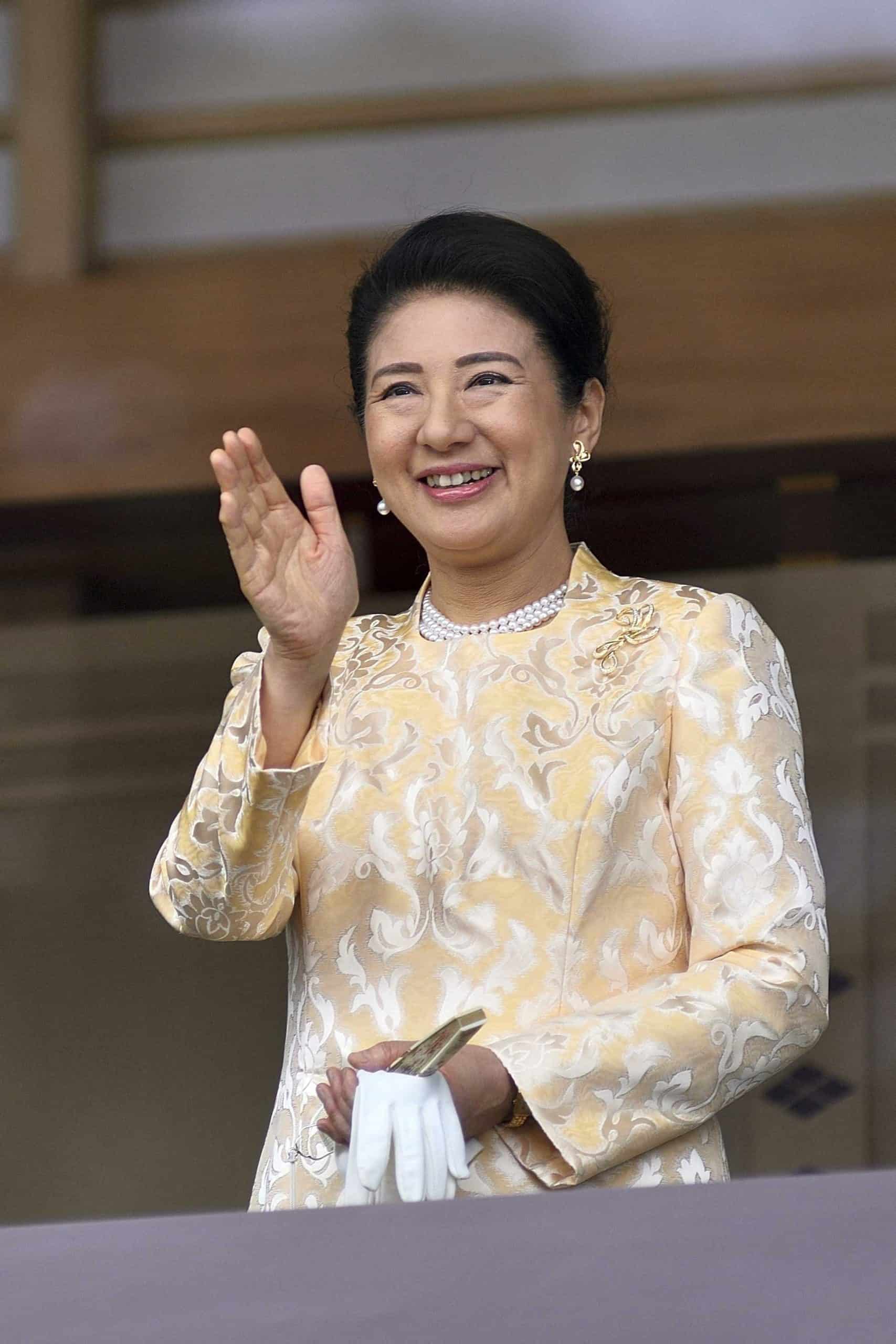
Empress Masako’s daytime balcony wardrobe centers on domestic craftsmanship. The fabrics are sourced from Japanese mills, often featuring subtle weaves such as chirimen silk or matte wool that reflect light evenly without glaring through the heavy glass partition. Her jewelry is dominated by pearls, Japan’s signature gemstone, paired with understated platinum and diamond brooches inherited through the imperial vault.
These brooches carry deep historic symbolism. Rather than rotating trendy accessories, Masako frequently rewears heritage pieces from the Showa and Heisei eras. Her favorite items include a spray-style brooch featuring diamonds and a teardrop pearl, as well as a geometric rosette brooch dating back to Empress Teimei. This commitment to modest, recurring jewels resonates with the Japanese public. It conveys thrift, continuity, and an institutional refusal to treat imperial duty as a fashion showcase.
From Diplomat to Empress: Masako's Balcony Composure
To appreciate the quiet impact of Masako's recent balcony appearances, one must recall her past challenges. When Masako Owada, an Oxford- and Harvard-educated diplomat, married then-Crown Prince Naruhito in 1993, expectations were impossibly high that she would revolutionize imperial diplomacy. Instead, rigid palace protocols, relentless pressure to produce a male heir, and intense scrutiny led to her withdrawal from official duties in the early 2000s.
For over a decade, her health was a subject of cautious palace bulletins. She missed numerous public appearances, and even brief outings carried an air of visible tension.
The contrast with the current Reiwa era is remarkable. Standing on the Chowaden balcony, Masako exhibits an easy, grounded confidence. She does not look away from the crowd; she meets the gaze of people standing directly below the railing, smiling warmly. Commentators in Tokyo note that her genuine smile has become an anchor for the monarchy. Emperor Naruhito's public devotion to his wife throughout her recovery has also elevated their standing, casting the couple as relatable, resilient partners navigating tradition together.
The Public Response: Decorum and New Media Fascination
While the rituals inside the Imperial Palace remain tightly regulated, the reception outside has adapted to modern communication. Photography is permitted from the courtyard, and thousands of attendees capture snapshots through the glass, sharing them widely on social media platforms like X and Instagram.
Online discussions focus on the subtle details: the precise tilt of Masako's wrist while waving, the crisp condition of her tailored collars, and the affectionate side-glances between her and Princess Aiko. Domestic commentary rarely fixates on high-fashion price tags. Instead, it highlights the Empress's elegance (kihin) and dignified perseverance (shin no tsuyosa).
The balcony glass itself has taken on symbolic meaning. Originally installed as a physical barrier for security, it also underscores the reality of imperial life: a family separated from ordinary society by an invisible, unbreakable boundary. Yet during the five-minute greeting sessions, Empress Masako manages to bridge that divide through simple eye contact and sincere bows, turning an antique palace rite into an intimate public moment.
Frequently Asked Questions (FAQ)
What is the difference between the New Year Ippan Sanga and the Emperor's Birthday greeting?
The New Year Ippan Sanga takes place annually on January 2 and features several appearances throughout the day with a wider group of imperial family members, including the extended royal branch. The Emperor's Birthday address, held on February 23, is dedicated specifically to Emperor Naruhito, who stands front and center alongside Empress Masako, Princess Aiko, and the Crown Prince family to thank the public.
Why is there bulletproof glass on the Chowaden balcony?
The reinforced glass was installed in 1969 following a security incident where a spectator fired a metal ball from a slingshot toward Emperor Hirohito (Emperor Showa). The glass shields the imperial family during large open gatherings without obstructing visibility for well-wishers in the courtyard.
What rules govern the clothes Empress Masako wears during balcony appearances?
Imperial Household Agency guidelines require high-collared daytime dresses (robe montante) or tailored jackets with long skirts for morning balcony appearances. Bright neon colors, low necklines, and ostentatious jewelry are strictly avoided. Classic white Akoya pearls, white gloves, and heritage brooches are the standard accessories for imperial women.
The Lasting Resonance of Subtle Imperial Pageantry
The enduring appeal of Empress Masako’s appearances lies not in spectacle, but in restraint. In an international royal landscape often dominated by celebrity styling and tell-all memoirs, Japan's Chrysanthemum Throne moves to a slower, quieter metronome. Masako’s soft-hued garments, her familiar Akoya pearls, and her measured waves project consistency in an uncertain world. As she stands alongside Emperor Naruhito and Princess Aiko, Empress Masako demonstrates that dignity need not be loud to leave an indelible mark on the public imagination.
