Tokyo Auto Salon 2026: Delica D:5 Arrives with Upgraded Practicality and Style
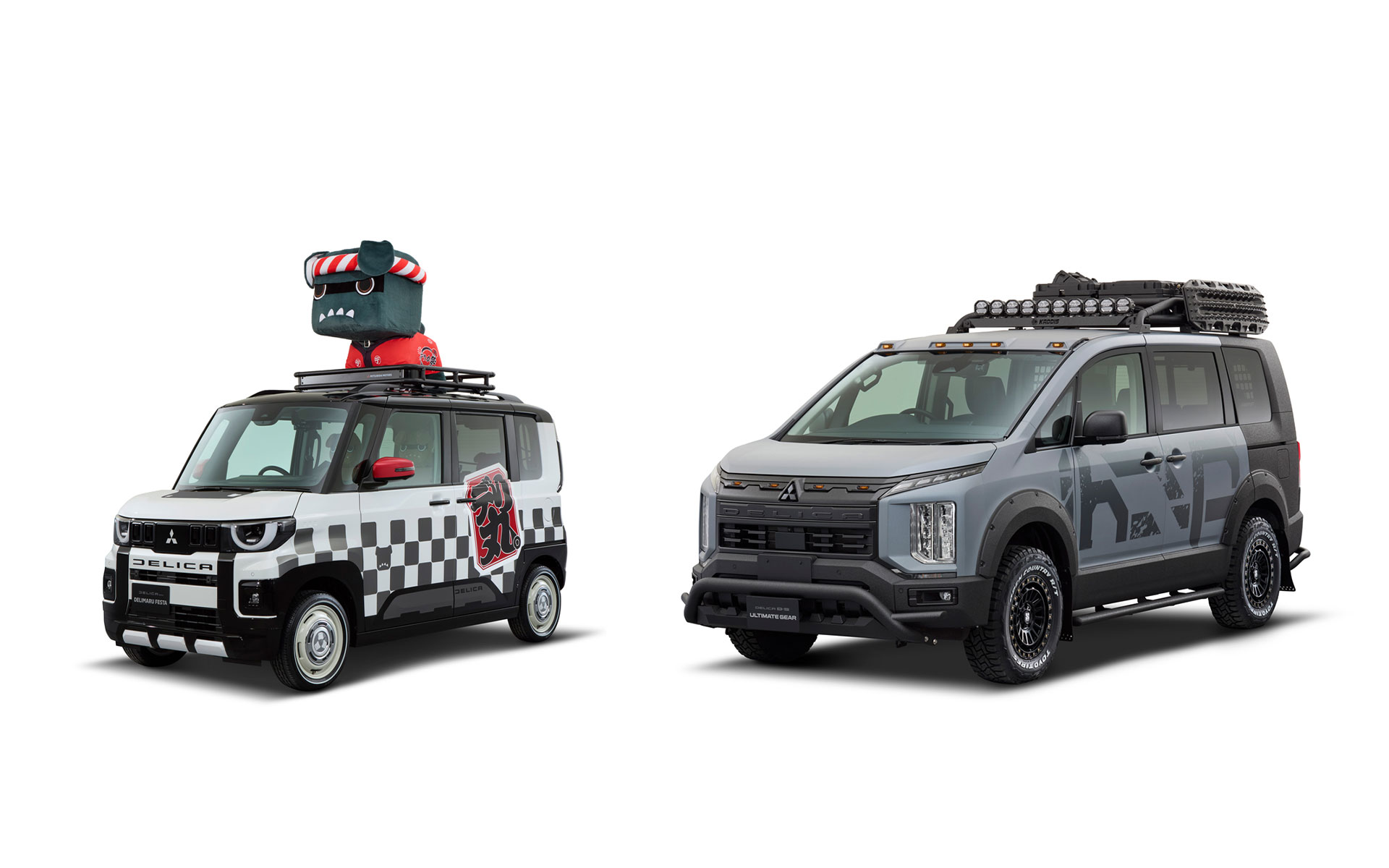
Mitsubishi Motors took the wraps off its refreshed Delica D:5 on January 9, 2026, anchoring its sprawling "Delica Festival: Unleash Playfulness" booth at Makuhari Messe in Chiba. As confirmed in official exhibition filings cited by the Car Watch Report, the Japanese automaker chose the opening morning of Tokyo Auto Salon 2026 to push its long-running clean diesel 4WD minivan straight onto dealership floors. Rather than replacing the vehicle's underlying monocoque ribs, engineers doubled down on the interior cargo configuration, physical ergonomics, and off-pavement control systems that have given this high-riding box its cult following across Japan, Australasia, and North American gray-market import circles.
The update brings substantial revisions to cabin utility and mechanical interaction. While commercial vans prioritize pure cubic footage and standard passenger haulers lean into fragile luxury, the Delica D:5 preserves its odd, singular middle ground: genuine light-truck capability wrapped in a dual-sliding-door monospace shell. For 2026, Mitsubishi directly addresses decades of owner feedback, overhauling seat-stowage mechanics, refining cabin storage compartments, and migrating tactile drivetrain controls directly from the Triton pickup and Outlander SUV.
📌 Key Takeaways:
- The Unveiling: Mitsubishi launched the refreshed Delica D:5 on January 9, 2026, alongside custom expedition concepts at Tokyo Auto Salon 2026 in Chiba.
- Tactile Upgrades: A rotary drive mode selector dial replaces legacy toggle setups, harmonizing the vehicle's All-Wheel Control (AWC) logic with the Triton platform.
- Cabin Engineering: Re-engineered third-row flip-up seats and standardized overhead utility rails resolve long-standing cargo obstruction issues for camping and overland setups.
Makuhari Messe Unveiling: The Delica Festival Takes Center Stage
The Tokyo Auto Salon floor is traditionally dominated by low-slung circuit specials and widebody drifters, but Mitsubishi turned Hall 1 into an outdoor basecamp. The corporate theme, centered around tactical utility and weekend recreation, served as the launchpad for the updated production van. Dealers began taking orders the morning of the show, backed by a fleet of factory-tuned display units wearing beadlock-style wheels, integrated roof racks, and modular tail packages.
The vehicle occupies a solitary market segment. Traditional Japanese three-row vans like the Toyota Alphard or Nissan Serena cater to paved motorways and low step-in heights. In contrast, the Delica platform sits atop a modified GS-based ribbed frame with 185 mm of ground clearance, an approach angle of 21 degrees, and a low-slung 2.2-liter 4N14 common-rail turbodiesel producing 380 Nm of torque at 2,000 RPM. The 2026 revision does not chase performance benchmarks. Instead, it systematically optimizes how drivers interact with the cabin during foul-weather travel and remote camping trips.
Rotary Drivetrain Control and All-Wheel Control Integration
The most immediate change from the cockpit is the elimination of the legacy four-wheel-drive push switch. Resting prominently on the lower center console is a weighted, knurled drive mode selector dial. This rotary hardware mirrors the tactile interfaces found in the sixth-generation Triton ute and the Outlander PHEV, giving the driver immediate, eyes-free selection among distinct traction programs.
Mitsubishi's electronically controlled All-Wheel Control (AWC) system receives retuned throttle mapping and yaw sensors. Drivers switch between 2WD for dry highway fuel economy, 4WD Auto for variable torque distribution on rain-soaked pavement, and 4WD Lock for low-traction mud, sand, and deep snow. Under the revised calibration, 4WD Lock routes up to 50 percent of available engine torque to the rear axle more aggressively, clamping the electronic center differential at the first detection of front-wheel slip rather than waiting for wheelspin to register across the ABS reluctor rings.
Third-Row Flip-Up Mechanics and Cargo Space Geometry
Owners of earlier Delica generations frequently complained about the physical effort required to secure the aft seats. In the older layout, the third-row cushions swung up toward the side quarter glass on heavy, sprung steel hinges, obstructing side visibility and pinching interior load width down to roughly 890 mm between folded seat bottoms. The 2026 update redesigns the flip-up seat latches with a single-motion spring-assist bracket and slimmer seat padding.
The new linkage pulls the seats flush against the side window recesses, widening the usable rear load aperture between the cushions to 1,010 mm. That extra 120 mm of clearance determines whether standard plastic storage totes or 50-liter overland coolers can slide straight through without angling. Furthermore, the cargo deck retains an anchor system of six recessed D-rings capable of withstanding 100 kg of shear force each, providing solid tie-down points for heavy field batteries, slide-out camp kitchens, or mountain bikes.
Architectural Benchmarks: How the 2026 Delica D:5 Measures Up
To understand the structural advantages and compromises of the refreshed platform, the following table breaks down functional cabin metrics, off-pavement dimensions, and driveline components compared across recent iterations and expedition trim specs.
| Feature / Metric | Delica D:5 (2019, 2025 Spec) | Refreshed Delica D:5 (2026 Spec) | Overland Camper Package |
|---|---|---|---|
| 4WD System Control | Toggle Switch / 3 Modes | Knurled Rotary Dial (Triton spec) | Knurled Rotary Dial + Hill Descent |
| Minimum Ground Clearance | 185 mm | 185 mm | 205 mm (Lifted suspension) |
| Rear Stowage Width (Seats Up) | 890 mm between cushions | 1,010 mm between cushions | Platform bed replaces 3rd row |
| Side Access Convenience | Dual Power Sliding Doors | Dual Hands-Free Kick Sensor Doors | Dual Doors + Reinforced Steps |
| Powertrain & Gearbox | 2.2L Diesel / 8-Speed Auto | 2.2L Diesel / 8-Speed Auto (Retuned) | 2.2L Diesel / 8-Speed Auto |
| Base Pricing (Japan Domestic) | ¥4,000,000, ¥4,500,000 | ¥4,250,000, ¥4,800,000 | ¥5,600,000+ (Dealer optioned) |
Power Sliding Doors and Everyday Cabin Storage Compartments
Rugged capability often comes at the expense of family usability. Solid-axle off-roaders force parents to wrestle heavy swing-out doors on steep grades and hoist small children over high rocker panels. The Delica bypasses this penalty entirely with its electric dual-sliding doors. For 2026, Mitsubishi added hands-free optical kick sensors beneath the B-pillar sills, allowing access when both hands are tied carrying snowboards, dry bags, or infant seats.
Inside, the passenger environment emphasizes cleanable, heavy-wear surfaces. Storage pockets flank the driver and front passenger footwells, while double-tiered upper and lower glove boxes isolate charging electronics from wet trail maps. The center console incorporates modular divider slots that swallow two 1-liter thermal canteens without rattling. Beneath the second-row seats, slide-out plastic troughs catch dirt, road salt, or melted snow, lifting out easily for a quick wash at a campsite spigot.
Overland Camper Conversions: Why the Monobox Layout Endures
The aftermarket ecosystem surrounding the Delica D:5 has transformed the vehicle into a staple of Japanese vanlife. Because the roof line stays flat all the way to the vertical rear hatch, internal volume remains predictable from front to back. Third-party upfitters at the Tokyo Auto Salon showcased modular camper kits that take advantage of the van's newly integrated M8 ceiling mounting points, which support hanging organizer bags, LED lighting strips, or structural crossbars without drilling into the headliner.
Fold the second- and third-row seats down, and the cushions form a continuous sleeping deck that spans over 1,900 mm in length. Factory-approved thermal shades snap magnetically to every window frame, sealing the cabin against winter frost. When paired with an optional 100V / 1,500W AC power outlet tapped directly into the vehicle's electrical system, the Delica operates as a self-sufficient winter bivouac, allowing campers to run electric blankets, portable induction cooktops, or field laptops through the night without idling the engine continuously.
Target Buyers and Operating Trade-offs
The updated D:5 is not universally suited for every van buyer. Selecting this vehicle requires balancing practical advantages against architectural limitations:
Ideal Profiles:
- Alpine and Winter Sports Enthusiasts: Drivers who regularly encounter unplowed roads, deep slush, and steep mountain passes where standard luxury minivans run out of clearance.
- Weekend Overlanders: Campers who need a daily school-run commuter Monday through Friday, but require genuine all-terrain traction, sleeping capacity, and gear security on weekends.
- Coastal and Water Sports Athletes: Users needing water-repellent upholstery, hose-down floor linings, and hands-free side loading while managing wet gear.
Risk Flags and Compromises:
- Pure Urban Commuters: The heavy-duty suspension architecture delivers a stiffer, more truck-like low-speed ride over inner-city potholes compared to softly sprung passenger vans.
- Maximum Highway Mileage Seekers: The upright front fascia and 4WD driveline mean highway fuel economy hovers around 12.6 km/L (approx. 29.6 mpg US), lagging behind smaller hybrid people-movers.
- Buyers Expecting Low Floor Heights: The 185 mm ground clearance requires stepping up into the cabin, which may prove cumbersome for passengers with limited mobility.
Frequently Asked Questions (FAQ)
Q1: What is the primary functional difference in the 2026 Delica D:5 interior?
A1: The updated interior features redesigned third-row flip-up seats that lock 120 mm wider against the quarter panels, single-motion folding mechanisms, a Triton-derived knurled drive mode selector dial, and hands-free kick sensors on both power sliding doors.
Q2: Does the 2026 refresh add a hybrid or electric powertrain?
A2: No. Mitsubishi continues to rely on its 2.2-liter 4N14 clean diesel engine paired with an 8-speed automatic transmission. The powertrain delivers 380 Nm of torque and complies with current Japanese emissions standards without requiring an electric hybrid battery pack.
Q3: Can the Delica D:5 accommodate full adult sleeping without aftermarket kits?
A3: Yes. By reclining the second- and third-row seatbacks completely flat, the cabin forms an unbroken sleeping surface exceeding 1,900 mm in length. Adding an aftermarket mattress pad smooths the remaining seat cushion contours for improved comfort.
The Delica D:5 Trajectory in 2026 and Beyond
Mitsubishi's rollout at Makuhari Messe confirms that the brand knows where its strength lies. By rejecting the modern push toward purely electronic, touchscreen-heavy interiors, the company preserved physical knobs, durable switches, and mechanical levers designed for gloved winter operation. The updated Delica D:5 maintains its grip on an overland market segment that competitors have largely abandoned in favor of generic soft-road crossovers.
As outdoor recreation, winter camping, and autonomous off-grid travel continue to dominate outdoor consumer trends throughout 2026, the updated Delica provides practical solutions instead of superficial styling gimmicks. Its reinforced chassis, functional cargo geometry, and reliable mechanical all-wheel drive confirm that dedicated utility will always find an audience.
