Trending This Wedding Season: The Viral Medium Half-Up Tutorial Taking Over Social Feeds

Professional salon appointments for wedding attendees reached an average price of $125 to $210 nationwide this spring, pushing thousands of attendees toward their own bathroom mirrors. Rather than booking formal blowouts, guests and bridesmaids are coalescing around a specific silhouette: a dimensional, twisted medium-length half-up style that takes under fifteen minutes to construct. The movement picked up steam across Tokyo, London, and New York fashion feeds before cementing itself as this year's default wedding guest hairstyle.
The look solves an old mechanical dilemma for collarbone-length hair and lob cuts. Pure updos often drop heavy pins or shed shorter rear strands halfway through an evening reception, while wearing hair entirely down risks limp curls under high humidity. By securing the top canopy through interlocking twists, the style locks in crown stability while allowing subtle texture waves to drape freely across the shoulders.
📌 Quick Summary:
- The Economic Shift: Rising formal salon fees, averaging $165 per visit, have driven a 42% surge in DIY occasion styling tutorials since late 2024.
- The Mechanical Secret: Interlocking horizontal twists bypass the instability of traditional hairpins, holding lobs and medium lengths secure for over ten hours.
- The Versatility Factor: Works across bridesmaids, black-tie guests, and registry brides looking for polished visual structure without salon rigidity.
How the Japanese "Kantan Half-Up" Reset Global Wedding Standards
The current wave originated largely in Tokyo salons, where stylists perfected the art of the effortless half-up (frequently shared online as "easy medium half-up" or kantan half-up). Japanese occasion styling has long emphasized controlled looseness, prioritizing delicate texture over shellacked rigidity. When clips demonstrating a two-strand twist technique using hidden silicone bands crossed onto Western beauty feeds, engagement spiked across demographics searching for manageable medium length half up half down methods.
Bridal parties immediately latched onto the approach. Traditional Western styling often demanded excessive backcombing, heavy hairpieces, and an arsenal of hardware that caused scalp fatigue by the dinner service. In contrast, the updated twisted method requires minimal tension. Stylists at high-traffic metropolitan salons report that clients increasingly bring in smartphone clips of self-styled creators rather than glossy bridal magazine spreads.
The aesthetic reflects a broader shift away from hyper-manicured glam toward lived-in elegance. Weddings held in rustic barns, outdoor vineyards, and mid-century town halls call for hair that moves naturally. The hybrid structure gives guests the polish expected of formal dress codes without the stiff, dated appearance of traditional prom-era chignons.
Why Medium Lengths Benefit Most From Canopy Twists
Long bob elegant styling presents distinct physical hurdles during formal events. When hair hovers between the chin and collarbone, the nape layers lack the length to tuck comfortably into high buns. Pushing those layers upward usually requires an excessive grid of hardware, which routinely loosens the moment an attendee steps onto the dance floor.
Securing only the upper third of the hair leaves the base free, completely sidestepping nape-slippage issues. Volume teasing at crown sections creates instant architectural height, counteracting the natural downward weight of medium cuts. This vertical lift visually elongates the jawline and prevents hair from flattening under humid conditions.
Bridesmaid medium hair ideas traditionally relied on loose curling alone, which often separates into stringy sections after four hours. Gathering the temporal hair back into a structured anchor keeps stray pieces from falling into dinner plates or blowing across lip gloss during windy photography sessions. The half-down portion retains movement and softens broad necklines, pairing cleanly with strapless, halter, and high-neck bridesmaid dresses alike.
The Chronological Breakdown: From Wet Prep to Final Setting
Executing this silhouette reliably requires following a clear sequence. Rushing the anchor points or applying the wrong heat profile will shorten the lifespan of the style.
| Phase | Core Action & Mechanics | Target Time |
|---|---|---|
| 1. Base Texture | Prep with dry texturizing spray; curl in alternating 1-inch ribbons at 340°F (170°C). | 5, 7 mins |
| 2. Crown Lift | Lightly backcomb beneath the crown root; secure a small central half-ponytail with a clear elastic. | 2, 3 mins |
| 3. The Twist Inversion | Gather lateral strands, twist toward the back, thread through or over the central base, and pinch-pull ridges. | 3, 4 mins |
| 4. Lock & Finish | Drive horizontal anchors beneath twists; coat canopy with long-lasting hold setting spray. | 1, 2 mins |
Begin by misting clean, fully dry hair with a lightweight thermal protectant and sea salt mist to generate grip. Take a 1.25-inch curling iron and wind mid-shaft sections away from the face, leaving the final inch of the ends straight to avoid an overly formal, barrel-curled finish. Once the subtle texture waves cool completely, rake through them using a wide-tooth comb or clean fingers.
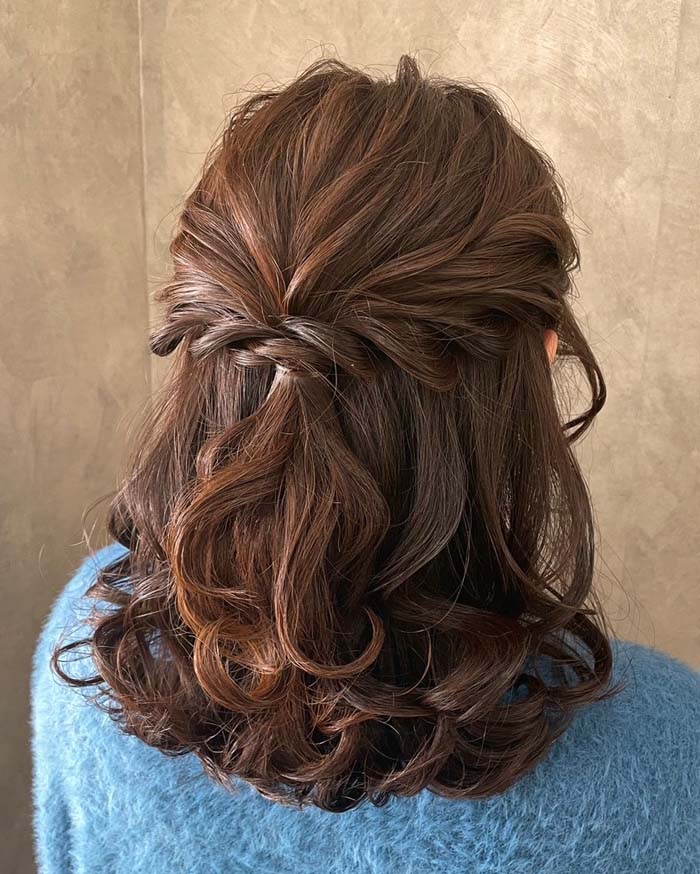
Isolate a horseshoe section of hair extending from the temples to the crown. Fasten this central pod using an ultra-slim elastic that matches your hair shade. To execute the twisted crown tutorial variant, draw a two-inch section from the right ear, twist it backward along its axis, and guide it directly across the central elastic. Repeat on the left side, overlapping the strands directly over the first twist to conceal the foundation entirely.
Gently pinch thin slivers along the twists, a salon technique known as pancake pulling, to create dimensional airy ribs. This step transforms what looks like a tight gym pull-back into an intentional, soft bridal design.
Bobby Pin Placement Tricks That Eliminate Slippage
Most DIY hairstyles unravel because pins are inserted straight into the hair without an anchor point. When a pin simply clamps onto hair, it slides downward with every head turn. Master stylists use specific friction mechanics to guarantee all-day hold.
First, flip the pin upside down: the wavy ridge belongs against the scalp, where it catches root hairs, while the flat side sits outward. Second, avoid opening the pin wide with your fingers or teeth before pushing it into place; prying the prongs apart weakens the metal spring, eliminating the gripping tension required to hold twisted bundles.
The primary secret is interlocking cross-pinning. After wrapping the lateral twist over your base elastic, insert the first pin horizontally from right to left, pushing directly into the meat of the twist. Take a second pin and push it from left to right at a diagonal angle, crossing over the first pin like an "X" beneath the hair surface. The metal-on-metal intersection locks the hardware in place, making it structurally impossible for the twist to pull free during dancing.
Finish by adding hair accessories and pearl pins. Slide decorative pins directly along the path of the existing hidden hardware rather than forcing them into unpinned sections. The established foundation holds the decorative pieces steady without weighing down the hairstyle.
Cost Comparison: The Rise of Easy DIY Bridal Hair
The average cost of wedding guest preparation has climbed steeply. Industry market surveys show beauty expenses for bridal party members jumped nearly 28% between 2023 and 2026. Salon blowouts now range from $65 to $95, while formal updos easily exceed $150 before gratuity.
Guests attending three to five weddings per season face steep beauty bills. That reality explains why home techniques have quickly overtaken salon bookings. A single $18 can of texturizing spray, a $6 pack of silicone elastics, and a quality hairspray last through multiple wedding seasons, reducing the per-event styling expense to under $5.
Couples planning nuptials are also adjusting expectations. While brides historically dictated professional hair appointments for all attendants, more wedding parties now provide styling boards with video links for easy DIY bridal hair. This approach saves each attendant hundreds of dollars while keeping the bridal party visually cohesive.
Adapting the Silhouette: From Garden Gatherings to Black-Tie Galas
The strength of the medium half-up lies in its aesthetic elasticity. A daytime vineyard wedding calls for relaxed, airy textures. Leaving wisps of hair framing the ears and pairing the style with raw pearl pins delivers an effortless romantic updo feel that complements floral linen dresses.
For black-tie evening events, the identical structural foundation can be adapted for elevated formality. Smoothing the front hairline with a firm-bristle boar brush and a drop of argan oil creates a clean, architectural finish. Fastening the overlapping twists with a sleek metallic barrette or a deep velvet ribbon aligns the hair with floor-length silk gowns.
Texture management must reflect the venue climate. Outdoor seaside ceremonies require generous application of flexible-hold finishing lacquer to guard against sea mist. Enclosed ballroom settings allow for a lighter, touchable finish using sheer shine mists. The structural framework stays identical; only the exterior polish changes.
Frequently Asked Questions (FAQ)
Q1: Can this half-up twist work on fine or thinning hair without exposing the scalp?
A1: Yes, provided you prep the roots with volumizing dry shampoo or texture powder before parting. Backcombing beneath the crown creates an opaque cushion that conceals the scalp, while pulling out delicate ridges on the twists gives the illusion of thicker, fuller hair.
Q2: My hair is cut into an angled bob. Can I still execute the lateral twists?
A2: Angled lobs actually work well with this design because the front strands are longer than the back. As long as your face-framing pieces reach behind your ears, they can be pulled back and secured over the elastic. If back layers are too short to participate, leave them down as part of the textured base wave.
Q3: How do I keep the elastic band completely invisible throughout the day?
A3: Always select clear or tone-matched silicone bands rather than standard cloth hair ties. By overlapping your left and right lateral twists directly across the elastic's center point and pinning them flat, the twist itself covers the mechanics, leaving no hardware visible.
Styling Choices for the Season Ahead
Occasion styling no longer demands three hours in a salon chair or high-tension hairpins that bring on a headache before the first toast. The widespread adoption of medium half-up twists highlights a lasting change in how people prepare for events: high-impact visual design built on functional, reproducible geometry.
Mastering the balance between secure anchor points and gentle ribbing gives anyone with collarbone-length hair total autonomy over their event look. With two silicone elastics, four bobby pins, and a reliable heat iron, achieving gallery-ready wedding hair is simply a matter of technique over spending.
