Truth Behind the Closures: Subway Expansion and the Underground Walkway Reality at Sapporo Station
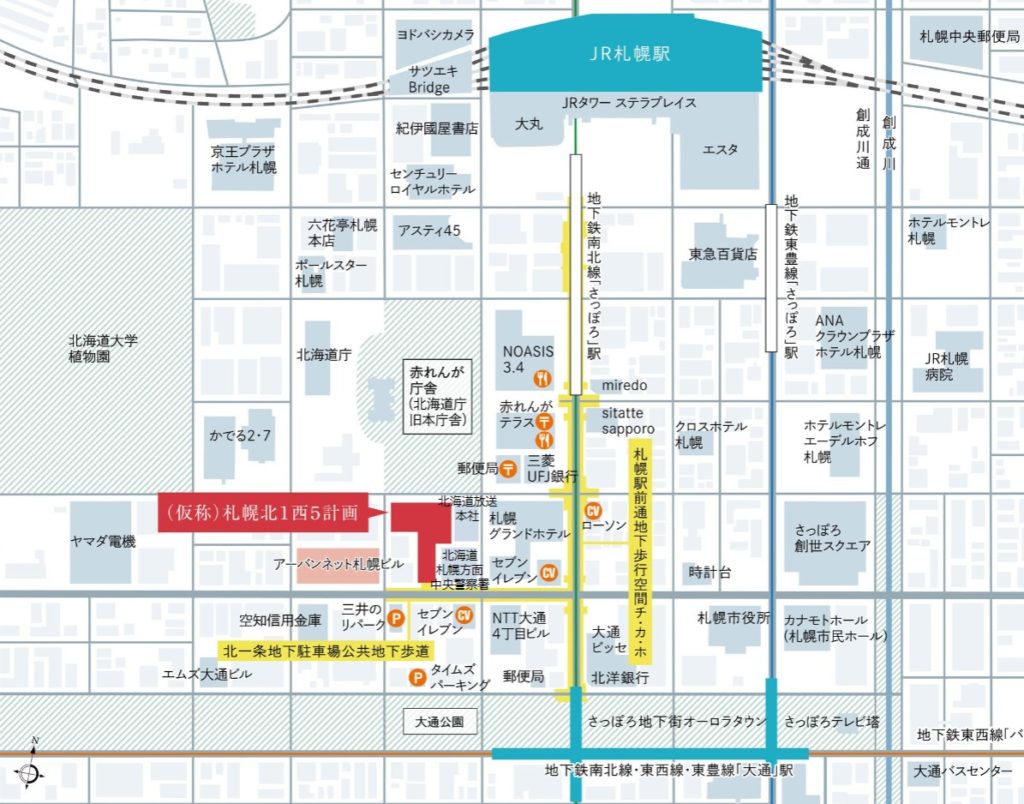
Commuters stepping off trains at JR Sapporo Station face a completely rearranged pedestrian world. Heavy excavation for the Hokkaido Shinkansen extension has severed long-standing surface crossings, forcing thousands of daily commuters down into subterranean corridors. Outside, winter winds drive temperatures well below freezing, turning above-ground detours into icy obstacle courses. Below the street grid, the Sapporo Station North Exit underground walkway functions as an indispensable transit valve, channeling travelers between Kita-ku office towers, university campuses, and southern commercial districts.
Commercial operators across central Hokkaido are adjusting their footpaths to align with these shifts. With the debut of high-profile properties downtown, documented by the Hyatt Newsroom Report regarding premium hospitality expansions, direct underground routes have become vital infrastructure rather than convenient shortcuts. The reality of moving through Sapporo in 2026 demands a clear grasp of subterranean connections, temporary construction barriers, and transit reroutes.
📌 Key Takeaways:
- The Disruptor: Ongoing civil works for the Hokkaido Shinkansen platform integration have shuttered key ground-level gates and altered conventional transfer corridors.
- The Subterranean Shield: Subsurface corridors around the North 6-jo underground link now manage over 70,000 daily trips, insulating pedestrians from extreme winter conditions.
- Access Adjustments: Travelers connecting between the JR lines, the Toho Line subway connection, and southern hotel districts must rely on updated signage and subterranean bypasses.
Shinkansen Platform Overhauls Reshape North Exit Foot Traffic
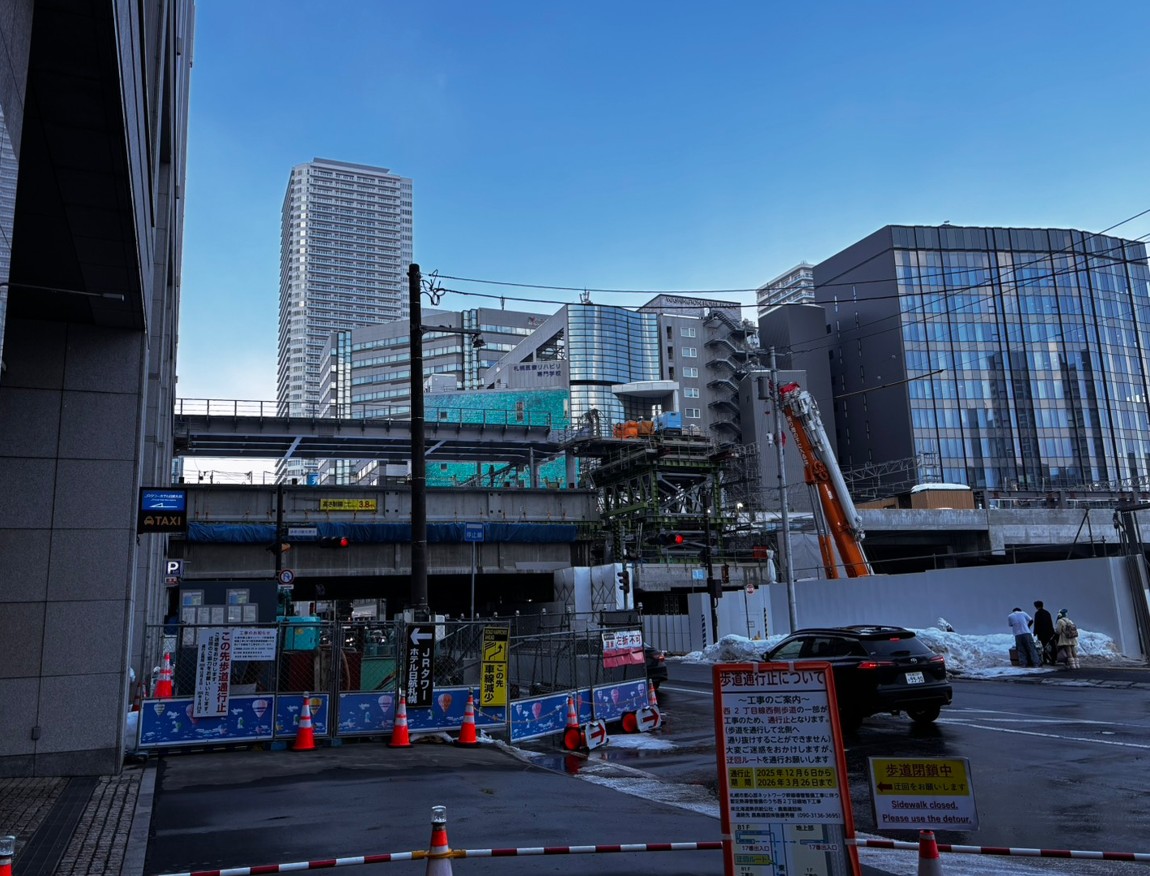
Heavy machinery occupies the former footprint of JR Sapporo Station’s eastern tracks. Building the elevated and sub-level infrastructure required for high-speed bullet trains arriving from Hakodate forced transit engineers to dismantle conventional pedestrian corridors. Ground-level gates along the northern facade now channel foot traffic toward reinforced subterranean stairwells rather than open plazas.
Surface walkways across North 6-jo street have experienced intermittent barricades and narrow temporary gantries. For decades, travelers crossed directly toward the Kita-ku government offices and Hokkaido University along wide sidewalks. Today, deep foundation piling and structural framing for track realignments push pedestrians downward. The JR Sapporo Station pedestrian passage has absorbed the bulk of this displaced volume, functioning as a primary detour channel beneath the ongoing noise and heavy dust of surface construction.
How Daily Commuters Survive Blizzards Beneath North 6-Jo
Sapporo records an average annual snowfall exceeding 4.7 meters. When heavy blizzards sweep off the Sea of Japan, navigating icy sidewalks across multilane intersections becomes genuinely hazardous. The winter pedestrian tunnel Sapporo network solves this seasonal crisis. Commuters emerging from train gates descend directly to the North 6-jo underground link without stepping into the elements.
Subsurface passages maintain steady interior temperatures near 14°C to 16°C throughout peak winter months. This environment prevents thermal shock for incoming office workers and spares elderly residents treacherous encounters with black ice on street crossings. Heating coils beneath terminal entrances melt tracking slush, while high-friction floor tiling minimizes slipping. What began as a transit passage operates as vital public safety infrastructure during the harsh sub-zero months.
Route Closures, Transit Detours, and Corridor Access Compared
Navigating the northern terminal requires understanding which subterranean passages offer uninterrupted connections and which ones lead to construction bulkheads. Temporary hoardings change position as structural contractors advance their work schedules across central rail easements.
| Transit Route | Operational Status | Pedestrian Impact |
|---|---|---|
| North Exit Ground Concourse | Partially restricted; heavy construction detours | Direct outdoor paths to North 7-jo redirected through covered hoardings |
| North 6-jo Underground Link | Fully open with directional signage | Direct subsurface connection between Kita-ku offices and JR concourse |
| Toho Line Subsurface Spur | Rerouted along eastern basement corridors | Adds 3, 5 minutes to subway transfers during peak hours |
| Chi-Ka-Ho Main Concourse | Fully open; southbound connectivity intact | Seamless walking access to Odori Park and Susukino commercial core |
Linking Kita-Ku Neighborhoods to the Toho Line Subway Hub
Transferring between the JR rail lines and the municipal subway network has long challenged first-time visitors. The Namboku Line lies directly beneath the station's western concourse, but the Toho Line subway connection sits several hundred meters east. Hokkaido Shinkansen construction detours complicate this route, requiring pedestrians to skirt around reinforcement caissons.
City transport coordinators implemented color-coded directional guides along the ceiling fixtures and tiled walls. Walking through the Sapporo Ekimae underground access network allows travelers to sidestep construction zones entirely. The continuous passage threads south toward the Chi-Ka-Ho underground concourse, enabling seamless foot travel through the city center without crossing a single signalized intersection on street level.
Commercial Redevelopment and Hotel Corridors Redraw the Map
The structural transformation extends beyond public rail infrastructure. Private real estate developers have coordinated major investments to tie into municipal pedestrian tunnels. As part of the broader Sapporo Station North Exit redevelopment, commercial building basements have been retrofitted with direct public passage easements.
South of the rail tracks, luxury hotel developments and multi-use corporate properties leverage these subterranean links. Guests seeking the Hyatt Centric Sapporo access route frequently navigate via the underground concourse, avoiding curb-side slush and taxi queues during peak snow storms. Real estate values along the perimeter of the Kita-ku pedestrian network show an increasing premium for structures with direct basement access to city tunnels, demonstrating that climate-controlled connectivity dictates footfall patterns across downtown Sapporo.
Frequently Asked Questions (FAQ)
Q1: How do I access Hokkaido University from JR Sapporo Station without walking outside?
A1: Exit the north ticket gates, descend to the North 6-jo underground link, follow the northern passage toward Exit 12, and emerge at street level just one block south of the university main gates.
Q2: Are the Sapporo underground walkways wheelchair and luggage accessible?
A2: Yes. All primary nodes linking the JR gates, subway stations, and the Chi-Ka-Ho concourse feature elevator banks and tactile paving, though construction detours around the North Exit may occasionally require taking marked elevator bypasses.
Q3: How late does the North Exit subterranean network remain open?
A3: Corridors generally open at 5:30 AM before the earliest morning trains and shutter around 12:30 AM following the arrival of final subway and regional rail services.
Subterranean Planning and the Transit Hub Ahead
The physical rearrangement of northern Sapporo represents one of the largest infrastructure shifts Hokkaido has seen in half a century. While the ongoing rail construction creates temporary friction, the expanded underground network ensures that thousands of daily travelers move safely beneath harsh winter squalls. Mastering these subterranean passages transforms a confusing construction detour into an efficient route across the snowy northern metropolis.
