Vegito Blue Visual Evolution: From Dragon Ball Super to 4K Gaming Era
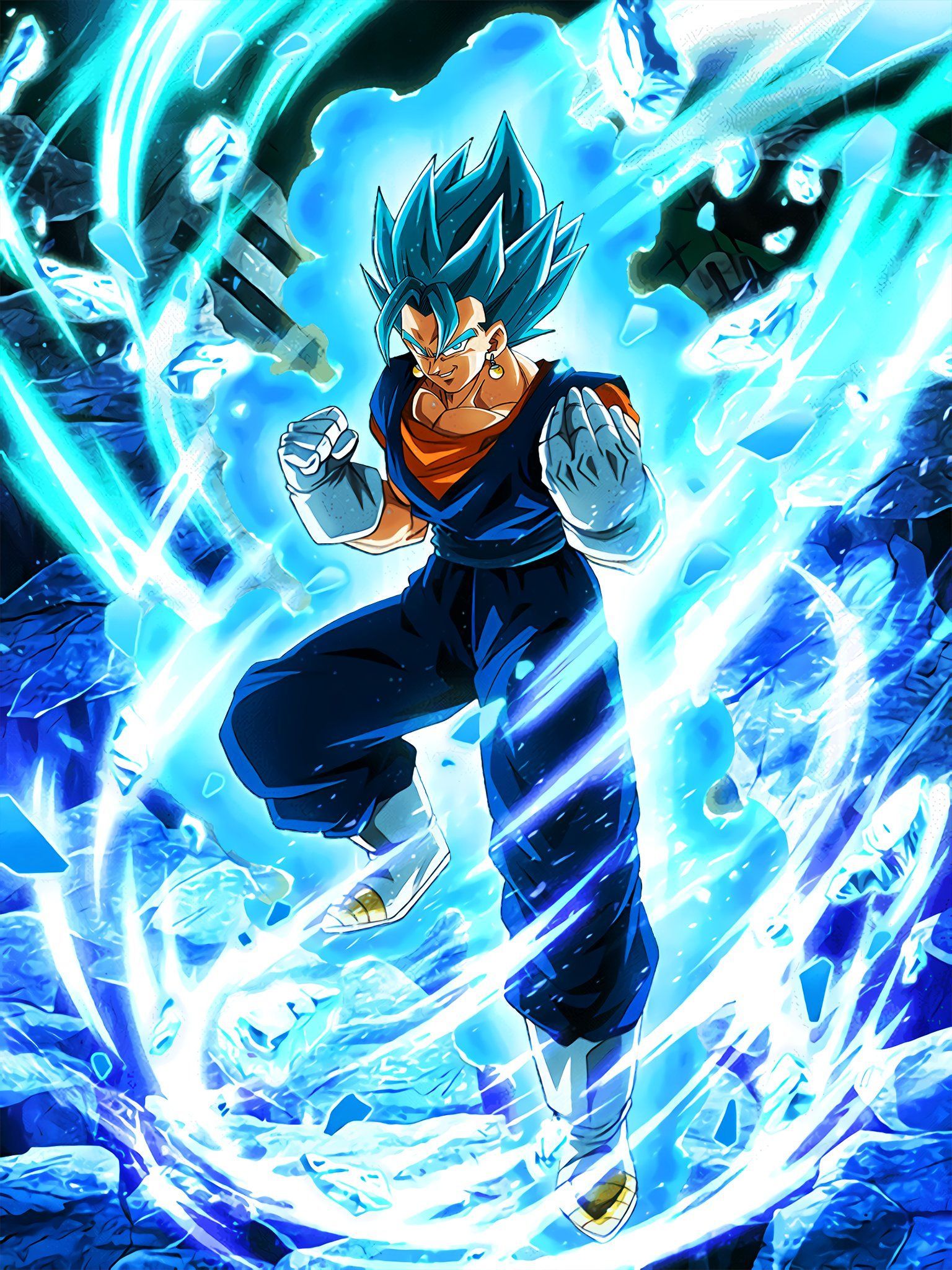
When Super Saiyan God Super Saiyan Vegito stepped onto television screens in November 2016 during Dragon Ball Super Episode 66, the visual reality did not match the narrative weight of the moment. Broadcast across Japan on Fuji TV at 1080i with noticeable digital compression, the climactic battle against Merged Zamasu contained brilliant flashes of animation by Naotoshi Shida and Futoshi Higashide. Yet, those sequences were constrained by rigid production schedules and standard-definition mastering pipelines. The fusion character that defined nineties peak hype felt visually muted on modern high-definition displays.
A decade later, the presentation of that same warrior has fundamentally changed. Today, modern graphic pipelines render the Potara fusion in native 3840x2160 resolution with full high dynamic range (HDR) color gamuts. Driven by specialized cel-shaded graphic engines and the arrival of Unreal Engine 5, fans no longer rely on grainy television rips. The character has transitioned from a compressed broadcast asset into an interactive showcase of high-end rendering technology.
📌 Key Takeaways:
- The Broadcast Constraint: Vegito Blue debuted in 2016 within a restricted 1080i television pipeline that washed out character linework and crushed the contrast of the cyan aura.
- The Shading Breakthrough: Arc System Works altered the trajectory of anime visuals in 2018 by using custom vertex normals in Dragon Ball FighterZ, proving that cel-shaded 3D could replicate hand-drawn animation in 4K.
- Modern Visual Fidelity: Current releases like Dragon Ball: Sparking! ZERO utilize physically based lighting and volumetric particles, setting a new graphical benchmark across high-end PC and console platforms.
The 2016 Broadcast Constraints and Episode 66's Animation Crucible
The visual origins of the transformation were forged under intense studio pressure. Toei Animation produced the "Future Trunks" arc during a period where weekly television animators operated with brutal turnaround times. Key animators delivered striking, kinetic work during the character's appearance in Episode 66. Shida’s cuts contained liquid fluidity, while Higashide brought hard-edged impact frames that instantly captured audience attention.
The broadcast master betrayed those drawings. The master video output was downscaled for broadcast, washed over with post-production digital blurring intended to prevent photosensitivity seizures, and stripped of deep black levels. The character’s signature aura, a dual-layered energy field consisting of divine sapphire inside a yellow Super Saiyan border, frequently dissolved into blocky digital artifacting whenever the screen was filled with fast motion. For years, fans seeking Dragon Ball Super high resolution renders had to settle for upscaled Blu-ray captures that only partially remedied the studio's color grading limitations.
Arc System Works and the Cel-Shaded Engineering Breakthrough
The true turning point occurred away from television studios. In January 2018, Bandai Namco published Dragon Ball FighterZ, developed by Arc System Works. Rather than relying on traditional 2D animation or standard photorealistic CGI, the team implemented a patented technique that altered cel-shaded 3D anime rendering forever.
Lead artist Junya Motomura directed a workflow where 3D character geometries were actively manipulated to mimic hand-drawn key frames. Artists manually edited vertex normals on Super Saiyan Blue Vegito models to control exactly how light fell across the character's hair, cheekbones, and cloth folds. Instead of allowing automated engine lighting to wash out the model, the studio painted artificial shadows directly onto the polygons. When running Dragon Ball FighterZ 4K graphics on modern displays, the character snaps between poses at intentional 24-frame-per-second animation steps while the game engine renders the camera and background at an uncompromising 60 frames per second.
This approach redefined his trademark moves. The Final Kamehameha high definition fx in the game abandoned flat 2D sprite overlays in favor of complex particle emitters paired with screen-warping distortion meshes. The Potara fusion cinematic lighting cast dynamic cyan flares across the fighting stage, establishing a visual language that modern gaming titles continue to emulate.
From Mobile Sprites to Native 4K: The Generational Rendering Shift
The character's aesthetic evolution spanned multiple development pipelines simultaneously. While home consoles chased geometric density, mobile titles forced artists to maximize visual impact on smaller, high-DPI screens. The split required radically different artistic methodologies across platforms over the last decade.
| Release / Medium | Rendering Pipeline | Lighting & Shading Technique | Visual Hallmarks |
|---|---|---|---|
| DBS Anime (2016) | Toei Digital 2D (1080i master) | Flat cel painting, digital glow filters | Hand-drawn Shida cuts, high compression artifacts, softened linework. |
| Dokkan Battle (2018, 2023) | 2D Spine bone-rigged sprites | Pre-rendered raster art, particle layers | Dokkan Battle LR Vegito Blue art introduced dynamic brushwork and ink effects. |
| FighterZ (2018) | Unreal Engine 4 custom cel-shade | Hand-sculpted vertex normals, fixed stepped lighting | 24fps keyframe emulation, anime-accurate camera perspective trickery. |
| Legends (2020, 2024) | Custom Mobile 3D Engine | Real-time mobile shaders, bloom buffers | Dragon Ball Legends high frame rate assets delivering 60fps card interactions. |
| Sparking! ZERO (Current) | Unreal Engine 5 (DirectX 12) | Lumen global illumination, Niagara VFX, sub-surface scattering | Volumetric god rays, clothing wear physics, real-time environment destruction. |
Akatsuki's Dragon Ball Z Dokkan Battle leaned on high-resolution hand-illustrated digital assets. With each anniversary, the game’s animation teams rebuilt character supers, transitioning from crude static cutouts to multi-layered, keyframed recreations of anime sequences. Concurrently, Dimps developed Dragon Ball Legends, which introduced full 3D models running at high refresh rates on OLED mobile screens. These models forced texture artists to craft high-resolution normal maps to maintain crisp edges even under extreme close-ups during Special Move triggers.

Unreal Engine 5 and the Sparking ZERO Real-Time Lighting Overhaul
The release of Spike Chunsoft’s Dragon Ball: Sparking! ZERO represents the most substantial technical leap the character has received. Migrating the arena brawler format to Unreal Engine 5 provided visual capabilities impossible during the PlayStation 2 era of Budokai Tenkaichi.
The Sparking ZERO Vegito Blue visual upgrade abandons baked lighting entirely. When the character powers up, the aura acts as a dynamic emissive light source. In dark or weather-torn stages, the intense blue radiance bounces off real-time geometry, casting soft cyan shadows onto shattered terrain and adjacent fighters. Character hair no longer uses simple flat textures. Developers integrated a subtle subsurface scattering shader that allows light to penetrate the edges of the model's hair strands, mimicking the semi-translucent, ethereal sheen designed by original character animators.
Cloth simulation marks another dramatic shift. As battles progress, Vegito’s orange undershirt and blue Gi tear, crease, and pick up volumetric debris generated by the engine's Niagara particle system. Ultra HD anime backgrounds are no longer static skyboxes. They are fully simulated, reactive environments where the shockwaves of an energy blade slice cleanly through volumetric cloud decks.
Community Archiving: Upscaling, 3840x2160 Wallpapers, and Color Grading Debates
Parallel to official game studios, a dedicated community of digital archivists and visual modders emerged across platforms like Reddit and X (formerly Twitter). The search term "ベジット ブルー 高 画質" (Vegito Blue High Quality) became a major index point on Japanese and international image boards as fans searched for artifacts that bypassed broadcast compression.
Early community efforts utilized neural networks like Waifu2x and Topaz Video AI to upscale 2016 television broadcast rips. These algorithms frequently introduced waxy skin tones and blurred fine line art. In response, modern digital curators shifted toward raw asset extraction. By ripping raw textures from PC game builds and running native Unreal Engine photo modes, creators established massive collections of pristine Vegetto Blue desktop wallpapers 3840x2160.
A heated aesthetic debate accompanied this technical evolution: the precise color hex code of Super Saiyan Blue. The original anime utilized a desaturated, pale turquoise tint overseen by color designer Rumiko Nagai. Modern video game iterations, led by Arc System Works and continued in recent engine builds, shifted heavily toward a deep, saturated royal azure. Digital artists consistently argue over which representation remains faithful to Akira Toriyama’s vision, with 4K wallpaper communities releasing custom Reshade presets to allow users to toggle between anime-accurate cyan and gaming-saturated cobalt.
Frequently Asked Questions (FAQ)
Q1: Where can fans find genuine 4K resolution renders of Vegito Blue without AI artifacts?
A1: The cleanest native assets originate from modern PC game extractions, specifically via the photo modes of Dragon Ball: Sparking! ZERO and Dragon Ball FighterZ running at native 3840x2160 on maximum graphics settings. These yield true pixel-level clarity without the smearing or distorted line work introduced by automated neural network upscaling tools.
Q2: Why does Vegito Blue's aura color look noticeably different across anime and games?
A2: The difference stems from intentional art direction changes. The 2016 Dragon Ball Super television anime used a softer, pastel-tinted color palette supervised by Toei Animation to simplify weekly hand-drawn production. Video game engines utilize high-contrast, deep royal blues alongside secondary HDR color passes to make the character visibly pop against complex 3D stage environments.
Q3: Does upscaling old anime footage to 4K match native modern game graphics?
A3: No. Upscaling 1080i or 720p broadcast footage using AI interpolators simply guesses missing pixel information, often erasing subtle linework and producing waxy artifacts. Native 4K gaming renders calculate real-time geometric lighting, dynamic particle effects, and high-polygon mesh deformation from scratch, delivering far superior clarity and color depth.
The Technological Horizon for Fusion Rendering
The visual progression of Vegito Blue illustrates a broader transition in digital entertainment. The character spent years defined by the limitations of compressed television transmissions and flat digital post-processing. Today, real-time rendering has outpaced the fidelity of the original animation frames.
Modern gaming displays, driven by high-density OLED panels and HDR rendering, treat the character not merely as a nostalgic anime icon, but as an ideal test case for complex visual effects. Balancing deep black contrast levels against blazing cyan luminance pushes hardware to its absolute limit. Whether viewed through the precise keyframes of competitive fighters or the particle-heavy chaos of modern arena brawlers, the Potara fusion has finally achieved the visual standard promised a decade ago.
