Velopharyngeal Insufficiency vs. The Nasal Cycle: What Medical Scopes Reveal About Nasal Voice

You exhale forcefully through both nostrils, and the airflow feels unobstructed. There is no crusting, no heavy mucus, and no acute cold symptoms dragging you down. Yet, every sentence you utter sounds muffled, hollow, or damp, as if you are speaking straight through a heavy winter scarf.
This persistent disconnect between perceived nasal patency and audible vocal resonance drives thousands of patients to otolaryngology clinics every year. In early 2026, clinical attention turned sharply toward home intervention missteps after an investigative ORICON NEWS Report detailed how aggressive saline rinses and manual irrigation often aggravate hidden tissue inflammation instead of curing phantom congestion. When your nostrils feel wide open but your speech sounds congested, the breakdown rarely lives at the tip of your nose. It originates deeper along the respiratory tract, where the mechanics of muscular velopharyngeal closure collide with dynamic vascular cycles.
📌 Quick Summary:
- Acoustic Deception: Speech sounds "nasal" either because too little air escapes through the nose (hyponasality) or because too much air leaks into the nasal cavity (hypernasality). Clear front nostrils can mask deep pharyngeal obstruction or muscular leakage.
- Dynamic Tissue Shifts: The physiological nasal cycle, occult turbinate swelling, and asymmetric soft palate closure distort harmonic resonance without blocking daytime resting breathing.
- Clinical Solution: Proper diagnosis requires direct visualization via flexible nasopharyngoscopy or posterior rhinoscopy, rather than aggressive home steaming or nasal flushing that can inflame delicate mucosa.
The Dual Faces of Acoustic Resonance: Hypernasality vs. Hyponasality
The everyday label "nasal voice" is an acoustic paradox. In speech-language pathology, clinicians split this single symptom into two opposing physiological categories: hypernasality and hyponasality. Conflating the two leads patients down incorrect treatment paths, from unnecessary decongestant sprays to misguided home rinses.
Hyponasality occurs when acoustic energy cannot enter the nasopharynx during the production of nasal consonants such as /m/, /n/, and /ng/. A speaker trying to say "morning" ends up saying "bording." This reflects a physical blockage somewhere along the airway. What fools many people is that this obstruction often sits far behind the anterior nasal valve. You can breathe easily through the front of your nose while an enlarged adenoid pad or posterior turbinate tail chokes off the specific acoustic frequencies required for clean phonation.
Hypernasality works in reverse. During normal speech, oral vowels like /a/, /e/, and /o/ require complete separation between the oral and nasal cavities. The soft palate must swing upward and backward like a trapdoor, sealing tightly against the posterior pharyngeal wall. When that muscular barrier fails, air escapes continuously into the nasal vault. The resulting voice sounds hollow, twangy, and muffled. Patients perceive this leakage as "stuffy" because the escaping air dampens the clarity of their consonants, creating a perceived acoustic blockage where none physically exists.
The Soft Palate Trapdoor: Velopharyngeal Insufficiency Unmasked
Normal speech demands rapid, millimeter-precise valve action. Every time you alternate between an oral consonant like /s/ or /p/ and an open vowel, the levator veli palatini muscle lifts the velum to prevent acoustic energy from spilling into the skull base. This dynamic process, known as soft palate closure, occurs dozens of times per minute during casual conversation.
When this mechanism degrades, the diagnosis is velopharyngeal insufficiency (VPI). Structural deficits cause this breakdown in multiple ways. A hidden submucous cleft palate, a congenitally short velum, or tissue scarring from a prior tonsillectomy or uvulopalatopharyngoplasty can leave a gap of just two to three millimeters. That tiny gap alters resonance dramatically. Air rushes into the nasal cavity during high-pressure consonants, producing audible nasal emission that sounds like faint hissing or snorting beneath speech.
Neurological fatigue also plays a role. Mild cranial nerve paresis, post-viral neuropathy, or general muscular fatigue can slow the speed of palatal elevation. Patients with early-stage muscular fatigue report that their voice sounds crisp at 8:00 AM but becomes noticeably slurred and nasal by 6:00 PM. Frontal airflow remains pristine throughout the day, yet the muscular seal steadily gives out under conversational load.
Diagnostic Contrasts: Why Structural and Acoustic Pathways Diverge
Identifying the root cause of an anomalous nasal tone requires untangling airflow mechanics from tissue geometry. A patient can have high nasal airway resistance without sounding nasal, or perfectly balanced resistance alongside profound vocal distortion.
| Pathological Condition | Primary Anatomical Site | Acoustic Profile | Perceived Breathing Resistance |
|---|---|---|---|
| Velopharyngeal Insufficiency (VPI) | Velum and posterior pharyngeal wall | Severe hypernasality with nasal turbulence | Normal (nostrils feel completely unobstructed) |
| Posterior Turbinate Hypertrophy | Inferior turbinate posterior tips (choanae) | Hyponasality (loss of /m/ and /n/ resonance) | Mild to moderate resting resistance |
| Adult Adenoid Hypertrophy | Nasopharyngeal vault roof | Cul-de-sac resonance (muffled, trapped sound) | Low during tidal breathing, worse when supine |
| Physiological Nasal Cycle Drift | Alternating erectile mucosa across turbinates | Transient, alternating resonance shifts | Imperceptible in 80% of healthy individuals |
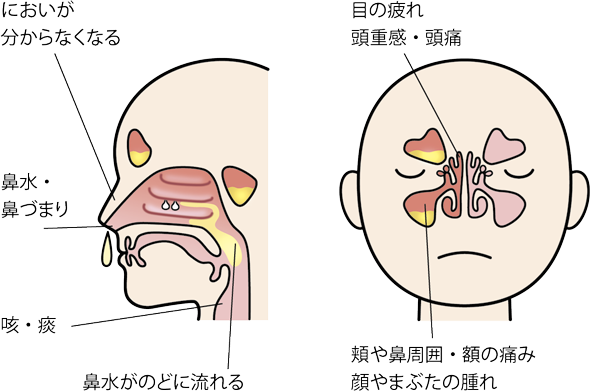
The Nasal Cycle and Stealth Obstruction: What Scopes Reveal
Human nasal anatomy is not a static set of rigid pipes. It is a living, vascular system governed by the autonomic nervous system. Under normal conditions, healthy individuals experience the physiological nasal cycle: a rhythmic, alternating engorgement and decongestion of the inferior turbinates that shifts sides every two to six hours.
Most people never notice these shifts because the total cross-sectional area of the combined nasal airway remains steady. When the left turbinate swells, the right shrinks to compensate. However, vocal resonance is exquisitely sensitive to internal chamber volume. As turbinate swelling expands the vascular sinusoids in one nasal passage, it alters the acoustic reflection coefficient inside the nasopharynx. If you speak for hours as part of your profession, that subtle internal shift can transform a clear voice into a raspy, dampened tone without ever triggering the sensation of a clogged nose.
Direct visualization through high-definition diagnostic scopes consistently catches what external mirror checks miss. In clinical settings, specialists deploy two primary optical tools: posterior rhinoscopy and flexible nasopharyngoscopy.
Flexible nasopharyngoscopy threads an ultra-thin fiber-optic or chip-on-the-tip camera through the nasal floor directly into the upper throat. The clinician watches real-time palatal motion while the patient counts from sixty to seventy or repeats phrases like "puppy pop" and "baby bob." During this evaluation, clinicians often encounter adult adenoid hypertrophy. While typically associated with childhood, persistent or recurrent lymphoid tissue in adults regularly forms a physical dampener at the skull base. The anterior passage stays clear, yet the acoustic chamber behind it is partially choked by tissue.
Similarly, mucosal trauma from well-intentioned home remedies often surfaces on the monitor. Otolaryngologist Dr. Shino Kimura warned in a May 2026 clinical advisory for livedoor News that aggressive nasal lavage and forced nose-blowing destabilize the delicate mucosal barrier, inducing reactive posterior swelling. When patients use hypertonic rinses incorrectly or blow violently against resistance, they trigger reactive edema along the posterior choanae. The nostrils feel clear, but the acoustic exit remains swollen shut.
Therapeutic Pathways: From Targeted Speech Therapy to Surgical Correction
Treating a vocal resonance disorder without first confirming whether the problem is hypernasal or hyponasal causes immediate treatment failure. Spritzing over-the-counter vasoconstrictor sprays into a nose that suffers from velopharyngeal insufficiency only dries out the mucous membrane, increasing vocal cord friction without improving closure.
For confirmed hypernasality tied to mild muscular hypomobility or behavioral speech habits, speech-language pathology is the primary treatment. Therapy focuses on continuous auditory feedback, articulation placement drills, and maximizing oral cavity aperture. By opening the mouth wider during vowel production, speakers lower acoustic impedance across the oral route. More sound energy exits through the lips, minimizing the proportion that escapes upward through a minor velopharyngeal gap.
Structural deficits require surgical intervention. When an anatomical gap exceeds four to five millimeters during speech, speech therapy alone cannot force the levator muscles across the void. In these cases, reconstructive surgeons perform a pharyngeal flap or dynamic sphincter pharyngoplasty, transposing vertical tissue strips from the pharyngeal wall to narrow the lateral ports. For severe posterior turbinate swelling that deadens resonance without blocking daytime breath, targeted radiofrequency ablation or submucosal resection can trim excess venous tissue while preserving delicate mucosal cilia.
Frequently Asked Questions (FAQ)
Q1: Why does my voice sound stuffy even though air passes freely through my nostrils?
A1: Your vocal resonance depends on tissue deep inside the pharynx and soft palate, not just the front of your nose. If your soft palate fails to seal properly, excess air escapes into the nasal vault (hypernasality), creating a hollow, muffled acoustic profile that sounds like a cold even when airflow is clear.
Q2: Can seasonal allergies cause a nasal voice without significant mucus production?
A2: Yes. Mild allergic responses can trigger vascular engorgement in the deep posterior inferior turbinates without generating runny mucus. This localized swelling acts as an acoustic dampener, altering resonance while allowing resting air to pass through unhindered.
Q3: How do specialists determine the difference between hypernasality and hyponasality?
A3: Otolaryngologists and speech-language pathologists use nasal mirror tests, nasometry, and flexible nasopharyngoscopy. Nasometry calculates the ratio of nasal-to-oral acoustic energy, while nasopharyngoscopy allows doctors to watch velopharyngeal closure live as you speak.
Q4: Are regular saline nasal washes safe if I suspect resonance issues?
A4: Gentle, isotonic rinses are generally harmless, but forceful or frequent irrigation can irritate sensitive respiratory mucosa. Medical practitioners advise against aggressive flushing, which can cause reactive tissue swelling deep in the choanae and worsen vocal resonance problems.
Restoring Balance to Vocal Acoustics
Vocal resonance is the product of balanced airflow and coordinated muscle movement throughout the upper airway. When your voice sounds persistently muffled despite clear nostrils, the symptom is rarely an illusion. It points to a measurable imbalance between velopharyngeal closure and deep mucosal volume.
Instead of guessing with over-the-counter decongestants or drying out your nasal lining with repetitive rinses, seek an objective evaluation with an ear, nose, and throat specialist. A brief nasopharyngoscopy can instantly reveal whether the issue stems from palatal muscle fatigue, occult lymphoid tissue, or subtle turbinate swelling. Pinpointing that structural boundary is the only reliable way to bring clarity back to your voice.
