Viral Proof: How Cardboard Box Mole Games Awaken Your Pet's Secret Hunting Instincts
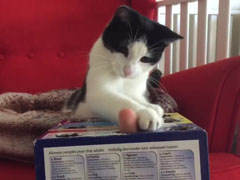
A shipping carton, a box cutter, and five circular cutouts are quietly replacing expensive electronic pet gadgets across millions of living rooms. The viral phenomenon of the homemade cardboard Whac-A-Mole, known in Japan as mogura tataki, has evolved from a charming social media gimmick into a recognized sensory enrichment technique. As documented by an early ITmedia Report covering the sensation of homemade finger-mole boxes, pet owners quickly discovered that a simple repurposed cat food container could capture an animal's undivided focus far better than commercial plastic automatons.
The mechanics look deceptively rudimentary: human hands manipulate fingers, felt mice, or feathered sticks through carved access holes beneath a closed cardboard chassis. Above, domestic cats and high-drive dogs track the erratic motion with razor-sharp intensity. This low-cost craft bridges the gap between everyday household recycling and feline behavioral psychology, demonstrating how tactile, unpredictable movement activates dormant stalking rituals inside modern indoor pets.
📌 Key Takeaways:
- Behavioral Trigger: Intermittent mechanical appearance closely mimics burrowing prey, satisfying predatory motor patterns that store-bought motorized gadgets fail to stimulate.
- Cost vs. Engagement: Zero-dollar upcycled packaging outlasts battery-powered plastic novelties by offering customizable hole spacing, variable tactile resistance, and organic human interaction.
- Safety and Design: Rounded cutout perimeters, non-toxic vegetable-based glue, and defensive finger-wand buffers prevent accidental scratches and claw snags during high-speed play sessions.
The Viral Rise of Homemade Finger Mole Arenas
The trend began with quiet domestic ingenuity. Pet guardians, weary of purchasing high-tech laser towers and robotic rolling balls that cats abandoned after 48 hours, noticed an enduring truth: cats inevitably preferred the shipping box over the toy inside it. Japanese creators took that observation to its logical extreme by cutting grids of 35mm to 50mm holes into sturdy snack crates, poking their fingers through from underneath to create a reactive, living arcade game.
The visual comedy of domestic felines furiously swatting at popping fingertips struck an immediate chord on platforms like TikTok and YouTube. In one widely tracked broadcast highlighted by livedoor ニュース on July 17, 2026, the popular channel "Minira Diary" showcased a Minuet kitten locked in an intense duel with a miniature cardboard rodent arcade. Viewers flooded the comment sections, noting how quickly the kitten's eyes dilated and its body compressed into a coiled stalking posture. What appeared to be casual play was actually an authentic demonstration of feline predatory mechanics operating at peak alertness.
The Neuroscience Behind the Box: Triggering the Predatory Motor Sequence
Domestic cats retain roughly 95% of the behavioral repertoire found in wild Felis lybica. In nature, small rodents and shrews spend their lives navigating subterranean tunnels, surfacing for fractions of a second before ducking back beneath leaf litter. When an indoor cat stares at a blank floor, its brain starves for micro-movements. The sudden, vertical emergence of an object from an opaque plane triggers what animal behaviorists classify as the "orient-stalk-pounce" sequence.
Commercial battery-driven toys operate on fixed algorithmic timers or uniform circular paths. Felines decode these repetitive mechanical rhythms within minutes, resulting in rapid habituation and disinterest. A human-driven cardboard mole box introduces biological unpredictability. You can pause, twitch, feint, or retract based on the pet's pupil dilation and ear position. That organic feedback loop keeps dopamine levels elevated, giving indoor animals the intense mental workout necessary to curb nocturnal pacing, vocalization, and territorial aggression.
DIY Builds Versus Commercial Entertainment: Performance Breakdown
Choosing the right enrichment tool requires balancing production effort, durability, pet safety, and behavioral payoff. While major pet brands flood shelves with plastic sensory boards, homemade variations retain distinct advantages in adaptability and cost efficiency.
| Enrichment Format | Average Build / Retail Cost | Predatory Engagement Rate | Average Usable Lifespan |
|---|---|---|---|
| DIY Cardboard Whac-A-Mole | $0, $3 (Upcycled materials) | 88%, 94% (High alertness) | 2, 6 weeks (Easily replaced) |
| Motorized Hide-and-Seek Toys | $25, $45 (Retail unit) | 35%, 48% (Drops after day 3) | 6, 12 months (Mechanical wear) |
| Static Puzzle Treat Feeders | $15, $30 (Hard plastic) | 60%, 72% (Food-dependent) | 12, 24 months |

Blueprint for a Safe and Durable Cardboard Hunting Arena
Constructing an effective game requires more than hacking random openings into a carton. A poorly built box can tear claws or pinch paw pads during aggressive strikes. Start with a double-wall corrugated box measuring roughly 40cm by 30cm, with a low profile height of around 10cm to 15cm. This shallow depth allows your hand complete mobility while keeping the upper surface flat and stable under your pet's body weight.
Trace 5 to 7 circles across the top panel, spacing them at least 8cm apart to preserve structural rigidity. Use a craft knife to cut clean edges, then rub medium-grit sandpaper around the rim of each cutout to smooth down raw cardboard fibers. Rather than risking direct scratches by sticking bare fingers through the holes, attach a felt mouse or sheepskin pom-pom to the tip of a flexible 20cm wooden dowel. This keeps your skin safe from reflex bites while allowing you to pop the target up with sudden, lifelike snaps.
From Arcade Nostalgia to Hollywood IP: The Whac-A-Mole Legacy
The enduring appeal of this play pattern reaches far beyond household pets. Originally engineered by Aaron Fechter and popularized throughout the 1970s and 1980s, the Whac-A-Mole concept became an arcade titan before Mattel acquired its global brand licensing rights. The underlying premise, punishing chaotic pop-up intrusions with swift physical precision, remains deeply embedded in popular culture.
That cultural grip reached a new milestone when Cinematoday reported on May 20, 2025, that Mattel and TriStar Pictures had officially partnered to develop a live-action Whac-A-Mole feature film, riding the expansive momentum of toy-to-cinema adaptations. Whether framed as a multi-million-dollar studio property or constructed from an empty dry-food box on a Saturday morning, the core psychological hook remains identical: nothing captivates human or animal attention quite like catching an elusive target bursting from the dark.
Frequently Asked Questions (FAQ)
Q1: What are the best box dimensions for an adult cat?
A1: Aim for a box approximately 40cm long, 30cm wide, and 12cm high. The low clearance gives you full wrist mobility underneath while providing a broad, stable platform that won't flip over when an 8-to-12-pound cat lands directly on top of it.
Q2: How do I prevent my cat from getting scratched or biting my fingers?
A2: Avoid using your bare hands as the target. Mount a small felt toy, silicone thimble, or fleece scrap onto a sturdy chopstick or craft dowel. Always ensure the cutout perimeters are sanded smooth or lined with paper tape to prevent minor friction burns on paw pads.
Q3: How long should a play session last to avoid feline overstimulation?
A3: Keep sessions between 8 and 12 minutes. Cardboard mole games demand intense concentration; extended sessions can trigger overstimulation, leading to aggressive biting or flattened ears. Always end the game by letting the pet "catch" a physical treat or toy to complete their natural predatory cycle.
Cardboard Engineering and the Future of Pet Enrichment
The widespread success of homemade arcade boxes reflects a fundamental shift in how companion animals are kept active. Pet parents are increasingly recognizing that engagement stems from organic interaction and sensory unpredictability, not expensive electronics or complex mobile companion apps. An empty carton destined for the recycling bin can outperform sophisticated plastic hardware because it demands genuine human participation.
By tailoring cutouts to your pet's specific strike range and varying the speed of movement, you provide an authentic physical outlet for ancestral hunting drives. As long as cats stalk shadows and dogs pounce on rustling leaves, a simple box and a flick of the wrist will remain one of the most effective, accessible enrichment tools available.
