Volleyball Net Height Rulebook Explained: Busting Common Measurement Myths
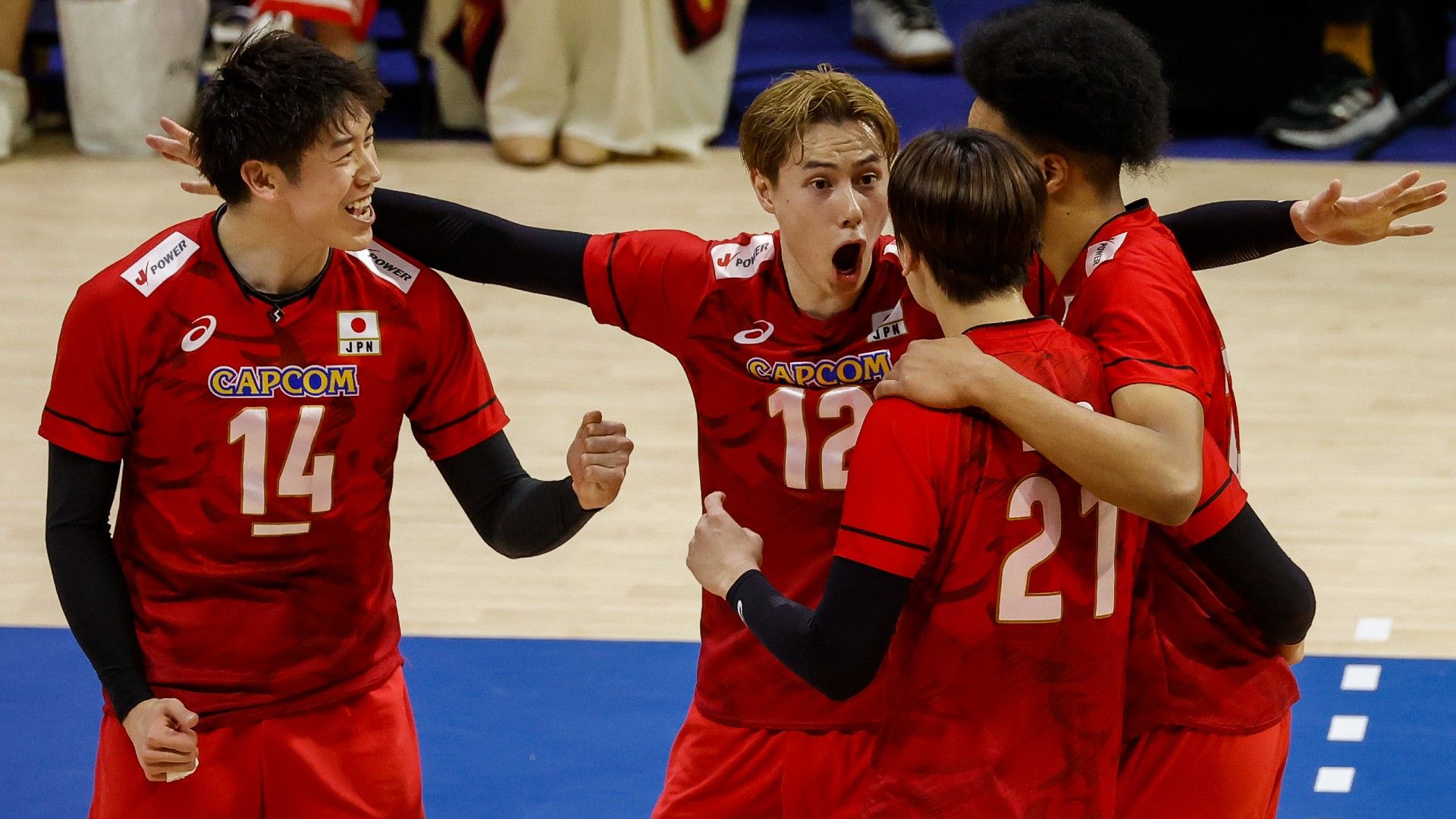
Precision in competitive volleyball begins well before the first serve crosses the tape. When the Japanese men's national team took the court during the 2026 Asian Championship quarterfinals against India, high-stakes international broadcasts via platforms like Amazon's FOD spotlighted the sheer physical demand placed above the cord, an operational intensity verified in recent coverage by Goal Report. At that tier of play, where teams battle for world ranking points and direct qualification paths toward the Los Angeles Olympics, a half-inch discrepancy alters attacking angles and invalidates block touches.
Setting up a court demands strict adherence to measurement protocols. Coaches, facility directors, and tournament organizers frequently fall into standard rigging traps, risking sanctions or forfeits under governing bodies like the Fédération Internationale de Volleyball (FIVB) and the National Federation of State High School Associations (NFHS).
📌 Key Takeaways:
- Core Standards: Regulation volleyball net height stands at 2.43 meters (7 feet, 11 5/8 inches) for men and 2.24 meters (7 feet, 4 1/8 inches) for women.
- Allowable Deflection: The net may sit up to 2 centimeters (3/4 inch) higher over the sidelines, but it must never drop below regulation height at the exact center.
- Equipment Requirements: Official volleyball antenna height extends 80 centimeters (32 inches) above the top band, marked in contrasting 10-centimeter bands to establish vertical crossing boundaries.
The Millimeter Margins of Modern International Play
Volleyball has evolved into an aerial sprint. Modern offenses run tempos clocked under 0.8 seconds from setter release to terminal attack, making vertical clearance a decisive tactical battleground. In marquee international showdowns, such as sixth-ranked Japan facing off against rivals like South Korea (ranked 24th) and India (ranked 50th) on the path toward continental titles, the margin between an unplayable block touch and a clean tool down the line comes down to millimeters.
Referees verify net height using a dedicated measuring rod at three distinct locations: above both sidelines and directly over the center line. If the center falls even 5 millimeters below the statutory mark, the chief official will hold the match until ground crew adjust the winch. Play cannot legally proceed on a non-compliant surface.
Official Center Height and the Sideline Sag Myth
A persistent myth across club leagues suggests that an official net must run entirely flat from antenna to antenna. Physics and heavy tension cables make absolute horizontal rigidity impossible across a 9.5- to 10-meter span.
Governing bodies recognize this tension reality through clear tolerance language. Under FIVB official rules and NFHS volleyball standards, measuring net sag centers on a single non-negotiable rule: the measurement at court center must match the division requirement exactly, while height directly over the sidelines may exceed the official baseline by no more than 2 centimeters (0.79 inches).
Crucially, both ends above the sidelines must measure the exact same height. A net pitched higher on the right sideline than on the left introduces an asymmetrical plane that creates unfair defensive advantages. Technicians must tighten top cables first to set center clearance, followed by bottom and side tension straps to eliminate slack without distorting the outer vertical bands.
Regulation Net Heights Across Divisions and Surfaces
Net heights vary depending on demographic criteria, physical developmental stages, and surface adaptations. While standard adult indoor volleyball maintains strict uniformity, youth competitions, sitting disciplines, and outdoor variations deploy distinct calibrations.
| Competition Division | Metric Standard | Imperial Equivalent | Governing Rulebook |
|---|---|---|---|
| Men's Senior / U20 / U19 | 2.43 m | 7' 11 5/8" | FIVB, USAV, NCAA |
| Women's Senior / U20 / U19 | 2.24 m | 7' 4 1/8" | FIVB, USAV, NCAA, NFHS |
| Coed Adult Standard | 2.43 m | 7' 11 5/8" | USAV (Reverse Coed uses 2.24 m) |
| Boys Middle School (U14) | 2.24 m | 7' 4 1/8" | USAV, Regional Interscholastic |
| Girls Middle School (U14) | 2.15 m | 7' 0 5/8" | USAV, Regional Interscholastic |
| Sitting Volleyball (Men) | 1.15 m | 3' 9 1/4" | World ParaVolley |
| Sitting Volleyball (Women) | 1.05 m | 3' 5 3/8" | World ParaVolley |
| Beach Volleyball (Men) | 2.43 m | 7' 11 5/8" | FIVB Beach, AVP |
| Beach Volleyball (Women) | 2.24 m | 7' 4 1/8" | FIVB Beach, AVP |
Outdoor sand installations present specific measurement challenges. Because sand shifts underfoot, referees do not simply measure from the loose surface beneath the net. Event crews level the playing area between the poles before using a flat wooden baseplate to establish a firm zero point on the sand.

Hardware Alignment, Antennas, and Boundary Geometry
Setting up the net requires checking the entire court framework. Standard indoor volleyball court dimensions measure 18 meters long by 9 meters wide (59 feet by 29 feet, 6 inches), flanked by a free zone at least 3 meters wide on all sides.
The net measures 1 meter wide and spans 9.5 to 10 meters long. It is positioned vertically over the center axis dividing the floor into two identical 9-meter squares.
Two white tapes, each 5 centimeters wide, are fastened vertically to the net directly above each court sideline. Fastened to the outer edge of these side tapes are the antennas:
- Flexible fiberglass rods measuring 1.80 meters (71 inches) in length with a diameter of 10 millimeters.
- The upper 80 centimeters (31.5 inches) extends straight up above the top horizontal band.
- Alternating red and white stripes, each 10 centimeters long, line this visible upper section.
The antennas serve as visual extensions of the sidelines. Any hit touching an antenna, landing outside its vertical path, or contacting the net cables outside the tape constitutes an immediate dead ball.
Common Rigging Violations and Administrative Penalties
Equipment delays disrupt schedules and trigger administrative penalties. In NFHS competitions, failure to provide a regulation court layout within designated warmup windows can yield an administrative yellow card against the home team, escalating to loss of rally (point penalty) if unresolved.
The most frequent setup failure stems from post deflection. When crews crank winches to eliminate center sag, weak floor sleeves or bending uprights pull inward at the top. The center height might reach 2.43 meters, but the sidelines drop or bow unevenly.
Inspectors look for three frequent setup errors:
- Loose Bottom Cables: A loose bottom cable allows the net to blow outward on driven attacks. The bottom band requires firm horizontal anchoring to prevent false net-touch disputes.
- Improper Antenna Placement: Fastening antennas inside the side tape narrows the legal crossing space. Antennas must align flush against the tape's outer boundary.
- Misaligned Upright Padding: Safety rules require protective padding around all uprights up to a height of at least 1.70 meters. Omitting padding will halt sanctioned warmups immediately.
Frequently Asked Questions (FAQ)
Q1: Why is the net permitted to be higher at the sidelines than at the center?
A1: Physics makes absolute horizontal tension across a 10-meter span impossible without damaging floor plates or breaking the cable. Rulebooks allow a 2-centimeter (3/4-inch) rise at the posts to account for natural structural sag while ensuring the center meets minimum clearance.
Q2: How does net height change in coed competition?
A2: Standard coed competition uses the regulation men's height of 2.43 meters (7 feet, 11 5/8 inches). In "Reverse Coed" play, where female players hit on the front row and male players hit strictly behind the 3-meter line, the net drops to the women's height of 2.24 meters (7 feet, 4 1/8 inches).
Q3: How do referees resolve disputes over net height during a match?
A3: Team captains may request a formal measurement check through the second referee during a dead ball or timeout. The lead official steps onto the stand with a calibrated measuring stick. If the net has slipped below regulation, play halts while court managers restore proper tension.
Precision Enforcement on the Road to 2028
Every international rally, from the packed stands of the Asian Games in Nagoya to Olympic qualification battles, hinges on equipment accuracy. When world-class athletes hit balls at speeds above 120 km/h, slight variances in net setup alter outcomes.
Tournament supervisors and court managers cannot rely on guesswork. Using calibrated measuring tools, maintaining correct sideline tolerances, and following official guidelines protects competitive balance across every division.
