What Is a Bicycle Kick? The Gravity-Defying Soccer Move That Shocks Stadiums Worldwide
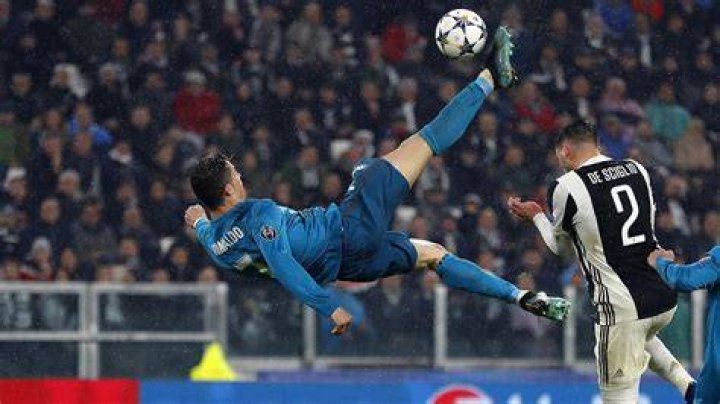
Few sights in modern sports stop time quite like a soccer player throwing both feet toward the sky, back turned to goal, striking a cross out of thin air. Known universally as the bicycle kick, or scissors kick, overhead kick, and chilena, this aerial volley technique represents the absolute apex of soccer acrobatics. When executed properly, it electrifies stadiums and explodes across digital broadcasts, sparking nationwide replay packages on regional outlets like the FOX 4 News Dallas-Fort Worth Report whenever grassroots or elite strikers pull off the stunt.
Yet pulling off an overhead strike demands far more than theatrical flair. It requires supreme aerial kinesthetics, blind positional orientation, and a split-second disregard for personal safety. Striking the ball at full height while suspended upside down in midair produces unmatched offensive power, but misjudging the trajectory leaves players facing fractured wrists, bruised ribs, or an immediate red card for dangerous play.
📌 Key Takeaways:
- Core Definition: A bicycle kick occurs when an inverted attacker leaps backward, cycles their legs to create rotational whip, and strikes an airborne ball over their head before crashing to the turf.
- Origins: Credited to Spanish-Chilean pioneer Ramón Unzaga around 1914 in the seaport of Talcahuano, the technique earned international fame across South America as la chilena.
- Regulatory Risk: Under IFAB Law 12, referees penalize overhead kicks as high boot fouls if an opponent is close enough to risk facial contact.
The Basque Athlete Who Invented the Move in Talcahuano
Discussions regarding who invented the bicycle kick often spark heated debates between Chilean and Peruvian historians. However, official records trace the earliest documented strikes to Ramón Unzaga, a Basque-born athlete who settled in Chile and first unleashed the airborne strike in January 1914 at the El Morro stadium in Talcahuano.
Unzaga was an all-around track-and-field talent. He combined pole-vault agility with soccer fundamentals, hurling himself backward to swat defensive clearances away from his penalty box. Local newspapers initially called the maneuver the chorera, honoring the port town's residents. When the Chilean national team competed in the Copa América tournaments of 1916 and 1920, Argentine journalists marveled at Chilean players performing the aerial strike and dubbed it la chilena.
Peruvians point to the port city of Callao, where local dockworkers engaged in games against British sailors in the late nineteenth century, claiming the strike emerged there as the chalaca. Decades later, Brazilian legend Leônidas da Silva popularized the technique across Europe during the 1938 FIFA World Cup, cementing its status as an offensive weapon rather than a desperate defensive clearance.
Defying Physics with an Inverted Airborne Volley
Executing an authentic bicycle kick demands rapid sequence timing. The maneuver consists of three distinct phases: the jump launch, the mid-air leg scissor, and the inverted ball strike.
The sequence begins with an offensive player reading a high cross or deflected ball while their back faces the opposition target. Rather than chesting the ball down, the striker plants their non-kicking leg and leaps violently backward. This vertical push converts forward momentum into upward rotational torque, thrusting the player's torso parallel to the ground.
Once airborne, the player initiates the signature bicycle motion. The non-kicking leg lifts first, acting as a visual decoy for defenders and functioning as a counterweight. At peak altitude, often exceeding 2.3 meters (7.5 feet) off the grass, the player scissors their legs in midair. Snapping the non-kicking leg downward propels the kicking leg upward like a catapult. The instep meets the ball cleanly right at the apex, sending a ferocious downward trajectory toward goal.
Five Historic Overhead Strikes That Changed Soccer Lore
Throughout modern soccer history, rare overhead strikes have altered title races and etched themselves into collective memory. The following benchmark moments demonstrate the evolution of acrobatic finishing under pressure.
| Player & Match | Date & Competition | Peak Strike Height | Strategic Context |
|---|---|---|---|
| Wayne Rooney (Manchester United vs. Man City) | February 12, 2011 (Premier League) | 1.85 m (Shin-contact volley) | Decided the Manchester Derby in the 78th minute. |
| Zlatan Ibrahimović (Sweden vs. England) | November 14, 2012 (International Friendly) | 2.05 m (From 30 yards out) | Won the 2013 FIFA Puskás Award from extreme distance. |
| Cristiano Ronaldo (Real Madrid vs. Juventus) | April 3, 2018 (UEFA Champions League) | 2.38 m (Crossbar elevation) | Earned a standing ovation from opposing Juventus fans in Turin. |
| Gareth Bale (Real Madrid vs. Liverpool) | May 26, 2018 (UCL Final) | 1.98 m (Off a whipped Marcelo cross) | Restored Madrid's lead within three minutes of coming on. |
| Alejandro Garnacho (Man United vs. Everton) | November 26, 2023 (Premier League) | 2.15 m (Moving backward to edge of box) | Claimed the Premier League Goal of the Season and Puskás nomination. |
Landing Mechanics and the Fine Line of Physical Risk
Every overhead kick carries severe impact forces. The striking athlete leaves the pitch entirely, suspended upside down with zero visual contact of the turf beneath them. How they land determines whether they sprint away celebrating or leave the pitch on a stretcher.
Professional landing mechanics dictate that strikers must never brace their fall with locked elbows or stiff wrists. Landing on an outstretched hand channels hundreds of pounds of downward kinetic energy directly into the scaphoid and radius bones, causing wrist fractures or dislocated shoulders. Instead, elite players absorb impact by rolling across the fleshy lateral zone of their upper back and shoulder blade, sliding across the grass to distribute shock over a wider surface area.
Concussions represent another massive danger. When players fail to tuck their chin toward their sternum during the descent, the back of their skull can whip backward onto the turf. Youth coaching academies consistently discourage amateur players from attempting full scissors kicks on firm artificial turf due to spine compression hazards.
The High Boot Foul and the Dangerous Play Rule
Spectators celebrate bicycle kicks, but match officials view them through a strict regulatory lens: IFAB Law 12 (Fouls and Misconduct). The law strictly regulates playing in a dangerous manner, commonly penalized as a high boot foul.
Under referee association directives, an overhead kick is entirely legal if executed in vacant space. If a defender approaches within heading distance, swinging a cleat at eye level immediately alters the infraction criteria:
- No Contact Made, Close Proximity: An indirect free kick is awarded against the attacker for dangerous play if a nearby defender must pull their head back to avoid getting kicked.
- Direct Contact Above the Shoulder: If the attacking player's studs connect with an opponent’s head, face, or chest, the referee automatically awards a direct free kick or penalty, paired with a mandatory yellow card for reckless play.
- Excessive Force with Cleats Exposed: Connecting with full force using exposed aluminum studs results in a straight red card for serious foul play, regardless of whether the striker intended to hit the ball.
This dynamic creates a high-stakes tactical dilemma inside crowded penalty boxes. Striking players must judge whether incoming central defenders will challenge for the aerial ball before committing their legs into upward rotation.
The FIFA Puskás Award Legacy and Global Obsession
The bicycle kick holds a special status in world sports culture because it combines pinpoint athletic precision with raw unpredictability. While tactical set pieces and passing patterns stem from meticulous training ground drill work, an overhead kick almost always represents an instinctive reaction to an imperfect pass.
When the FIFA Puskás Award was established in 2009 to honor the year's most aesthetically breathtaking goal, overhead volleys instantly became recurring contenders. Strikes by Zlatan Ibrahimović in 2013 and amputee soccer star Marcin Oleksy in 2022 demonstrated that the move transcends specific leagues or physical limitations, standing out as soccer’s supreme visual feat.
Frequently Asked Questions (FAQ)
Q1: What is the main difference between a bicycle kick and a scissors kick?
A1: While the terms are frequently used interchangeably, a bicycle kick strictly refers to an inverted strike executed with the player's back facing the goal and both legs cycling vertically overhead. A scissors kick can occur horizontally or sideways, where the legs cross like blades to hit a lateral volley without the player turning fully upside down.
Q2: Why is the move called "la chilena" in Spanish-speaking countries?
A2: The name originated after Spanish immigrant Ramón Unzaga introduced the airborne volley while playing for Chilean club teams and the Chilean national squad during the 1916 and 1920 South American Championships. Surprised Argentine and Uruguayan journalists branded the technique la chilena in their match reports.
Q3: Can a bicycle kick goal be disallowed if the player does not touch an opponent?
A3: Yes. Under IFAB Law 12, if an opposing defender is positioned close enough that the swinging boot prevents them from challenging for the ball out of fear of getting struck, the referee can disallow the goal and award an indirect free kick for playing in a dangerous manner.
Why Soccer Acrobatics Still Dominate Highlight Reels
Modern soccer places heavy emphasis on positional discipline, high-press data metrics, and structured low-block defenses. Despite that analytical rigor, spontaneous moments of individual acrobatics still break tight matches wide open.
A perfectly struck bicycle kick defies defensive geometry. It turns a misdirected cross into an unstoppable bullet before goalkeepers can set their feet. That blend of danger, physical timing, and cinematic execution ensures the airborne volley remains the gold standard of athletic brilliance.
