When Kyoto Locals Actually Praise You: The Subtle Shift Between Real Compliments and Polite Sarcasm
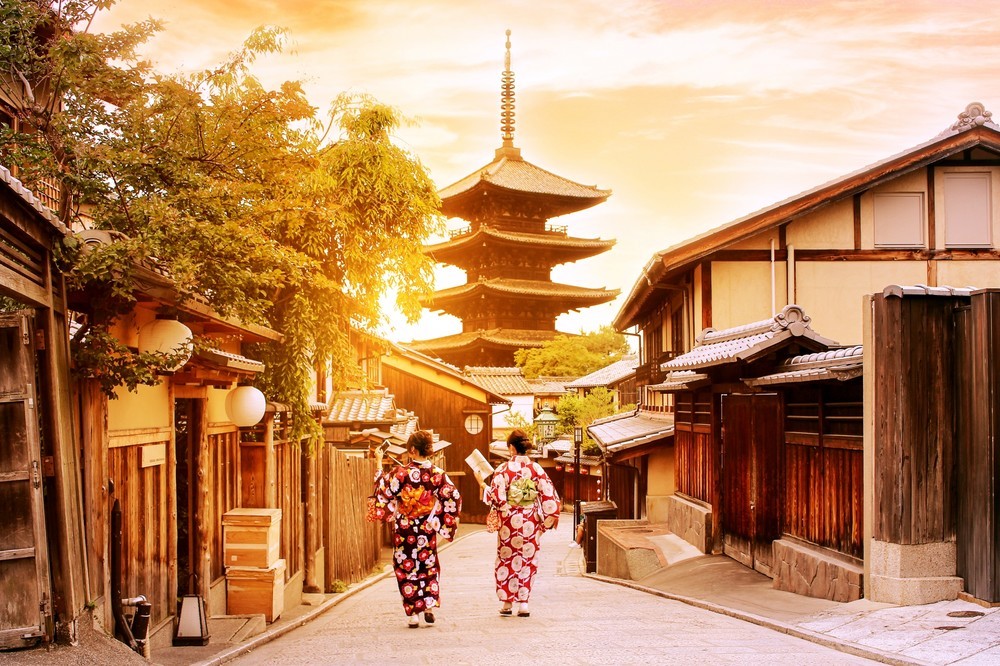
If an elderly resident in Kyoto tells you that your child plays the piano with astonishing energy, your instinct might be to beam with pride. Across the historic neighborhoods of Japan’s ancient capital, however, that observation carries a razor-sharp subtext: close your windows because the noise is disturbing the entire street. Kyoto indirect communication has long baffled outsiders, earning a reputation across Japan for weaponized politeness and legendary conversational traps. The cultural tension between surface courtesy and biting irony sparked renewed debate following analysis from music producer and author Sho Yamamoto, whose study on praise dynamics covered in an MSN Report highlighted that giving authentic compliments requires conscious discipline rather than reflexive flattery.
Decoding Kyoto’s verbal landscape goes far beyond surviving humorous local tropes. For international professionals, domestic transplants, and long-term residents living in Kansai in 2026, distinguishing authentic approval from calculated social boundary-keeping remains essential for navigating community integration. When an ancient capital spends more than 1,200 years refining self-preservation through refined speech, deciphering what someone actually thinks requires reading far deeper than standard dictionary definitions.
📌 Key Takeaways:
- Core Social Dynamic: Kyoto praise operates on strict high-context boundaries where exaggerated politeness frequently marks social exclusion rather than intimacy.
- Historical Roots: Centuries of imperial politics, merchant vulnerability, and devastating fires forged an unspoken consensus that direct confrontation destroys neighborhood stability.
- The Genuine Signal: Authentic compliments rarely arrive wrapped in dramatic hyperbole; they appear as mundane, practical advice, shared vulnerability, or softened dialect markers.
The Imperial Origins of Kyoto Indirect Communication
Kyoto served as the formal seat of the Imperial Court from 794 until the Meiji Restoration shifted executive power to Tokyo in 1868. Over those eleven centuries, political survival inside the city walls depended on absolute discretion. Shifting samurai alliances, aristocratic intrigues, and recurring neighborhood fires meant that making an explicit enemy across your wooden garden fence could bring catastrophic consequences. Neighboring households lived inches apart along narrow machiya townhouses. If a conflict escalated into direct anger, entire districts faced social paralysis.
To survive, merchants and court retainers constructed a communicative architecture founded on extreme ambiguity. This historical legacy produced the foundational split between tatemae (the public facade erected to preserve collective peace) and honne (one's private, authentic thoughts). While every prefecture in Japan exercises high-context communicative discretion, Kyoto refined the practice into an art form where the spoken word functions as insulation rather than direct expression.
The notorious urban legend of bubu zuke, the traditional dashi tea poured over leftover rice, remains the baseline test for Kansai social distance. If a host offers you a bowl of bubu zuke as an evening winds down, standard Japanese behavioral etiquette dictates that you do not sit down to eat. The offer indicates that the host has exhausted their planned hospitality, providing you with a graceful, face-saving excuse to depart before your welcome curdles into nuisance.
How Exaggerated Courtesy Masks Kyoto Polite Sarcasm
The primary mechanism of Kyoto polite sarcasm relies on excessive structural honorifics. When a conversation partner employs grandiloquent praise for a relatively modest action, alarm bells should ring. In traditional merchant quarters like Nakagyo-ku or Kamigyo-ku, social transgressions are rarely addressed with anger. Instead, the speaker elevates the offending party into a state of visible social awkwardness through disproportionate flattery.
Consider the common compliment directed at wristwatches or expensive accessories: "Eey yatsu tsuketaharimasuna" (You certainly wear a magnificent piece). To an uninitiated ear, this sounds like admiration. To local ears, it implies that you are showing off unearned wealth or exhibiting poor taste by flaunting luxury in an understated setting. The compliment isolates the transgressor by drawing public attention to their breach of modest decorum.
Similarly, praising someone for being "genki" (vigorous or spirited) in a quiet tea shop or residential alleyway points directly to disruptive volume. The high-context calculation operates through inversion. Rather than telling you to lower your voice, the speaker praises your boundless energy, leaving the burden of shame entirely on your shoulders if you fail to comprehend the hint.
Decoding Common Phrases: Sarcastic Deflection Versus Real Praise
Understanding everyday conversational encounters requires cataloging the stark divide between defensive pleasantries and genuine personal validation. The following matrix illustrates how common phrases diverge based on social context and conversational cues.
| Spoken Kyoto Phrase | Surface Meaning | Veiled Irony (The Warning) | True Praise Equivalent |
|---|---|---|---|
| "O-piano, jōzu ni natteharimasu ne" | Your piano playing has improved so much. | The acoustics in this alley carry every mistake; close the windows. | Unprompted quiet appreciation shared over a cup of seasonal tea without fanfare. |
| "Itsumo o-hade de, kekkō desuna" | You always dress so gorgeously and vibrantly. | Your clothing is garish and completely out of harmony with the neighborhood. | "Sono tsumugi, ii iroai ya wa" (Specific, muted praise of material or craft). |
| "Zuibun to o-kangaegoto ga fukai no desune" | You are such a deep, philosophical thinker. | You take far too long to finish tasks and hold up collective progress. | Asking for your personal opinion on a project before making decisions. |
| "Eey tokei tsuketeharimasu na" | That is a magnificent, luxury watch. | Your display of personal wealth lacks taste and displays poor upbringing. | Focusing entirely on your craftsmanship or your reliability under pressure. |
| "Bubu zuke demo ikaga dosu ka?" | Would you care for some dashi rice soup? | The formal gathering is over; please exit the premises immediately. | Pouring fresh tea unbidden while settling back into their seat for longer talk. |

The Psychology of Authentic Praise and Conversational Tension
In his published exploration of praise dynamics, music producer Sho Yamamoto observed that authentic appreciation requires intentionality and mental discipline. As highlighted in his 165-word framework on verbal validation, shallow compliments frequently fall flat because they lack structural empathy. When compliments fail to consider the recipient's interior state, they devolve into routine social transactions or thinly veiled hostility.
This observation mirrors the sociological architecture of Kansai communication. In Osaka, social distance collapses rapidly through aggressive humor, playful teasing, and immediate familiarity. Kyoto builds the opposite framework: the preservation of mutual dignity through rigorous conversational padding. When a Kyoto speaker delivers a double-edged compliment, they are managing interpersonal friction without incurring public escalation.
True validation occurs when that calculated defense drops. When an established artisan, merchant, or longtime community member actually respects your work, the theatrical performance vanishes. They cease treating you as a volatile outsider who requires delicate handling. The elaborate honorific prefixes (o- and go-) give way to grounded observations about process, patience, or communal contribution.
The Four Behavioral Markers of Genuine Kyoto Praise
Spotting real admiration in Kyoto requires monitoring micro-behaviors rather than analyzing literal vocabulary. When authentic acceptance occurs, four specific patterns consistently emerge across personal and professional interactions.
First, praise focuses on subtle effort rather than ostentatious results. If you assist with preparing a neighborhood festival (chōnaikai) or a business installation, a sarcastic observation will compliment how bright your banner looks. A genuine compliment will remark on how early you arrived to sweep the curb before sunrise. Kyoto locals value quiet diligence that prevents social burdens from landing on others.
Second, the speaker lowers the register of their Kyoto dialect (Kyo-kotoba). Formal Kyoto phrasing like -haru indicates polite social distance. When an elder shifts to relaxed Kansai cadences (-ya ne or -de), the defensive wall has lowered. Sincerity manifests as shared casualness.
Third, authentic praise often takes the form of constructive, unsolicited local guidance. If a longtime neighbor suggests a specific, unadvertised butcher shop down the road or reminds you quietly which day the recycling truck arrives earliest, you have crossed an unspoken threshold. In high-context culture, providing practical advice indicates they view you as a permanent, responsible component of their immediate ecosystem rather than a transient guest.
Fourth, they introduce you to their inner circle without hyperbole. The highest honor in Kyoto commerce and community life is an unembellished introduction: "Kono hito wa, shikkari shita hito dosu" (This is a solid, reliable person). It carries none of the glowing adjectives found in merchant salesmanship. In an ancient capital where stability outranks flashiness, being labeled reliable means everything.
Navigating High-Context Culture Without Paranoia
Navigating Kyoto society does not mean treating every friendly exchange as a psychological trap. A survey across Kansai urban centers reveals that over 68% of younger residents under 35 find traditional indirect idioms archaic, preferring clearer, direct communication. Nonetheless, historic business guilds, neighborhood associations, and traditional craft sectors continue to run on subtle relational codes.
If you suspect you have received a veiled barb about noise, style, or timing, the correct protocol is calm acknowledgment without defensive argument. Responding with "O-kizukai arigatō gozaimasu, ki o tsukemasu" (Thank you for your consideration, I will be mindful) disarms the friction instantly. It signals that you possess the contextual literacy to catch the cue without causing a scene.
Accept praise with modesty and deflect personal accolades toward mentors, colleagues, or collective effort. When you demonstrate that you do not require excessive soothing and that your presence brings zero friction to the neighborhood, Kyoto’s legendary conversational armor gently sets itself aside.
Frequently Asked Questions (FAQ)
Q1: Is bubu zuke still actually offered to kick guests out today?
A1: In modern households, nobody literally brings out a bowl of rice soup to tell you to leave; the phrase exists primarily as a cultural meme and warning story. However, subtle closing rituals persist, such as a host abruptly offering a fresh, lukewarm cup of roasted green tea (*bancha*) or checking their schedule for early morning errands the next day.
Q2: How can I respond if I realize someone gave me a sarcastic Kyoto compliment?
A2: Never confront the sarcasm directly or point out the double meaning. Bow slightly, thank them warmly for pointing out the matter, and adjust your behavior quietly. Accepting the hint without breaking social harmony earns deep respect in traditional Kansai circles.
Q3: Does the younger generation in Kyoto still use indirect communication?
A3: Younger demographics and modern corporate workplaces in Kyoto use standard Japanese with direct conversational styles comparable to Tokyo or Osaka. The indirect layer remains dominant primarily in traditional neighborhoods (*machiya* districts), long-standing family businesses, cultural arts, and residential neighborhood councils (*chōnaikai*).
The Evolving Art of High-Context Etiquette in 2026
Kyoto indirect communication is not an engine of malice; it is a sophisticated system of shock absorbers engineered to keep an overcrowded historic city functioning without social friction. When locals employ veiled ironies, they are attempting to preserve the peace of a shared space without descending into raw confrontation. Learning to hear the quiet space between the words transforms confusing interactions into intelligible cultural signposts. When a Kyoto resident offers you understated, unvarnished appreciation, you can rest assured that the compliment was earned through patience, humility, and genuine respect.
