Who Are the Mysterious Couple in the TRICK Ending? The Unsolved Cult Mystery Finally Explained

Who Are the Mysterious Couple in the TRICK Ending? The Cult J-Drama Riddle Solved
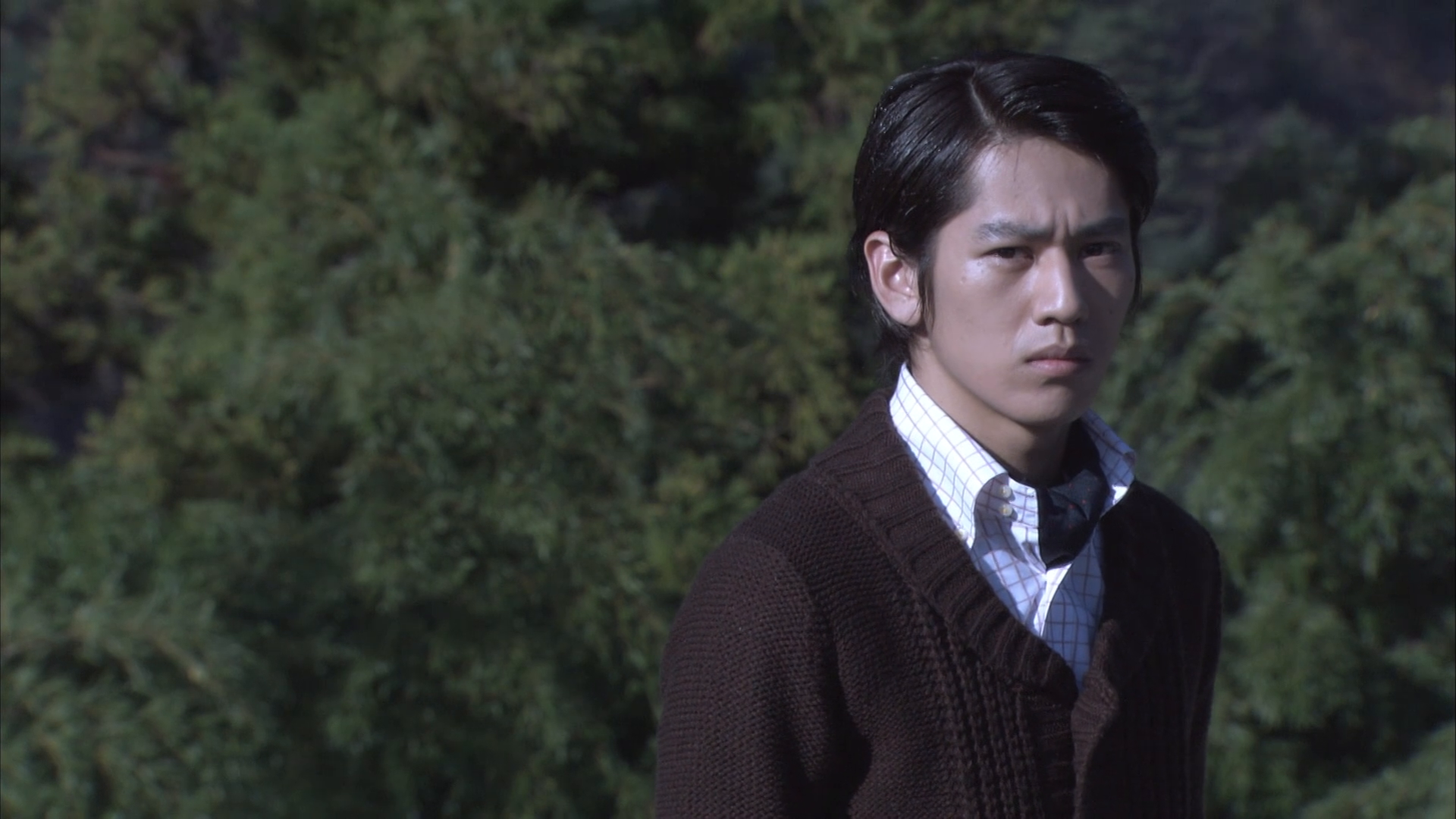
Every Friday night in the summer of 2000, Japanese viewers tuning into TV Asahi watched an eccentric illusionist named Naoko Yamada and an arrogant physics professor named Jiro Ueda debunk fraudulent cult leaders. The show was TRICK, an irreverent blend of deadpan comedy, folk horror, and puzzle-box logic directed by visual stylist Yukihiko Tsutsumi. Yet when the credits rolled, the slapstick dissolved into haunting melancholy. Accompanied by Chihiro Onitsuka's breakthrough ballad "Gekkou," a grainy, desaturated sequence showed an unnamed young man and woman clinging to each other in an abandoned concrete ruin, weeping and running in terror.
For more than two decades, that 90-second sequence has fueled one of the most stubborn debates across Japanese online forums. Viewers obsessed over the query "TRICK エンディング 男女 誰" (Who are the man and woman in the TRICK ending?), spawning endless theories about hidden backstories, dead parents, and secret plot twists. Unraveling the true story behind the footage reveals a collision between music-industry visual marketing, deliberate directorial misdirection, and the eerie house style of early-2000s Japanese television.
📌 Key Takeaways:
- The Concrete Answer: The man and woman in the credits are non-starring commercial models cast exclusively for promotional footage rather than hidden characters in the narrative canon.
- Directorial Overlap: Series director Yukihiko Tsutsumi simultaneously directed Chihiro Onitsuka's official "Gekkou" music video, shooting the atmospheric ending roll during the single's promotional production cycle.
- The Fan Mythology: Decades of viewer speculation misidentified the duo as young versions of Naoko Yamada’s parents or future avatars of Yamada and Ueda.
The Friday Night Cult Phenomenon That Haunted Late-Night TV
When TV Asahi launched TRICK on July 7, 2000, in its late-night 11:15 PM slot (Kinyo Night Drama), network executives expected a modest procedural. Instead, the pairing of Yukie Nakama as the rent-challenged magician Naoko Yamada and Hiroshi Abe as the cowardly, pompous academic Jiro Ueda struck an immediate chord. The show ran for three television seasons, three feature films, and multiple standalone specials, culminating in Trick The Movie: Last Stage in 2014.
The tonal whiplash defined the series. A typical episode featured absurd sight gags, wordplay, and caricatured villagers, only to pivot suddenly into grim murders driven by human greed and isolated rural despair. Nothing captured this duality more intensely than the ending sequence. As the final scene faded, the opening piano notes of Chihiro Onitsuka's "Gekkou" (Moonlight) took over. The screen shifted to bleak, high-contrast monochrome, showing a desperate young couple trapped in an industrial wasteland. The contrast was deliberate, jarring, and unforgettable.
Deconstructing the Mystery: Who Were the Uncredited Actors?
Viewers scouring the rolling credits of Season 1 never found an answer. The names of the two actors appearing in the sequence were conspicuously absent from the weekly guest cast credits. Over the years, Japanese internet forums like 2channel and Chiebukuro filled with competing claims. Some users claimed the male actor was a pre-fame Kenichi Matsuyama; others argued the woman was a disguised Yukie Nakama.
Both claims are false. Production documentation and accounts from production company Office Crescendo confirm that the couple consisted of agency-hired fashion and commercial models recruited specifically for visual atmosphere. They were cast not as dramatis personae with scripted dialogue, but as human silhouettes to embody the emotional desolation of Onitsuka's lyrics. Because they held no speaking roles and were engaged under promotional visual contracts rather than drama production agreements, their names were never legally mandated to run in the television broadcast credits.
The Directorial Secret: The "Gekkou" Music Video Correlation
The aesthetic mystery becomes straightforward once you trace the person behind the lens: director Yukihiko Tsutsumi. Known for his kinetic camera work, stark color grading, and offbeat framing on groundbreaking series like Keizoku (1999) and Ikebukuro West Gate Park (2000), Tsutsumi was also an in-demand music video director.
When Chihiro Onitsuka signed on to provide the theme song for TRICK, Toshiba EMI tapped Tsutsumi to direct the official music video for "Gekkou." Tsutsumi shot both projects in close coordination during the spring of 2000. Rather than assembling a standard television credit crawl made of recycled episode clips, Tsutsumi used the drama's ending credits as an extension of the single's visual world. The raw footage captured for the promotional campaign was cut directly into the television master tapes. The mysterious couple was never part of Naoko Yamada’s universe; they were figures in Tsutsumi’s visual interpretation of Onitsuka's inner turmoil.
Fan Theories vs. Production Reality
Because the drama refused to explain the imagery, fans spent decades retrofitting the footage into the fictional lore of the show. The narrative ambiguity invited deep speculative reading.
| Theory / Interpretation | Narrative Rationale | Production Reality |
|---|---|---|
| Young Yamada Parents | Represents Naoko’s mother Satomi and her late father Keisuke fleeing Kokumuri Island. | Debunked. The timeline, casting, and wardrobe do not align with official flashbacks of Keisuke. |
| Metaphor for Yamada & Ueda | An abstract vision of the lead duo’s subconscious trauma and suppressed emotional bond. | Plausible thematic resonance, but purely unintended by the scriptwriting team. |
| Music Video Outtakes | Visual assets created during the promotional shoot for Chihiro Onitsuka's debut track. | Confirmed. Produced and directed by Tsutsumi to visualize the emotional themes of "Gekkou." |
The most persistent theory held that the couple represented Naoko Yamada's mother, Satomi Yamada (played by Yoko Nogiwa), and her father, Keisuke, during their tragic escape from a remote island village. While the drama later explored that tragic history in detail across multiple plotlines, the physical details in the ending sequence, such as contemporary Western casualwear and modern urban decay, clash directly with the folk-tradition imagery established in the main story.
Why Tsutsumi's Lingering Imagery Still Resonates
The decision to let the mystery linger without an on-screen explanation highlights an era of television production that prioritized tone over immediate algorithmic clarity. In 2000, Japanese late-night programming operated with remarkable creative freedom. Directors like Tsutsumi, Shunji Iwai, and Noriyoshi Sakai treated television time slots like personal laboratory spaces.
Chihiro Onitsuka’s lyrics, opening with the striking declaration "I am God's child / This corrupt world is abandoning me", demanded visuals that refused to comfort the audience. By pairing that raw emotional cry with nameless figures wandering an empty, broken world, Tsutsumi tapped into the profound social anxiety of Japan’s Lost Decade. The ending sequence worked precisely because it remained unexplained. It left viewers uneasy, anchoring the memory of the show in their minds long after the comedic punchlines ended.
Frequently Asked Questions (FAQ)
Q1: Were the man and woman in the credits ever officially named in any episode?
A1: No. Neither character appears in the drama's canon, script dialogue, or official character guidebooks. They exist purely within the ending sequence and promotional imagery.
Q2: Is the female actor in the ending sequence actually Chihiro Onitsuka herself?
A2: No. While Chihiro Onitsuka appears prominently in her own music video for "Gekkou," the female figure seen running through the ruins with the young man was a separate commercial model hired for the narrative segments of the visual campaign.
Q3: Why did subsequent seasons of TRICK change the ending sequence?
A3: As the franchise expanded into prime-time specials and big-budget theatrical releases, the tie-in theme songs rotated to fit new singles (including Onitsuka's "Ryuuseigun" for Season 2 and "Watashi to Waltz wo" for Season 3), each accompanied by distinct, updated ending title cards.
The Lasting Legacy of a Television Enigma
The enduring obsession with the unidentified couple in TRICK reveals how powerful atmospheric filmmaking can be when creators resist the urge to over-explain every detail. In a streaming era where bonus features and promotional explainers exhaustively catalog every extra on screen, the haunting ambiguity of that 2000 credit sequence remains an artifact of a different television landscape. The man and woman in the ruins were never secret masterminds or long-lost relatives. They were visual ghosts, conjured by Yukihiko Tsutsumi and Chihiro Onitsuka to remind late-night audiences that tragedy always hovers just beyond the frame.
