Why Defenders Can't Stop Takefusa Kubo and Neymar: The Hidden Secrets of Elite 1v1 Dribbling
Why Defenders Can't Stop Takefusa Kubo and Neymar: The Hidden Secrets of Elite 1v1 Dribbling
Modern tactical football prioritizes defensive structures, zonal presses, and calculated transitions, making the isolated 1v1 winger rare. Defenders track hip angles, close down passing lanes, and rely on recovery speed to smother attackers before they can turn. Yet wingers like Takefusa Kubo and Neymar continue to dismantle low blocks and double teams with disorienting ease.
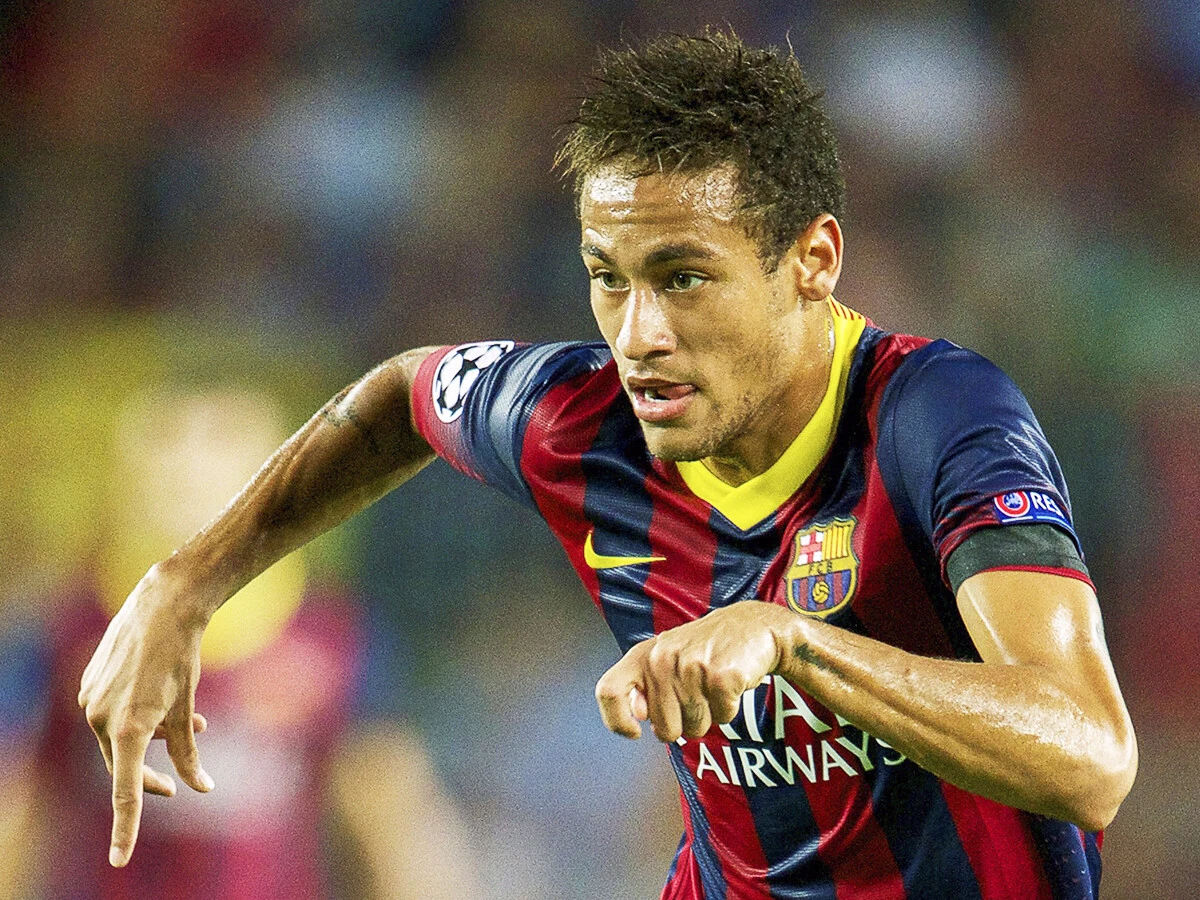
Former Japanese international Daisuke Matsui recently characterized Neymar as an "endangered species" of pure street-football instinct, observing that his improvisational flair even surpasses Ronaldinho's calculated trickery, according to a detailed 集英社 Report. At the same time, Kubo's clinical rise at Real Sociedad demonstrates that technical minimalism can be just as lethal as South American swagger. Both players rely on a masterclass of timing, weight distribution, and cognitive manipulation that leaves world-class fullbacks lunging at empty grass.
📌 Key Takeaways:
- Deception Over Speed: Elite 1v1 dribblers bypass defenders by freezing their center of gravity rather than relying solely on pure sprinting velocity.
- Contrasting Philosophies: Neymar manipulates tempo using street-rooted deception like the Elastico and nutmeg, while Kubo exploits microscopic balance shifts honed at Barcelona's La Masia academy.
- Micro-Decisions: Modern defensive isolation requires wingers to recognize plant-foot locks in under 0.3 seconds to execute clean escapes.
The Death and Rebirth of the 1v1 Isolation Specialist
Over the past decade, positional play turned touchline wingers into passing conduits. Coaches demanded high-percentage recycling of the ball over risky dribbles, reducing creative dribbling into structured cutbacks. That tactical rigidity reached its limit when defensive low blocks became impenetrable without individual disruptors. Teams now deliberately clear out the weak-side flank to engineer defensive isolation, creating space for singular talents who can beat their marker without overlapping support.
The return of the isolation winger demands far more than raw track speed. Fullbacks have adapted with athletic recovery strides and strict instructions not to dive in. Beating these defenders requires disrupting their decision-making timeline. A winger must force the defender to commit weight to their heels or hips before choosing an exit route.
Matsui pointed out that players capable of breaking a structured game through sheer imagination are disappearing from professional academies. Neymar represents the pinnacle of that fading South American tradition, blending futsal reflexes with psychological provocation. Kubo, by contrast, embodies the modern intellectual dribbler who uses minimal touches to force defensive errors.
Kubo's La Masia Blueprint: Close Ball Control and Micro-Feints
Takefusa Kubo does not rely on flashy stepovers or viral trickery to split double teams in La Liga. His effectiveness stems from close ball control and an uncanny ability to strike the ball with identical body posture on every stride. Defenders cannot read whether Kubo plans to shoot, slip a reverse pass, or accelerate toward the touchline because his torso angle remains upright until the escape touch occurs.
Kubo's formative years at Barcelona's La Masia academy drilled this efficiency into his muscle memory. His signature weapon is the subtle body feint. As he approaches a defender at three-quarters speed, he dips his left shoulder while his eyes glance toward the central corridor. This split-second visual cue forces the fullback to adjust their back foot. The instant the defender's studs bite into the grass, Kubo nudges the ball with the outside of his left boot across the defender's lead knee, eliminating them from the play.
Kubo also excels at executing La Croqueta at full speed. Unlike Andres Iniesta, who used the lateral push-and-catch move primarily in central midfield traffic, Kubo applies it along the right touchline. He draws the fullback's tackle toward his instep, shifts the ball laterally to his left foot, and bursts past before the defender's tackling foot returns to the turf.
Neymar's Futsal Geometry: The Elastico, Nutmegs, and Psychological Chaos
Neymar approaches 1v1 attacking skills with an entirely different psychological framework. Where Kubo seeks efficiency, Neymar seeks control over the defender's nervous system. The Neymar dribbling style relies on calculated provocation, using erratic stops and starts to drag defenders out of their disciplined defensive stances.
His signature weapon remains the Elastico flip flap. Executed predominantly on the left wing, Neymar pushes the ball outward with the outside of his right boot, enticing the fullback to commit toward the sideline. Within a fraction of a second, while the ball is still rolling, he wraps his ankle around the sphere and snaps it back to the inside. Because his hips sell the outward trajectory completely, the defender's momentum carries them outward while Neymar accelerates into the half-space.
The nutmeg panna technique serves as both an escape route and a structural trap. Fullbacks know that diving in against Neymar leaves them vulnerable to an outside flick, so they widen their base to block his acceleration path. Neymar anticipates this wide stance. He uses light toe-pokes or sole rolls to slide the ball through their open legs the instant their weight transfers, recovering possession behind them.

The Core Technical Repertoire of Elite Wingers
Mastering the modern dribble requires understanding which move exploits specific defensive postures. The table below outlines how top-tier attackers match technical execution to defensive vulnerabilities.
| Technique | Primary Execution Trigger | Biomechanical Advantage |
|---|---|---|
| Body Feint | Defender matches attacker's running lane | Shifts defender's center of gravity without touching the ball |
| Step-Over (Scissors) | Defender maintains a low, square stance | Forces hip rotation, delaying recovery acceleration |
| La Croqueta | Defender lunges with lead foot to poke ball | Moves ball laterally outside tackle radius into open running stride |
| Elastico (Flip Flap) | Defender anticipates an outside touch toward touchline | Rapid two-phase snap exploits defender's over-committed momentum |
| Nutmeg (Panna) | Defender widens base to block passing/running lanes | Takes shortest linear path through defender's locked stance |
The Biomechanics of the Step-Over and Change of Pace
The classic step-over technique remains one of football's most misunderstood tools. Ineffective wingers circle their feet around the ball while keeping their upper body rigid, allowing modern defenders to simply hold their ground. Elite practitioners treat the step-over as an athletic illusion built on three distinct biomechanical phases:
- The Entry Deceleration: The attacker approaches at 70% speed, shortening their stride length to load the spring mechanism in their calves and quads.
- The Shin and Hip Deception: The leg circles over the ball from inside to outside, dropping the corresponding hip by roughly 15 to 20 degrees. This mimics the exact biomechanics of a hard push off that foot, convincing the defender that the burst is happening in that direction.
- The Explosive Exit: While the defender shifts weight toward the feint, the attacker's trailing foot explodes in the opposite direction using a sharp change of pace.
This sudden acceleration relies heavily on change of pace. If a winger moves at maximum speed continuously, the defender only has to match their stride. By dropping from full sprint to near-stationery balance, and then exploding to 100% velocity within two steps, the attacker exploits the physical reality of reaction delay. Human reaction time sits around 0.2 to 0.25 seconds; by the time the defender's brain registers the exit touch, the attacker has already gained half a yard of separation.
Developing Elite 1v1 Execution Under Modern Pressure
Coaches at the elite youth level are redesigning dribbling drills to reflect the suffocating spatial constraints of top leagues. Cones and unopposed dribbling patterns have largely been replaced by decision-based small-sided games that enforce tight boundary limits.
Aspiring attackers must master the concept of the "freeze frame." When running directly at an isolated marker, the objective is not to run around them immediately, but to advance directly at their center mass until they stop retreating. The instant the defender halts backward movement to plant their feet, the attacker holds the structural advantage.
Players who succeed in high-level competition share specific behavioral habits during 1v1 duels:
- They keep the ball within 12 to 18 inches of their feet until the final acceleration touch.
- They fix their eyes on the defender's beltline or hips rather than their feet, ignoring reactive lunges.
- They attack the defender's front foot, forcing them to pivot backward over their heels rather than turning smoothly on their toes.
Frequently Asked Questions (FAQ)
Q1: What is the most effective dribbling move for beginners to learn first?
A1: The body feint is the most practical starting point. It requires no complex foot coordination, teaches attackers how to manipulate defensive weight distribution, and builds foundational balance for advanced moves like the step-over and La Croqueta.
Q2: Why is Takefusa Kubo considered harder to dispossess than faster wingers?
A2: Kubo's advantage lies in his low center of gravity and stride synchronization. Because he touches the ball on almost every running stride with his left foot, he can change direction or release a pass without taking an extra setup step, eliminating the visual cues defenders need to time their tackles.
Q3: How do modern defenders counter the Elastico and step-over moves?
A3: Elite defenders avoid looking directly at the ball or upper-body twitches. Instead, they track the attacker's hip line, stand half a yard deeper to avoid lunging, and angle their bodies at 45 degrees to channel the winger toward secondary cover.
The Tactical Survival of Pure 1v1 Artists
Tactical systems will continue to prioritize structure, but individual 1v1 brilliance remains the ultimate counter to defensive order. As defensive blocks grow more coordinated, the ability to isolate a marker and beat them through pure skill creates spatial imbalances that passing algorithms cannot replicate.
Takefusa Kubo and Neymar represent two distinct paths to the same objective. Whether through La Masia's clinical geometry or South America's unscripted street defiance, both prove that true ball mastery begins in the mind of the defender. Wingers who master close control, balance manipulation, and explosive deceleration will always dictate terms against the most disciplined backlines in world football.
