Why Gamers Are Ditching Official Wii U Chargers for Modern USB Power Alternatives
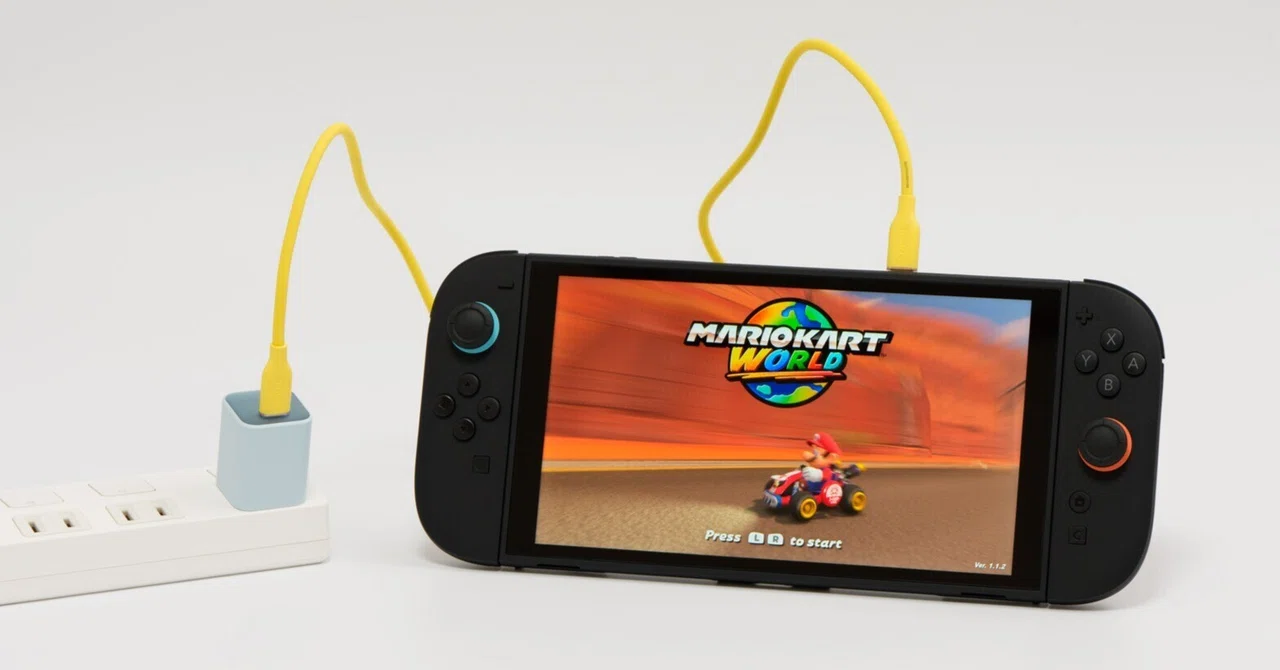
Anyone dusting off a Nintendo Wii U in 2026 encounters the same frustrating obstacle: the GamePad power supply. The original Nintendo AC adapter replacement market has dried up, leaving enthusiasts stranded with frayed wires, failing internal capacitors, and an oversized gray wall-wart that blocks two power outlets. As modern players demand cleaner setups and universal ports, a shift mirrored in consumer electronics analyses like the recent [note Report](https://note.com/orisusarusan/n/n7027b2aa9d61), a quiet hardware migration is taking place. Retro gaming communities are abandoning OEM bricks in favor of modern USB charging alternatives.
Replacing the original GamePad charger used to mean scouring auction sites for secondhand cords that were already a decade old. Today, a specialized USB to Wii U GamePad cable paired with a reliable mobile brick offers superior reliability at a fraction of the physical footprint. Making the switch safely, however, requires understanding the peculiar electrical engineering inside Nintendo's touchscreen controller.
📌 Key Takeaways:
- The Electrical Reality: The Wii U GamePad officially demands a 4.75V 1.6A power specification, but modern 5V USB ports deliver acceptable power within the GamePad's internal voltage tolerance.
- The Hardware Fix: A dedicated USB-A or USB-C power delivery adapter combined with a GamePad connector cable eliminates outlet crowding while unlocking portable play from external battery packs.
- The Safety Threshold: Cheap unshielded cables can trigger touchscreen jitter; safe operation demands an adapter with robust voltage overload protection delivering at least 2.0A of headroom.
The Bulky Wall-Wart That Haunts Nintendo Preservation
Nintendo built the Wii U GamePad (model WUP-010) during an awkward transition period in consumer electronics. The console arrived in 2012, years before USB-C emerged as an international mandate. Rather than adopting a micro-USB standard or standard 5V barrel jack, Nintendo engineered a proprietary, wafer-thin connector and paired it with the WUP-011 AC adapter.
The engineering choices were notoriously user-unfriendly. The cable housing featured thin, PVC-based insulation prone to dry rot and splitting near the strain-relief collars. Worse, the charging brick sat mid-cord or mounted directly to the wall outlet with excessive bulk, consuming space meant for adjacent plugs. By 2024, official Nintendo repair depots had systematically halted service for Wii U hardware across North America and Japan, making authentic first-party replacements nearly extinct on store shelves.
When an original adapter dies today, finding a factory replacement costs upwards of $35 to $50 on secondhand markets. Most of those units are already suffering from degraded smoothing capacitors. Players seeking a reliable third-party Wii U power supply found that generic reproduction wall units often cut corners on filtering, generating electrical noise that bled directly into the GamePad's analog digitizer.
Cracking the 4.75V 1.6A Power Specification
The primary point of hesitation for hardware modders has always been the odd label printed on the back of the controller: 4.75V ⎓ 1.6A. Standard USB architecture operates at a baseline of 5.0V. That 0.25V discrepancy prompted years of caution across community forums, with many fearing that standard USB power would fry the controller's charging board.
Teardowns of the GamePad motherboard reveal why that fear was largely unfounded. The internal power rail feeds directly into a Texas Instruments charge management chip, which accepts an operating tolerance between 4.5V and 5.5V. The controller does not require an active 5V to 4.75V step-down conversion circuit inside the cable itself because the GamePad's internal regulators step the incoming voltage down to 4.2V to recharge its internal lithium-ion pack.
The true danger lies not in the 0.25V overage, but in amperage starvation. During peak operation, when the controller powers its wireless receiver, stereo speakers, rumble motors, and 6.2-inch LCD screen while charging a depleted battery, it draws approximately 1.5A to 1.6A. Plugging a USB conversion cord into a dated 0.5A computer port or an underpowered 1.0A phone charger triggers thermal throttling or causes the battery to drain faster than the cord can feed it.
Hardware Showdown: Official Adapters Versus USB Alternatives
Switching from factory hardware to modern retro handheld power solutions changes how the console integrates into an entertainment center. The table below outlines how original Nintendo gear compares to current third-party alternatives across core performance metrics:
| Power Delivery Method | Input / Output Specs | Hardware Protection | Average Market Cost (2026) |
|---|---|---|---|
| OEM Nintendo WUP-011 | 120V AC in / 4.75V 1.6A out | Internal fuse, basic surge protection | $35, $50 (Used / Surplus) |
| Generic Reproduction AC Brick | 100, 240V AC in / 4.75V 1.6A out | Minimal; high ripple noise risk | $10, $15 |
| Passive USB-A to GamePad Cable | 5V USB in / 5V 2.0A+ out | Relies on host charger safety chip | $6, $10 |
| USB-C PD Trigger Adapter / Cable | 5V, 9V USB-PD in / 5V negotiated | Full PD overcurrent & thermal cutoff | $12, $18 |
Untethering the Controller with Power Banks and Modern Cradles
Beyond decluttering the entertainment center, switching to modern USB infrastructure solves the GamePad's greatest historical flaw: battery life. The stock 1,500mAh pack inside the controller notoriously expired after roughly 2.5 to 3 hours of play. Even Nintendo's official high-capacity 2,550mAh upgrade struggled to clear the five-hour mark.
USB power bank compatibility completely removes that wall-tether restriction. A standard 10,000mAh external battery delivering 5V 2.4A output slips into a pocket or sits next to the couch, powering the GamePad for over 14 hours of uninterrupted gameplay. For living room environments, players can run a single high-wattage multi-port GaN charger to power their phone, tablet, and Wii U simultaneously without hunting for open AC sockets.
This setup also supports the original GamePad charging cradle replacement docks. The official charging stand features passive metal contact pins connected directly to the rear charging port. A USB conversion cable plugged into the base of the cradle works identically to the original equipment, restoring drop-in charging without modifying the dock's internal housing.
Avoiding Cheap Converters and Protecting Motherboard Traces
Not every third-party cord on online marketplaces is built to the same standard. Poorly manufactured cables introduce clear electrical risks that can damage Nintendo console power compatibility boards.
The primary failure mode in cheap aftermarket cables is thin internal copper wire gauge. Ultra-cheap options use 28 AWG wire that experiences massive resistance over six-foot runs, causing voltage drops down to 4.2V before current ever reaches the controller. When voltage sags, the GamePad's internal charging circuit pulls higher amperage to compensate, generating excess heat near the battery bay.
To ensure long-term hardware preservation, avoid cables lacking clear wire gauge specifications. Look for accessories wired with 22 AWG or 24 AWG copper, integrated ferrite beads to suppress high-frequency line interference, and source blocks equipped with certified voltage overload protection. Premium cables feature molded strain reliefs and gold-plated pins that seat firmly without stretching the delicate port prongs inside the GamePad.
Frequently Asked Questions (FAQ)
Q1: Will feeding 5V from a USB charger burn out my Wii U GamePad over time?
No. The Wii U GamePad motherboard contains an integrated power regulation module rated to tolerate up to 5.5V. Standard 5V USB output stays comfortably inside that safety envelope, and the internal circuitry automatically manages conversion down to the battery's 4.2V charging voltage.
Q2: Can I power the GamePad directly from the front USB ports on the Wii U console itself?
It depends on controller activity. The Wii U console's front USB 2.0 ports cap output at roughly 500mA (0.5A). While this trickle-charges the GamePad when turned off, it cannot deliver the 1.6A required to charge the battery while playing a game. Use an external USB wall charger or a rear dual-USB Y-cable setup instead.
Q3: Does a USB-to-GamePad cable work with the official charging cradle?
Yes. The official cradle contains no active chips; it simply passes voltage through two spring-loaded contact pins that mate with the bottom of the controller. Plugging a quality USB replacement cable into the cradle's rear jack delivers identical charging performance.
Preserving Wii U Hardware in a USB-C Standardized Era
The Wii U generation was marked by transition, trapped between legacy proprietary accessories and modern universal interfaces. As original components cross the 14-year mark, keeping this hardware operational requires moving away from deteriorating original accessories. Adopting high-grade USB charging solutions preserves rare GamePad motherboards, eliminates wire clutter, and ensures that one of gaming's most unusual dual-screen experiments remains fully playable for years to come.
