Why Morijuku Kanazawa-Bunko Is Trending: The Secret Behind Its 1-to-2 Tutoring Surge
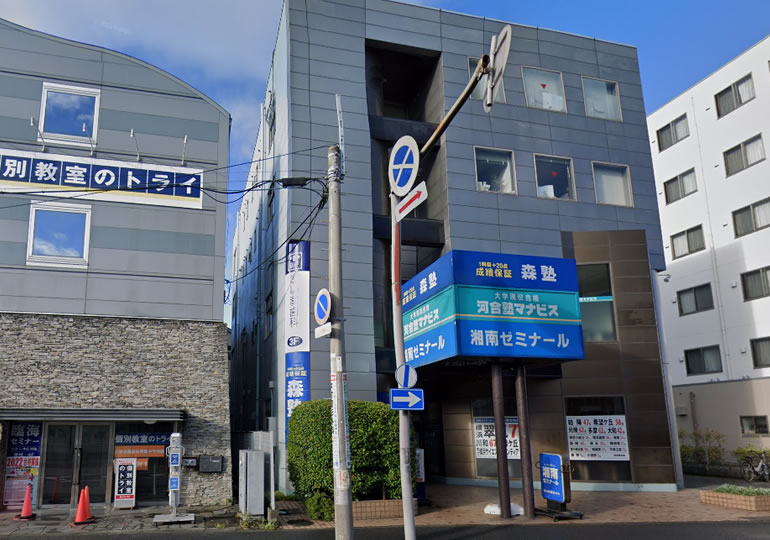
Near Kanazawa-Bunko Station in Yokohama's Kanazawa Ward, after-school competition has intensified as families reassess traditional cram school formats. As detailed in an evaluation by the ダイヤモンド・オンライン Report, the Morijuku Kanazawa-Bunko branch has seen an influx of enrollments driven by its targeted focus on regular test score improvement and a distinct semi-individualized setup. For local households balancing public school curricula with high school admissions pressure, the branch offers an alternative to both impersonal lecture-hall cram schools and cost-prohibitive private tutoring.
The neighborhood surrounding Kanazawa-Bunko houses an array of public middle schools, including Kanazawa, Nishiba, and Mutsuura Junior High Schools, where internal evaluation scores (known as naishinten) directly shape entrance prospects for Kanagawa prefectural high schools. Against this backdrop, Morijuku's specialized framework addresses a specific pain point: students who struggle to ask questions in large groups but need more structured discipline than independent study provides.
📌 Key Takeaways:
- Core Methodology: A strict 1-to-2 tutoring system pairs one instructor with two pupils, alternating between focused explanation and independent problem solving to prevent passive listening.
- Curriculum Design: The branch runs an advance learning curriculum (sakidori gakushu), ensuring students cover textbook concepts weeks before their public school teachers introduce them.
- Target Demographic: The program primarily targets middle and elementary schoolers seeking internal grade boosts (regular test gains of +20 points or more) rather than highly competitive, hyper-elite private academy testing tracks.
How the 1-to-2 Tutoring System Balances Attention and Autonomy
The hallmark of Morijuku Kanazawa-Bunko is its refusal to expand past two students per instructor during individualized instruction sessions. In typical commercial cram schools, "individual tutoring" often masks a 1-to-3 or 1-to-4 ratio where instructors spend the hour juggling disjointed questions. Morijuku anchors its desk setup so that while Student A receives an explanation of a new mathematical formula, Student B works through practice drills unassisted. The teacher then alternates desks.
This rhythm eliminates the dependency trap common in pure one-on-one sessions, where an instructor hovering over a workbook can induce performance anxiety or prompt students to wait for hints rather than thinking critically. In community forums across Kanazawa Ward, parents frequently observe that this alternating cadence builds stamina for school exam halls, where outside coaching is unavailable.
The classroom layout is tailored to reduce acoustic distraction. Situated within walking distance of the station's east exit corridors, the Kanazawa-Bunko branch uses quiet, partition-divided workstations. Instructors keep continuous logs of where comprehension stumbles occur, logging errors into centralized student progress files rather than relying on informal memory.
The Advance Learning Curriculum and Score Guarantee Framework
Morijuku structures its comprehensive subject tutoring around the local school calendar. Its advance learning curriculum teaches textbook material roughly two to three weeks ahead of the student's regular public school syllabus. When students encounter quadratic equations or English relative clauses during regular daytime classes, the lesson acts as a review session rather than an unfamiliar lecture.
Confidence shifts dramatically once a pupil moves from playing catch-up to anticipating the teacher's questions. This sequence underpins the network's score guarantee system (seiseki hosho). Under this contract, if an enrolled student entering with a regular school exam score below 60 points fails to achieve at least a 20-point increase in their registered subject within two terms, the school waives tuition for the following term's classes under qualifying attendance conditions.
For students entering with scores above 60 points, the benchmark requires crossing at least the 80-point threshold. Achieving these gains relies on repetitive drill books named Foresta, internal teaching texts specifically cross-referenced with standard Kanagawa Prefecture approved textbooks. These materials isolate the exact recurring patterns found in mid-term and final examinations.
Evaluating Academic Models Across Kanazawa Ward
Selecting an after-school academic support provider in Kanagawa requires understanding how teaching philosophies split across class size, cost, and target goals. The table below outlines how Morijuku Kanazawa-Bunko measures against traditional neighborhood options:
| Instructional Format | Student-to-Teacher Ratio | Primary Focus | Approximate Monthly Tuition |
|---|---|---|---|
| Morijuku (Kanazawa-Bunko) | 1 to 2 fixed | Regular school tests & internal reports (naishin) | ¥14,000, ¥28,000 (varies by grade/load) |
| Mass Group Juku (e.g., Step, Rinkai) | 1 to 15, 25 | Competitive high school entrance exams | ¥20,000, ¥35,000 |
| Pure 1-on-1 Private Tutoring | 1 to 1 fixed | Custom remedial work or elite school prep | ¥35,000, ¥60,000+ |
| Self-Directed Digital Study Rooms | AI / On-demand mentor | Independent study habits & video lectures | ¥10,000, ¥18,000 |
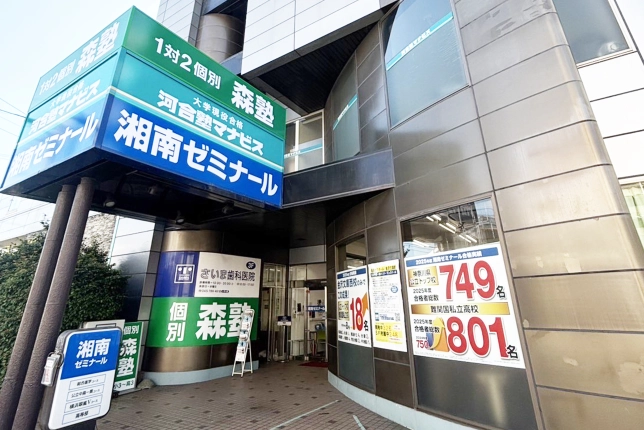
Tutor-Student Compatibility Matching and Local Middle School Alignment
Academic progress stalls when communication between a teenager and their tutor breaks down. Recognizing this, the Kanazawa-Bunko branch uses a tutor-student compatibility matching system. During the initial trial period, the administration monitors personal dynamics, pacing, and explanatory styles. If a student feels an assigned instructor speaks too quickly or fails to make concepts approachable, parents can request a change without administrative friction.
This flexibility works in tandem with localized intelligence. Public schools throughout Kanazawa Ward do not use identical testing calendars or identical teacher-written quizzes. Math teachers at nearby schools like Tomioka or Kamagaya set unique mid-term problems that deviate from textbook baselines. Instructors at the Kanazawa-Bunko branch collect past examination papers from these specific schools, cataloging test-question trends to construct personalized study methodologies for revision weeks.
Students also receive mandatory weekly check-ins on assignment completion. Rather than assigning open-ended homework, instructors specify page counts and time blocks. This structured approach helps prevent eleventh-hour cramming during the critical two weeks before middle school finals.
Who Benefits Most Versus Who Should Consider Alternatives
While the branch has earned strong marks in local Kanazawa Ward cram school reviews, the facility is not designed as a one-size-fits-all solution. Families must evaluate their child's specific academic goals before committing to this model.
Ideal Student Profiles:
- Students scoring in the 40-to-70 point range on school tests who feel intimidated asking questions during regular school classes.
- Children who struggle with procrastination and require structured, step-by-step accountability alongside an advance learning curriculum.
- Students preparing for public senior high school admission via the Kanagawa prefectural route, where standard GPA benchmarks dictate qualification brackets.
When to Consider Alternatives:
- Aspirants targeting nationally ranked, ultra-selective national or private high schools (such as Keio, Waseda, or Kaisei affiliates). These institutions administer specialized entrance tests requiring advanced theoretical training beyond public school curricula.
- Students needing intense, round-the-clock remedial intervention across all elementary fundamentals, where a specialized 1-on-1 therapeutic or developmental tutor may be more appropriate.
Frequently Asked Questions (FAQ)
Q1: What subjects are available at the Morijuku Kanazawa-Bunko branch?
The branch provides comprehensive subject tutoring covering English, Mathematics, Japanese, Science, and Social Studies for junior high school students. Elementary school programs focus primarily on building foundational calculation and English literacy skills, while high school courses prioritize internal grade tracking and university entrance baselines.
Q2: How does the score guarantee program handle seasonal test variations?
The guarantee applies directly to regular school semester examinations (mid-terms and finals) in registered subjects. The student must meet basic criteria, including maintaining a 95% attendance rate and completing assigned daily homework modules, ensuring that both the student and the center commit to the required practice schedule.
Q3: Can students attend self-study sessions outside their scheduled class hours?
Yes. Enrolled pupils can use the branch’s dedicated self-study desks during regular operational hours. This setup allows students to complete their public school assignments in a quiet environment and ask available staff members quick questions between formal instructional blocks.
The Evolving Educational Picture in Kanazawa Ward
The steady expansion of Morijuku Kanazawa-Bunko reflects a broader shift across Japanese juku learning models: away from rigid, one-way lectures and toward pragmatic, highly responsive tutoring. For families in southern Yokohama, success in the regional high school admissions race rarely hinges on unguided memorization. It depends on building steady academic confidence, mastering textbook concepts before they are taught in class, and securing the internal school grades needed to keep secondary education options open.
