Why OLED Screens Aren't Made on Farms: The Shocking Chemistry Behind 'Organic' Tech
Walk into any electronics showroom and the premium televisions immediately draw your eye with the label "OLED." The acronym stands for Organic Light Emitting Diode, a designation that regularly puzzles shoppers who associate the word strictly with pesticide-free produce and grocery market certifications. As detailed in a consumer analysis by the MSN Report, modern retail vocabulary has blurred the line between agricultural standards and physical chemistry. Buyers often wonder whether engineers harvest display panels from specialized agricultural plots or if the hardware degrades like wood chips.
The reality rests inside fundamental chemistry. In modern materials science, "organic" has nothing to do with biological farming practices or living flora. Instead, it describes a massive branch of chemical compounds anchored by carbon atoms bonded into intricate structures. Understanding why an ultra-thin smartphone panel shares a classification with living tissue requires examining the dividing line between organic and inorganic matter.
📌 Key Takeaways:
- The Linguistic Divergence: Agricultural "organic" refers to farming practices free of synthetic inputs, whereas chemical "organic" defines molecules organized around carbon-hydrogen backbones.
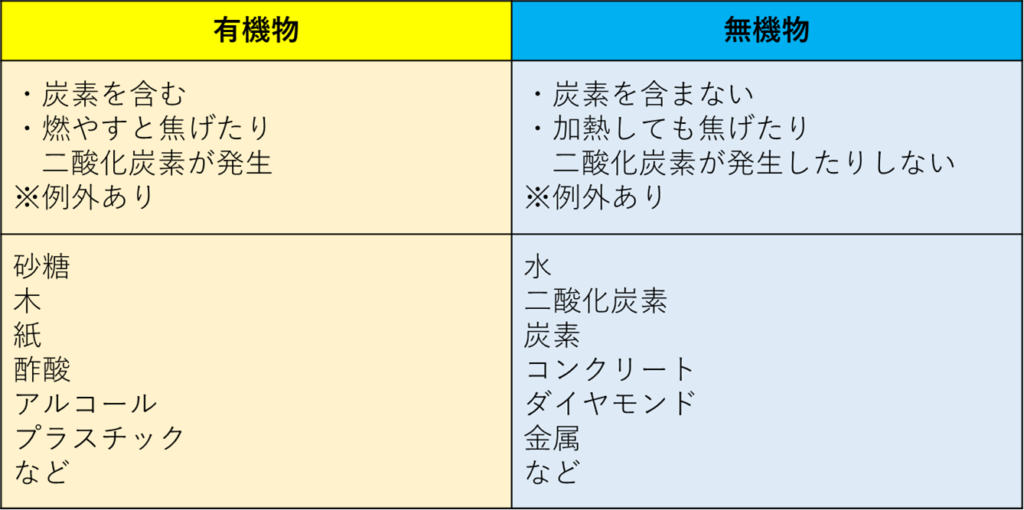
- The Scientific Divide: Organic substances burn into carbon soot and melt at lower temperatures, while inorganic minerals like salts, metals, and ceramics withstand extreme heat.
- The Tech Application: OLED hardware earns its name from thin films of synthetic carbon polymers that generate electroluminescence when electrical current passes through them.
The Supermarket Confusion: Agriculture Versus Molecular Chemistry
The English language uses the same word for two entirely distinct realms of thought. In the supermarket aisle, "organic" serves as an agricultural certifying label. Regulated by government departments like the USDA, it indicates that crops were grown without synthetic pesticides, bioengineered genes, or petroleum-based fertilizers. Consumers interpret the word as a proxy for natural, untreated, and earth-grown materials.
In a chemistry laboratory, the term has carried a precise technical meaning for centuries. Early scientists believed organic matter possessed a mystical "vital force" found only within living organisms, a doctrine called vitalism. That idea collapsed in 1828 when German chemist Friedrich Wöhler heated inorganic ammonium cyanate in a flask and accidentally produced urea, a substance previously extracted only from mammalian kidneys. Wöhler wrote to his mentor that he had produced urea without the aid of an animal kidney. His breakthrough proved that substances associated with biology follow standard physical laws and can be synthesized on a lab bench.
Today, organic chemistry encompasses any chemical compound built around carbon, regardless of whether it grew in a forest or was synthesized in a petrochemistry vacuum chamber. Your phone screen contains no moss, bacteria, or cellulose. It uses pure, synthetic carbon compounds engineered by materials scientists to manipulate electricity.
Carbon-Hydrogen Bonds: The True Structural Boundary
Carbon sits at position six on the periodic table. It possesses four valence electrons, allowing it to form exceptionally stable covalent carbon bonding arrangements with itself and neighboring elements. Carbon atoms can link into long chains, branching lattices, and stable aromatic rings. This bonding flexibility gives rise to millions of unique molecules, ranging from simple hydrocarbons like methane (CH₄) to complex synthetic organic polymers like nylon and Kevlar.
In modern biological matter classification, chemists look for stable carbon-hydrogen (C, H) bonds to classify a substance as organic. Methane, sugars, gasoline, proteins, and plastics all fall under the organic umbrella because their architectures rely on carbon networks laced with hydrogen, nitrogen, oxygen, and other nonmetals.
Inorganic compounds, by contrast, generally lack carbon-hydrogen bonds. They comprise minerals, pure metals, transition metal complexes, and salts formed by ionic bonds, such as ordinary table salt (sodium chloride, NaCl). Yet chemistry maintains a few famous exceptions that trip up students. Carbon dioxide (CO₂), carbon monoxide (CO), calcium carbonate (CaCO₃, the primary component of limestone), and hydrogen cyanide are traditionally categorized as inorganic. Although they contain carbon, they lack the characteristic C, H covalent structure and behave chemically like mineral compounds.
How Matter Responds: Combustion, Melting, and Material Tests
Distinguishing organic from inorganic materials in a lab does not always require high-end spectroscopy. The two classes exhibit sharply different macroscopic physical properties because of their underlying chemical bonds.
Covalent carbon compounds generally maintain weaker intermolecular forces than the rigid ionic or metallic lattices found in inorganic matter. Plastics, waxes, and biological tissues melt at modest temperatures, often below 300°C. Expose an organic substance to an open flame with oxygen, and it combusts, producing water vapor, carbon dioxide, and a telltale black residue of soot or char. That black residue is elemental carbon left behind by incomplete combustion.
Inorganic minerals react very differently. Common table salt will not melt until it hits 801°C, and it will never catch fire or turn into black charcoal in a kitchen pot. Quartz crystals (silicon dioxide, SiO₂) and iron oxide withstand extreme industrial furnaces without burning.
| Property / Metric | Organic Matter | Inorganic Matter | Everyday Examples |
|---|---|---|---|
| Primary Chemical Bond | Covalent carbon-hydrogen bonds and carbon chains | Ionic, metallic, or non-carbon covalent networks | Plastic polymers vs. Table salt (NaCl) |
| Melting & Boiling Points | Typically low to moderate (often under 300°C) | Extremely high (frequently 800°C to over 2,000°C) | Paraffin wax (50°C) vs. Quartz (1,710°C) |
| Combustion Behavior | Burns in oxygen, often leaves black carbon char | Generally non-combustible; does not char into soot | Burned toast char vs. Ceramic kiln pottery |
| Solubility Trends | Often soluble in organic solvents (acetone, benzene) | Frequently soluble in polar solvents (water) | Engine oil in gasoline vs. Salt in ocean water |

Inside OLED Displays: Electroluminescence Through Carbon Polymers
The "organic" designation in OLED technology stems directly from this molecular divide. Standard LED televisions are actually conventional liquid crystal displays (LCDs) illuminated from behind by an inorganic semiconductor backlight. Those backlight LEDs typically rely on crystals of gallium nitride (GaN) or indium gallium nitride, dense, rigid, inorganic semiconductors.
An OLED panel operates on a fundamentally different mechanism called electroluminescence. Instead of passing light from a separate bulb through liquid crystals and color filters, each pixel on an OLED screen produces its own light. Engineers achieve this by sandwiching ultra-thin films of organic molecules between an anode and a cathode. When an electric current enters the cell, electrons and positive charges (holes) collide within the emissive organic layer, releasing energy as photons.
The active layers in these screens are microscopic films, roughly 100 to 500 nanometers thick, composed of synthetic small molecules like aluminum tris(8-hydroxyquinoline) (Alq3) or long-chain organic polymers like poly(p-phenylene vinylene). Because these light-emitting compounds are carbon-based, display panels can be made exceptionally thin and flexible. The molecular properties allow modern curved monitors, foldable smartphones, and rollable prototype televisions to exist without cracking rigid inorganic semiconductor crystals.
This carbon backbone also explains why OLED panels degrade differently than standard displays. Blue OLED subpixels undergo chemical stress from high-energy photons, which gradually breaks down covalent carbon bonds over years of high-brightness operation. That breakdown is the underlying physical cause of display burn-in, a challenge display manufacturers counter using active pixel-shifting software and vapor-deposited heat-dissipation plates.
Inorganic Crystals Versus Carbon Films in Consumer Tech
The technology sector continues to pit organic and inorganic materials against one another in a race for hardware longevity and display precision. While organic polymers dominate foldable phones, the next display frontier is MicroLED, a technology built entirely from inorganic semiconductor materials.
MicroLED uses millions of microscopic, individual inorganic gallium-nitride crystals. Because inorganic crystals lack sensitive carbon-hydrogen bonds, they do not suffer from the same molecular degradation when driven at peak luminance. They can operate at thousands of nits for prolonged cycles without the burn-in vulnerabilities that affect carbon thin films.
However, manufacturing inorganic MicroLED panels remains extraordinarily difficult. Transferring 24 million individual microscopic inorganic crystals onto an 8K television glass backplane with microscopic precision remains prohibitively expensive. In contrast, organic OLED materials can be applied efficiently through thermal evaporation inside vacuum chambers or printed using precision inkjet methods. The organic nature of the material provides the manufacturing flexibility that makes current ultra-thin displays commercially viable.
Frequently Asked Questions (FAQ)
Q1: Does buying an OLED screen mean the device is eco-friendly and biodegradable?
A1: No. While the emissive layers are chemically organic because they contain carbon bonds, they are synthetic polymers sealed hermetically inside glass substrates with epoxy barriers. They will not decompose in a compost pile and require standard electronic waste recycling alongside other modern electronics.
Q2: Why is carbon dioxide considered inorganic when it contains carbon?
A2: Carbon dioxide (CO₂) lacks carbon-hydrogen bonds and exhibits properties typical of simple inorganic compounds. Historical conventions group carbon dioxide, carbonates like chalk, and cyanides with inorganic minerals due to their reactivity and absence of hydrocarbon chains.
Q3: Can organic electronics be dissolved by water?
A3: OLED emissive materials are sensitive to atmospheric moisture and oxygen, which causes rapid molecular degradation. Manufacturers seal these organic layers between impenetrable glass sheets or laser-welded thin-film barriers to keep air and humidity out.
The Structural Takeaway for Modern Hardware
Understanding the boundary between organic and inorganic substances changes how you evaluate modern technology. The term "organic" does not imply pastoral origin, non-toxic simplicity, or biological growth. It describes the chemistry of carbon atoms: a versatile elemental framework capable of forming everything from human DNA to light-emitting synthetic polymers inside a glass panel.
When you look at an OLED screen, you are looking at industrial organic chemistry pushed to its physical limit. The same covalent carbon properties that allow living cells to flex and function enable synthetic molecules to convert electrical energy directly into vibrant light. The distinction between organic and inorganic remains one of the fundamental organizing principles of physical science, explaining both the biology of living organisms and the brilliant displays lighting up modern living rooms.
