Why Saying 'Mianheyo' Could Offend Korean Speakers: The Hidden Politeness Trap Revealed
A crowded subway car jolts on Seoul's Line 2. A foreign traveler bumps an elderly passenger's shoulder and reflexively offers a word learned from hundreds of hours of K-dramas: "Mianheyo." Instead of an understanding nod, the elder scowls, mutters under their breath, and turns away. The tourist freezes, convinced they apologized politely.
They did not. In South Korea, linguistic precision is not a stylistic flourish; it is a moral baseline. To many international fans, learners, and casual travelers, "mianheyo" (미안해요) registers as a universal, polite translation for "I am sorry." On paper, the trailing syllable "yo" provides an informal polite veneer. On the streets of Seoul, in corporate boardrooms, or when addressing elders in Korea, dropping this casual apology across a generational or professional divide acts less like an olive branch and more like an unintended insult.
📌 Key Takeaways:
- The Core Trap: While "mianheyo" sits in the informal polite register, using it with elders, superiors, or complete strangers breaches Korean social hierarchy rules.
- The Linguistic Divide: "Mian" (sorry) relies on casual roots, whereas "joesong" derives from Sino-Korean vocabulary signifying profound guilt, making "joesonghamnida" the mandatory baseline for formal public apologies.
- The Safe Rule: When navigating transit, hospitality, retail, or the workplace in 2026, default entirely to "joesonghamnida" to avoid an embarrassing Korean language faux pas.
The K-Drama Illusion and the Rise of Casual Apologies
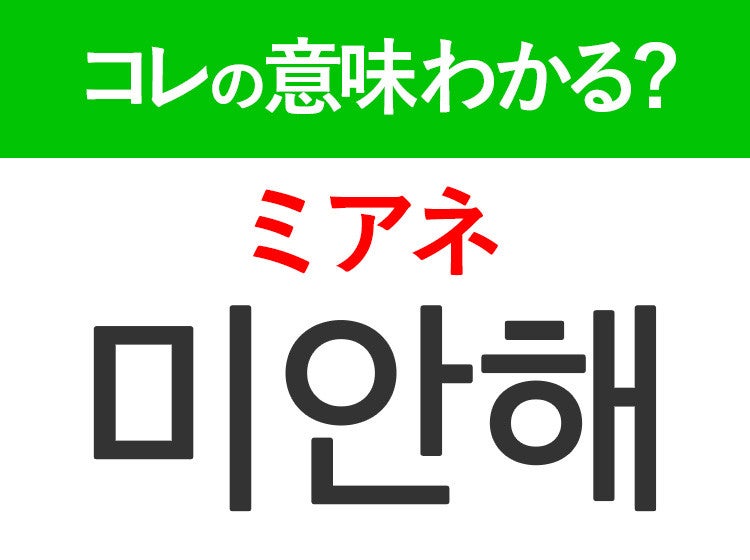
The explosion of Korean entertainment across global streaming platforms created an unexpected linguistic side effect. Viewers watch romantic leads whisper apologies across café tables, or squabbling peers mend fences using soft, emotive phrasing. Millions of learners absorb "mianheyo" (written in Hangul apology phrases as 미안해요) or its raw root "mianhae" (미안해). The word sounds rhythmic, familiar, and gentle.
Screenwriters construct dialogue between peers, romantic partners, or family members. Those dynamics thrive on haeyoche (informal polite) and banmal (informal speech). Real-world Korean society, however, operates on distinct vertical axes of age, institutional seniority, and social distance.
When international travelers apply screen dialogue directly to service workers, taxi drivers, and senior citizens, the mismatch jars native speakers. A phrase meant to diffuse friction suddenly manufactures it.
The Politeness Trap: Why "Mianheyo" Triggers Disrespect
The misunderstanding stems from the grammatical category of haeyoche informal polite. Ending a sentence with "-yo" elevates basic banmal into polite conversation. You can use it with casual acquaintances around your own age, friendly baristas you see daily, or junior colleagues in relaxed settings.
The syllable does not confer absolute deference. When you hurt someone, disrupt their day, or bump into them on the street, informal politeness falls short.
Saying "mianheyo" to an elder signals an unearned closeness. It subtly implies, "We are close enough that a light, everyday apology settles our business." For older generations who lived through periods of strict social structuring, this perceived presumption can feel dismissive. Korean apology etiquette demands that the weight of your words matches the gravity of the social gap between you and the other party.
Linguistic Architecture: Honorific Levels in Korean Apologies
Korean verbs conjugate through distinct speech levels determined by the relationship between the speaker and the listener. The National Institute of Korean Language classifies these registers systematically. Knowing how to apologize in Korean requires choosing the right speech tier before speaking a single syllable.
| Phrase (Hangul / Rom.) | Speech Level | Appropriate Context |
|---|---|---|
| Mianhae (미안해) | Banmal (Informal/Intimate) | Close friends, younger siblings, children. Highly offensive if used with elders or strangers. |
| Mianheyo (미안해요) | Haeyoche (Informal Polite) | Peers in casual settings, younger acquaintances, mildly regretful situations between adults of equal rank. |
| Mianhamnida (미안합니다) | Hasipsio-che (Formal Polite) | Clear social situations requiring structured grammar, though rarely used toward elders due to its native root. |
| Joesonghamnida (죄송합니다) | Hasipsio-che (Formal Honorific) | The gold standard. Public spaces, strangers, elders, clients, transit mishaps, workplace errors. |
Joesonghamnida vs Mianheyo: The Root Meaning of Guilt
The contrast between joesonghamnida vs mianheyo runs deeper than verb endings. It sits squarely within root etymology.
The word mian (未安) translates literally to "not feeling at ease" or "uncomfortable in mind." It is an introspective condition. You express personal unease regarding an inconvenience.
Joesong (罪悚), by contrast, relies on Sino-Korean morphemes meaning "crime" or "sin" (joe, 罪) paired with "fear" or "trembling" (song, 悚). The formal apology jwesonghamnida literally confesses: "My transgression makes me tremble with shame before you."
Because the underlying vocabulary acknowledges deep accountability, Korean culture considers joesonghamnida the only appropriate phrase when an offense occurs across an asymmetrical social dynamic. Downgrading to mianheyo strips the apology of its necessary humility.
Avoiding Social Blunders in Public Spaces and the Workplace
Understanding the mechanics prevents awkward friction on the ground. A foreigner accidentally stepping on someone’s foot on the Seoul subway should never use mianheyo. The person whose space you invaded is an unacquainted citizen; they deserve standard formal deference. The correct, immediate reflex is a short bow paired with "Joesonghamnida" (죄송합니다).
In office spaces across Gangnam or Yeouido, corporate hierarchies monitor speech carefully. If a project deadline slips, telling a team lead or managing director "mianheyo" can prompt a closed-door reprimand. Subordinates must state: "Silsuhaeseo joesonghamnida" (I made a mistake and am deeply sorry) or use higher honorific humble forms like "Dril malsseumi eopseumnida" (I have no words to justify my mistake).
Even when trying to squeeze past people in a crowded elevator or down an aisle at a convenience store, mianheyo is inappropriate. In that scenario, use "Jamsimanyo" (잠시만요, "just a moment") or "Silryehamnida" (실례합니다, "excuse my rudeness").
Frequently Asked Questions (FAQ)
Q1: What does "mianheyo" mean in Korean?
"Mianheyo" (미안해요) means "I'm sorry" in the informal polite speech register (haeyoche). It combines the native root for feeling uneasy with the polite sentence-ending "-yo," making it suitable for casual friends, peers, and younger acquaintances.
Q2: Is it ever acceptable to say "mianheyo" to a stranger?
Almost never. To strangers, especially service workers or people older than you, standard social etiquette requires the formal, deferential phrase "joesonghamnida" (죄송합니다). Using "mianheyo" sounds presumptuous.
Q3: What should I say if I bump into an elderly person in Seoul?
Immediately bow your head slightly and say "Joesonghamnida" (죄송합니다). If you want to convey extra deference for a significant stumble, add "Gwaenchaneuseyo?" (괜찮으세요? / "Are you alright?").
Q4: Why does "joesonghae" sound strange in normal conversation?
"Joesong" carries heavy, formal connotations, while dropping the polite ending into "joesonghae" mixes solemn vocabulary with informal grammar. Koreans rarely use it; they prefer the natural informal phrase "mianhae" with peers, and "joesonghamnida" with superiors.
Mastering Everyday Korean Etiquette Beyond the Screen
Language acquisition always begins with imitation, and popular media provides an accessible doorway into modern Korean phrasing. Real communication requires stripping away the dramatic license of television scripts and learning the social terrain beneath everyday interactions.
When you step out of the classroom and onto Korean streets, err on the side of formality. Keep mianheyo reserved for close study partners, familiar peers, and shared moments over casual meals. For everything else, every crowded train, accidental nudge, late delivery, and workplace check-in, let "Joesonghamnida" carry the weight of your intentions. Politeness is never just about what you say; it is about honoring the person standing in front of you.
