Why the Star Drawing Personality Test Is Taking Over Social Feeds Again
Ask five people to sketch a five-pointed star on a blank sheet of paper, and you will watch five distinct mechanical rituals unfold. Some drop the pen on the top apex and slice diagonally down to the bottom right. Others begin at the lower left edge, sweeping upward in a single fluid gesture. Across TikTok, Instagram Reels, and X, this simple kinetic decision has powered a massive wave of personality quizzes. Millions of users argue that the stroke order of a childhood doodle unlocks hidden subconscious personality traits.
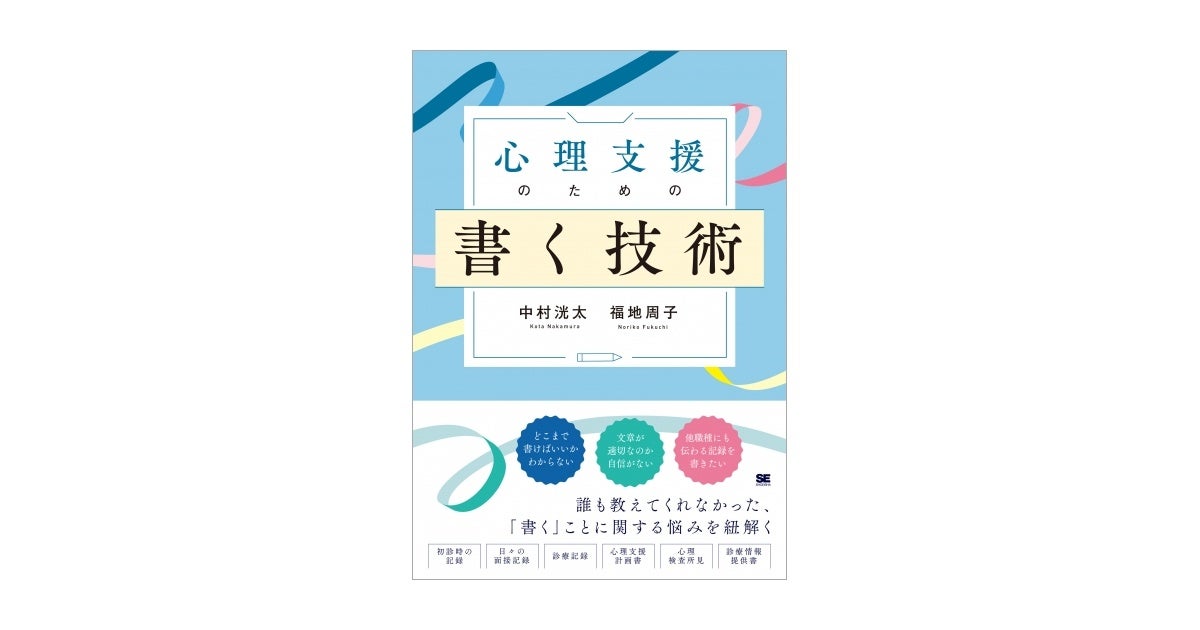
The phenomenon mirrors a wider appetite for instant self-discovery through tactile, physical prompts. While amateur graphology feeds online identity curation, professional practitioners view drawing behavior through a far more structured lens. The clinical value of expressive documentation and behavioral observation is underscored in professional literature, such as the clinical practitioner guide detailed in a PR TIMES Report on psychological support and clinical recording techniques. Understanding why drawing-based self-assessments capture the public imagination requires untangling motor habits from clinical reality.
📌 Quick Summary:
- The Viral Mechanic: Social feeds have turned a 1980s Japanese variety show parlor game into a global sensation, categorizing users into five archetypes based entirely on where their pen starts.
- Cognitive Reality: Neurobiology and early motor skill acquisition dictate starting points far more than hidden emotional wounds or latent leadership traits.
- The Psychological Pull: The test succeeds because of low barrier to entry, tactile participation, and the classic Forer effect, where generic statements feel intensely personal.
From Japanese Variety Shows to Global Feeds: The Five-Pointed Star Resurgence
The star drawing personality test did not originate in Silicon Valley design labs or European psychoanalytic clinics. It emerged on Japanese television networks during the 1980s and 1990s as lighthearted variety program entertainment, frequently resurfacing on programs like Getsuyou kara Yofukashi. In Japanese popular culture, the test was categorized under shinri testo (psychological tests), playful interpersonal games meant for dates, drinking parties, and school breaks rather than psychiatric wards.
The test migrated into Western algorithmic feeds when digital creators began pairing screen-recorded sketching videos with atmospheric audio tracks. Short-form video platforms thrive on physical participation. Unlike static multi-question personality inventories that demand three minutes of reading comprehension, the star test takes less than four seconds to execute. Viewers do not passively read text. They grab whatever writing instrument sits near them, sketch the five lines, and immediately match their outcome against the comment section.
By late 2024, the tag #StarTest had accumulated over 180 million collective views across major video networks, expanding into a secondary trend where creators tested their partners to evaluate relationship compatibility. The visual nature of continuous-line drawing (unicursal hexagrams and pentagrams) turns the viewer into an active participant before they have time to evaluate whether the underlying methodology carries scientific merit.
Where the Pen Drops: Starting Point Psychology and Behavioral Archetypes
The core premise of the viral assessment relies on five-pointed star analysis, isolating the exact vertex where the pen makes initial contact with the writing surface. Each starting point corresponds to an assigned psychological profile, offering character analysis rooted in traditional Japanese pop-culture frameworks.
Point 1 (Top Apex)
/\
/ \
Point 5 /____\ Point 2
(Top-L) \ / (Top-R)
\ /
Point 4 \/ Point 3
(Bot-L) (Bot-R)
Point 1: The Top Apex
Individuals who start at the topmost point are characterized as ambitious, self-driven leaders. The cultural interpretation links the downward initial stroke from the peak to decisive action, high personal standards, and strong desire for self-determination. In dating contexts, online commentary labels this group passionate but stubborn.
Point 2: The Upper-Right Vertex
Starting at the upper-right corner is associated with social awareness and an intense desire for validation. Pop-graphology interprets this entry point as a sign of individuals who adapt their behavior to satisfy others, prioritizing group harmony over personal preference. Critics describe this profile as the classic people-pleaser archetype.
Point 3: The Lower-Right Vertex
Those who begin at the bottom right are framed as free-spirited romantics and nonconformists. Viral interpretations assign high emotional volatility and artistic temperament to this stroke order. They are viewed as individuals who reject traditional schedules and make lifestyle choices guided by intuition rather than pragmatic planning.
Point 4: The Lower-Left Vertex
The lower-left starting point signifies structural precision, reliability, and emotional caution. Popular analysis views this quadrant as the domain of analytical thinkers and perfectionists who demand moral clarity and meticulous organization. They maintain tight inner circles and exhibit slow, deliberate decision-making.
Point 5: The Upper-Left Vertex
Initiating the star from the top-left vertex denotes honest pragmatism and fierce independence. This group is characterized by clear personal boundaries, resistance to external social pressure, and straightforward communication styles that can occasionally verge on bluntness.
The Evolution of Drawing-Based Social Assessments
The journey of drawing-based personality tests illustrates how social platforms transform traditional cultural pastimes into viral engagement drivers.
| Period | Dominant Medium | User Engagement Dynamic |
|---|---|---|
| 1985, 1998 | Japanese Print Media & Variety Shows | In-person parlor games, print magazines, casual icebreakers among peers. |
| 2006, 2014 | Forums, BBS, and Early Blogs | Text-and-diagram message board reposts with user polls on localized bulletin systems. |
| 2018, 2021 | X (formerly Twitter) Image Prompts | Static diagrams prompting quote-reposts; engagement driven by tribal self-labeling. |
| 2024, 2026 | TikTok & Instagram Short-Form Video | Interactive duets, overhead pen-tracking, algorithmic amplification of binary debates. |

Graphology, Motor Habits, and the Illusion of Deep Subconscious Analysis
Online influencers routinely describe the star test as a window into the subconscious mind. Cognitive psychology and motor development research present an entirely different explanation. How a person draws a star is largely a byproduct of early mechanical conditioning and handedness, not unresolved psychological conflict.
Left-handed individuals show a natural biomechanical preference for clockwise movements and starting coordinates on the right side of the canvas to avoid smudging lead or ink. Right-handed individuals exhibit the opposite pattern, frequently initiating drawings from the left or the top apex to maximize line visibility. When a child learns to draw a pentagram, they generally mimic the stroke order modeled by an elementary teacher or parent. Once that kinetic sequence enters procedural memory, the basal ganglia executes it automatically throughout adult life without conscious intervention.
The sensation that the test "accurately reads" personal temperament stems directly from the Barnum-Forer effect. Formulated by psychologist Bertram Forer in 1948, this cognitive bias describes how individuals assign high accuracy ratings to personality descriptions that sound distinctive but apply to almost everyone. Statements such as "You present a calm exterior to the public but harbor deep internal doubts" or "You value direct honesty yet avoid useless drama" resonate regardless of whether your stroke started at Point 1 or Point 4.
Projective Psychological Tests in Clinical Reality Versus Pop Culture
Drawing-based self-assessments borrow the superficial aesthetic of formal projective psychological tests without retaining their clinical rigor. Within clinical psychology, drawing tasks do exist. The Baum Test (Tree-Drawing Test) developed by Charles Koch, the House-Tree-Person (HTP) technique, and the Draw-A-Person (DAP) test have seen historical use as supplemental expressive tools.
The divergence between real clinical assessment and social media trends lies in methodology:
- Qualified clinicians never interpret a single stroke order or isolated detail in isolation. Drawing exercises are administered alongside structured clinical interviews, developmental histories, and standardized psychometric instruments like the Minnesota Multiphasic Personality Inventory (MMPI-3) or the Beck Depression Inventory.
- Standardized Coding Systems: When clinicians utilize expressive mediums, they analyze variables such as proportional size, ground-line presence, line heaviness, and stroke continuity across repeated trials, rather than relying on a static five-choice outcome table.
- Contemporary academic psychology treats projective drawing tools with marked caution. Decades of meta-analyses have revealed lower inter-rater reliability and questionable predictive validity compared to modern psychometric frameworks such as the Big Five personality traits (OCEAN model).
The star drawing test remains an enjoyable social exercise. It provides immediate conversational material and creates playful tribalism online. However, treating motor stroke patterns as valid diagnostics for workplace aptitude or emotional resilience conflates procedural muscle memory with complex human cognition.
Frequently Asked Questions (FAQ)
Q1: Does the star drawing personality test have any genuine scientific validity?
No. The test is a cultural parlor game popular in Japanese entertainment media rather than a validated psychometric instrument. Peer-reviewed psychological literature attributes starting points and stroke order to early motor habits, handedness, and procedural memory rather than subconscious personality traits.
Q2: Why do the descriptions for each starting point feel so accurate to individual users?
The perceived accuracy is driven by the Barnum-Forer effect, an established cognitive bias where people believe broad, universally relatable personality descriptions are uniquely tailored to them. Confirmation bias also plays a major role, as users remember the sentences that match their self-image while ignoring the mismatches.
Q3: How does stroke order in handwriting differ from stroke order in drawing tests?
In formal graphology, stroke order and pressure are sometimes studied in forensic document examination to identify document forgery and verify signatures. Even in forensic science, stroke order is used exclusively to establish physical authorship, not to assess psychological stability, neurosis, or emotional compatibility.
The Enduring Appeal of Interactive Self-Assessment
Drawing-based tests will continue to cycle through digital feeds under new visual formats. The fundamental human desire to be cataloged, understood, and grouped into meaningful archetypes has outlasted every platform shift from print zines to algorithmic video streams. Grabbing a scrap of paper to draw a star costs nothing and demands no login credentials. It delivers an instant moment of self-reflection wrapped in digital play, even if the result says far more about how childhood teachers held a marker than it does about the deep architecture of the human mind.
