Why Your Office Chair Wheels Are Ruining Your Floors—And the Instant Fix
Most office chairs ship with twin-wheel casters molded from cheap, unyielding nylon. On commercial low-pile carpet, hard plastic glides without incident. On finished oak, walnut, or luxury vinyl plank, however, those same stock wheels act like industrial belt sanders. They collect ambient grit, trap abrasive dust particles against the flooring surface, and mill away polyurethane clear coats under your body weight. Over months of routine desk work, the damage accelerates from light micro-marring to deep, gouged white tracks that demand costly professional refinishing.
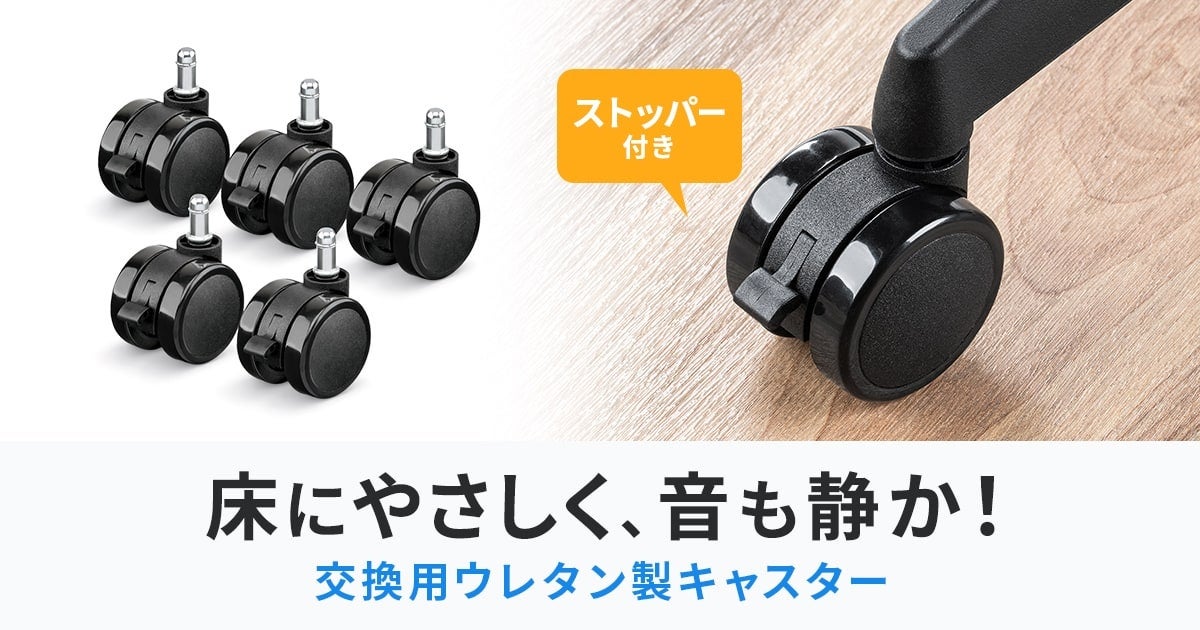
Hardware manufacturers have responded to an influx of damaged home offices. As detailed in a recent PR TIMES Report, peripherals maker Sanwa Supply introduced the SNC-CAST12, a set of 60mm urethane casters engineered with integrated stoppers to protect delicate flooring while silencing rolling clatter. Meanwhile, consumer tech outlets from Lifehacker to Gizmodo Japan have documented thousands of workers swapping stock wheels for aftermarket "quiet feet" assemblies. Fixing the problem does not require an ugly plastic floor mat; it requires understanding caster mechanics, stem tolerances, and wheel compounds.
📌 Quick Summary:
- The Root Cause: Factory-installed nylon wheels trap microscopic grit and drag it across hardwood, stripping protective sealants within weeks.
- The Simple Fix: Upgrading to snap-in polyurethane chair wheels or rollerblade-style casters provides immediate hardwood floor protection and eliminates rolling noise.
- The Critical Check: Measure your caster stem diameter before purchasing, standard office chairs use 11mm stems, while brands like IKEA use proprietary 10mm fittings.
The Physics of Floor Abrasion and the Factory Nylon Trap
Office furniture brands operate on slim manufacturing margins. Ergonomic chair companies routinely invest hundreds of dollars into adjustable lumbar bladders, multi-axis armrests, and breathable mesh backings, yet ship the entire assembly on a five-dollar set of hard nylon casters. Hard nylon registers high on the Shore D durometer scale, offering practically zero mechanical give.
When you sit, your entire body mass distributes across five contact points, creating intense localized pressure. Microscopic grit, pet dander, and silica track indoors on shoes and settle across the floor. Soft wheels would deform slightly around these granules. Rigid nylon cannot deform. Instead, it captures the grit beneath its contact patch and drags it across your floorboards whenever you shift backward or reposition yourself toward your desk. Within six months, the friction wears away the protective topcoat, exposing raw wood grain to moisture and dirt.
Why Polyurethane and Rollerblade Wheels Solve Noise and Wear
Upgrading to polyurethane chair wheels fundamentally alters the physics of desk mobility. Polyurethane functions as an elastomer, combining the structural load-bearing capacity of rubber with the low rolling resistance of hard plastics. It yields microscopically beneath surface imperfections, allowing the wheel to roll over grit rather than grinding it down.
The transition yields an immediate acoustic shift. Standard dual-wheel nylon assemblies produce a sharp, hollow rattle across floor seams. Polyurethane dissipates vibration, earning praise across remote-work forums as essential noise dampening casters for apartment dwellers living above sensitive neighbors. Two primary configurations dominate the upgrade market:
- Dual-Wheel Urethane Casters: Modeled after classic office aesthetics, these feature a twin-disc profile coated in a thick, semi-soft polyurethane layer. They swivel effortlessly in tight spaces and distribute weight over two contact patches per wheel.
- Rollerblade Desk Chair Wheels: These borrow engineering directly from inline skates, mounting a single 3-inch transparent polyurethane tire on an aircraft-grade steel fork with precision ball bearings. They clear rug edges smoothly, eliminate all scuffing, and roll with near-zero effort.
Stem Sizing: Preventing Loose Casters and Snapped Sockets
Upgrading casters takes less than five minutes, but purchasing the wrong stem dimensions will leave your chair lopsided or permanently damage its base. Most swivel chairs employ a grip ring stem replacement system. These stems feature a small steel compression ring sitting inside an annular groove near the tip of the metal post. When pushed into the base socket, the friction ring compresses and expands inside the internal housing, locking the wheel in place.
The universal industry standard across North America, Europe, and Asia is a stem diameter of 11mm (7/16 inch) with a stem length of 22mm (7/8 inch). Chairs from Herman Miller, Steelcase, Haworth, Secretlab, and standard Amazon brands utilize this sizing exclusively.
The major exception is IKEA. Most IKEA desk chairs use a proprietary 10mm (3/8 inch) stem diameter. Forcing an 11mm stem into an IKEA star base will crack the plastic housing. Conversely, inserting a 10mm stem into an 11mm base creates severe slop. As highlighted in user field reports on platforms like note.com, loose stems cause casters to pop out unexpectedly during routine movement, dragging metal forks across wood floors and warping the socket.
Always verify your caster stem diameter using a digital caliper before buying replacement sets. If you lack calipers, wrap a strip of paper around the smooth section of the metal stem to measure its circumference: an 11mm stem measures approximately 34.5mm around, whereas a 10mm stem measures roughly 31.4mm.

Wheel Materials Compared: Durability, Acoustics, and Floor Safety
Selecting the right replacement caster depends on flooring materials, aesthetic preferences, and budget constraints. The following breakdown highlights performance differences across standard residential setups.
| Wheel Type | Core Material | Hardwood Safety | Noise Level | Typical Price (Set of 5) |
|---|---|---|---|---|
| Stock OEM Wheels | Molded Hard Nylon | Dangerous; causes abrasions | High (65, 72 dB clatter) | $0 (Bundled) |
| Twin-Wheel Urethane | Polyurethane over Nylon Core | Safe; non-marking contact | Low (40, 46 dB glide) | $22, $38 |
| Rollerblade Inline Casters | Solid Polyurethane on Steel Hub | Very Safe; absorbs grit | Whisper-quiet ( | $28, $48 |
| Soft Natural Rubber | Vulcanized Synthetic Rubber | Moderate; can leave dark streaks | Low (42, 48 dB) | $25, $40 |
Executing a Wooden Chair Caster Conversion
Modifying non-wheeled wooden dining chairs, accent seats, or vintage studio chairs requires a distinct mechanical approach. Because wooden legs lack molded five-star sockets, you cannot insert standard push-in grip stems directly into solid timber without splitting the grain.
Completing a wooden chair caster conversion requires four essential hardware elements: threaded stem casters, matched insert nuts, wood glue, and a spade drill bit.
First, inspect the chair legs. The timber must be structurally sound and measure at least 30mm in diameter at the base to accommodate drilling without sacrificing structural integrity. Mark the dead center of each leg. Using a drill press or steady handheld drill equipped with a depth stop, bore a pilot hole matching the outer barrel of your insert nut.
Thread the brass or zinc insert nut into the wood using an Allen wrench. Adding a light coat of high-strength wood glue along the external threads creates an immovable mechanical lock. Once the insert cures, thread your caster stem into the socket until the caster base sits flush against the bottom of the leg. Opt for threaded stems with locking caster stoppers; unbraked dining chairs on casters can slide dangerously when guests attempt to stand or sit.
Weight Capacities, Dynamic Loads, and Maintenance
A frequent error among DIY desk customizers is miscalculating caster wheel weight capacity. Hardware sets generally specify an aggregate rating, such as 500 to 650 lbs (226 to 295 kg) across all five wheels. That aggregate number applies strictly to static loads distributed equally on level surfaces.
In real-world use, shifting your posture, leaning back against the recline spring, or rolling across floor transition strips concentrates the bulk of your body weight onto only two casters. Always purchase sets rated for at least twice your seated body weight combined with the chair's tare weight. Industrial-grade rollerblade casters with steel fork brackets provide the safest safety margins, typically tolerating dynamic impacts without fatiguing the internal ball tracks.
Maintenance is equally vital. Polyurethane wheels roll so smoothly that users neglect them for years. Over time, ambient pet hair and dropped threads wrap around the central axle pin, binding the rotation. Once an axle ceases spinning freely, the soft tire locks up and drags flat across the floor, compromising the exact floor protection you installed it to achieve. Pop off the wheels annually, snip away bound threads with precision scissors, and lubricate the bearing housing with dry PTFE spray.
Frequently Asked Questions (FAQ)
Q1: Will rollerblade wheels elevate my chair too high?
A1: Yes, standard 3-inch rollerblade casters raise chair height by approximately 1 to 1.5 inches (25 to 38mm) compared to stock 50mm nylon wheels. If your desk frame is non-adjustable and your chair cylinder sits at its lowest threshold, consider 60mm twin-wheel polyurethane casters instead to preserve ergonomic elbow alignment.
Q2: How do I remove stubborn grip ring stems that refuse to pull out?
A2: Factory casters occasionally seize inside metal star bases due to galvanic corrosion or overly stiff friction rings. Wrap a flathead screwdriver or pry bar in a shop rag, wedge it between the star base and the top of the caster housing, and apply gentle downward leverage. A brief spray of penetrating oil inside the socket will dissolve surface oxidation.
Q3: Do polyurethane wheels leave black residue or chemical stains on floors?
A3: High-quality polyurethane casters are 100% non-marking and chemically inert. However, cheap synthetic rubber casters containing carbon black additives can leach plasticizers into porous finishes, causing permanent yellow or grey discoloration on white oak or unsealed stone.
The Permanent Fix for Workspace Flooring
Relying on clear PVC floor mats to preserve hardwood creates a secondary problem. Plastic mats trap grit beneath their undersides, creating sweat rings and haze marks on timber finishes while restricting your working radius to a tiny plastic square. Upgrading directly to high-grade polyurethane casters tackles floor defense at the mechanical source.
Whether you choose low-profile dual-wheel urethane models with built-in braking stoppers or smooth-gliding inline rollerblade casters, verify your stem dimensions before ordering. The five-minute swap protects your floor finish, silences workplace noise, and delivers immediate mobility.
