Yokosuka High School Deviation Guide: Admissions Standards, GPA Strategies, and College Paths
Kanagawa’s public high school selection process demands cold mathematical precision. For families targeting Kanagawa Prefectural Yokosuka High School, one of the Miura Peninsula’s most storied academic institutions, the bar sits well above regional averages. Prospective students confront a standardized testing framework where decimal points dictate acceptance, and internal middle school grades dictate survival before exam day arrives.
Recent admissions analysis published in an investigative Yahoo!ニュース Report underscores a widening strategic divide across Japanese secondary education: schools maintaining a deviation score of 58 or higher lean overwhelmingly toward direct, general university entrance exams, while institutions below that threshold increasingly rely on recommendation tracks. Sitting comfortably above this line, Yokosuka High School presents applicants with a calculated gamble. Securing a seat requires mastering the Kanagawa High School Entrance Exam, surviving rigorous internal grading metrics, and planning college trajectories years before graduation.
📌 Key Takeaways:
- Academic Benchmark: The Yokosuka High School deviation score hovers between 66 and 67, placing it in the top tier of Kanagawa prefectural high school admissions.
- Selection Formula: Admission depends on a composite admission score combining three elements: 9-subject middle school report cards, the 5-subject standardized academic test, and a specialized descriptive exam.
- Strategic Reality: High internal academic evaluation criteria make maintaining an elite GPA competitive, driving most graduates toward general national and private university entrance tracks rather than school recommendation quotas.
The Kanagawa Testing System and Yokosuka High School's Deviation Benchmark
The Japanese hensachi represents a student's relative ranking against the entire testing pool, normalized around a median of 50. A score of 66 places an applicant in roughly the top 5.5% of all test takers across the prefecture. In the public high school ranking Kanagawa maintains, Yokosuka serves as the primary academic flagship for the southern coastal region. While northern juggernauts like Yokohama Suiran (deviation 73) and Shonan (deviation 72) capture prefecture-wide attention, Yokosuka retains a fierce grip on regional prestige.
Getting accepted is not a matter of sheer test-taking talent alone. Kanagawa’s Education Board runs a unified public admission system that standardizes evaluation across all municipalities. Applicants cannot simply cram for a single Sunday test; their academic record across eighth and ninth grade directly impacts their baseline composite score.
Prep academies like Step and Rinkai Seminar calibrate their mock examinations throughout the year to track student deviation fluctuations. A student who posts a 62 in June must climb to at least a 66 by November to feel secure. Falling below the general admissions cutoff typically diverts candidates toward strong private backups such as Kamakura Gakuen, Yamate Gakuin, or Zushi Kaisei.
Deciphering the Composite S-Score: Hyotei GPA and the Characteristic Exam
Kanagawa does not admit students based on raw percentages. Admissions committees calculate a composite admission score known locally as the S-value (S-chi). This formula assigns mathematical weights to three distinct pillars:
- Internal Middle School GPA (Hyotei): Graded on a 1-to-5 scale across nine academic subjects. The state evaluates Year 2 (2nd term or final) plus Year 3 (multiplied by two), creating a maximum possible total of 135 points.
- Academic Test (Gakuryoku Kensa): Standardized five-subject prefecture exam (Japanese, Mathematics, English, Science, Social Studies), scored out of 500 points.
- Characteristic Inspection (Tokushoku Kensa): A specialized descriptive aptitude exam that tests interdisciplinary problem-solving, reading comprehension, and spatial logic.
Yokosuka High School employs an aggressive selection ratio that emphasizes testing proficiency over passive classroom compliance. For top-bracket admissions, Yokosuka typically configures its formula with heavy emphasis on the written test and the characteristic inspection.
Composite S-Value = (Standardized GPA × Weight f) + (Standardized Exam × Weight g) + (Characteristic Test × Weight h)
Students with an imperfect hyotei can theoretically recover ground if they dominate the academic exam. A middle schooler holding a modest 118 out of 135 points must outperform peers on the 500-point test to survive the cut. Relying entirely on middle school report cards without sharpening high-speed problem-solving skills guarantees failure on test day.
Kanagawa Public High School Admissions Benchmarks
Understanding Yokosuka High School requires comparing its numerical expectations against other leading prefectural institutions. The data below outlines typical thresholds observed during recent Kanagawa admissions cycles:
| High School | Deviation Score (Hensachi) | Target Hyotei GPA (Max 135) | Characteristic Exam (Tokushoku) |
|---|---|---|---|
| Yokohama Suiran | 73, 74 | 128, 135 | Mandatory (High Weight) |
| Shonan High School | 72, 73 | 126, 134 | Mandatory (High Weight) |
| Yokosuka High School | 66, 67 | 120, 128 | Mandatory (Standard Weight) |
| Kibogaoka High School | 66, 67 | 118, 126 | Mandatory (Standard Weight) |
| Oite High School | 61, 63 | 110, 118 | Not Implemented |
Students targeting Yokosuka need to consistently score above 85 points per subject on the standard prefectural test. Dropping below 400 total points on the general exam makes admission precarious unless their tokushoku kensa score ranks in the top decile.
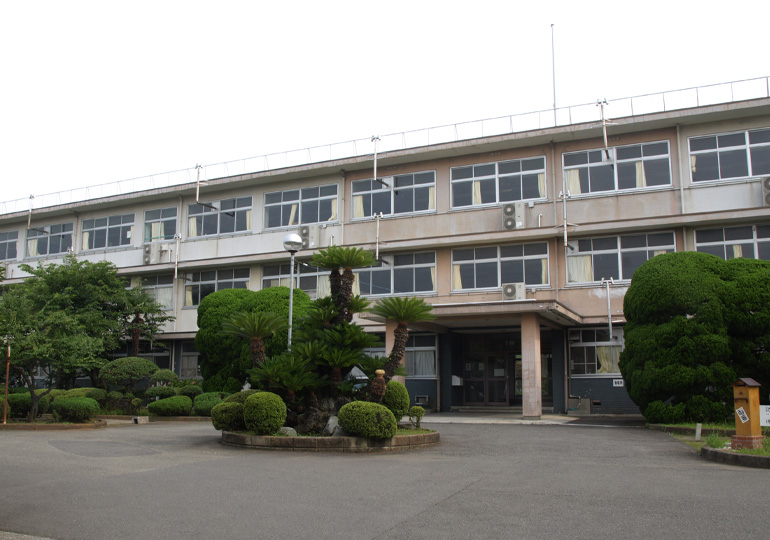
The Internal Grading Dilemma: Navigating Hyotei for University Quotas
Earning admission to Yokosuka High School introduces a new academic paradox. In Japan’s changing higher-education market, university admission via recommendation routes (suisen nyūshi) has expanded rapidly. These paths include designated school recommendation quotas (shitei-kō suisen) and comprehensive selection frameworks. However, designated quotas demand high high-school GPAs, often an unweighted 4.0 to 4.3 out of 5.0 across three years.
Earning a 4.2 GPA in an ordinary high school with a 50 deviation score is straightforward. Pulling off that same 4.2 inside Yokosuka High School requires going toe-to-toe with 280 students who all aced middle school. Regular midterms and final exams contain university-level concepts. Teachers do not grade on a soft curve. Consequently, many capable students end up with internal GPAs around 3.5 to 3.8.
That dynamic pushes the majority of Yokosuka’s cohort straight into general university testing (ippan senbatsu). The institution's academic culture embraces this reality. Students spend their second and third years drilling for the National Center Test for University Admissions and private university general exams. University advancement rates reflect this focus: large contingents gain admission to prestigious national institutions like Yokohama National University, Tokyo Institute of Technology (now Institute of Science Tokyo), and Tohoku University, alongside private anchors like Waseda, Keio, and the MARCH cohort (Meiji, Aoyama Gakuin, Rikkyo, Chuo, Hosei).
Campus Culture, Super Science Legacy, and Alumni Influence
Yokosuka High School carries deep historical roots dating back to its establishment as Yokosuka Middle School in 1908. Its alumni network spans business leaders, scientific researchers, and politicians, most notably former Japanese Prime Minister Junichiro Koizumi. That heritage translates into a self-governing campus atmosphere that avoids the rigid micromanagement found at many private alternatives.
The school holds an ongoing designation as a Super Science High School (SSH) by the Ministry of Education, Culture, Sports, Science and Technology (MEXT). This accreditation funnels specialized funding into advanced laboratory equipment, authentic data analysis curricula, and independent field research. Students present scientific research papers at national symposiums and regularly interface with nearby marine research agencies, including JAMSTEC (Japan Agency for Marine-Earth Science and Technology).
Extracurricular activities operate at full throttle. The annual sports festival (Taiikusai) and cultural festival (Kenryosai) are planned and executed by student committees without heavy administrative interference. Balancing these activities with a 6-to-7-period daily schedule forces students to master rigorous time management early.
Strategic Roadmap: How Middle Schoolers Clear the Admissions Cutoff
Securing a spot at Yokosuka requires an intentional, multi-year preparation cycle. The margin for error narrows quickly once the final year of middle school begins.
- Eighth Grade (Second Year): Target the Hyotei Foundation. Kanagawa counts Year 2 report cards directly into the admission equation. Students must secure 4s and 5s across all nine subjects, including physical education, fine arts, and home economics. Neglecting non-tested subjects damages the starting baseline.
- Ninth Grade Summer: Master General Core Content. The standard curriculum must be completed early. Summer break should focus on finishing all middle school mathematics and science concepts to open up the autumn for mock testing.
- Ninth Grade Autumn: The Tokushoku Shift. Standard multiple-choice practice will not suffice. Candidates must work through past characteristic inspection exams. These tests challenge examinees to synthesize charts, write analytical essays, and solve multi-step geometric puzzles under strict time limits.
- December to January: Final Calibration. Maintain school grades through final middle school assessments. Analyze weakness profiles through Kanagawa-specific mock exams. If practice scores sit below a 64 deviation score by late December, families should decide whether to commit to Yokosuka or adjust toward reliable regional alternatives.
Frequently Asked Questions (FAQ)
What exact deviation score is needed for Yokosuka High School?
Applicants generally need a deviation score (*hensachi*) between 66 and 67 on standard Kanagawa prefectural mock tests (such as Step or Woshin exams). Scoring above 68 provides a solid safety margin, while scores below 64 place an applicant at significant risk.
Does Yokosuka High School require the characteristic test (Tokushoku Kensa)?
Yes. Yokosuka High School mandates the descriptive *tokushoku kensa* alongside the five standard academic subjects. This test evaluates analytical deduction, cross-disciplinary reading comprehension, and creative logic.
Is it better to attend Yokosuka or pick a lower-tier school to get an easy university recommendation?
If a student's sole objective is securing a designated recommendation quota (*shitei-kō suisen*) for a mid-tier private university, maintaining a 4.3 GPA at a school with a deviation score of 58 might prove less stressful. However, Yokosuka High School offers an environment geared toward national universities and top private institutions through general exams, backed by advanced STEM facilities and an ambitious peer group.
Navigating Kanagawa's Elite Public School Track in 2026
Navigating Yokosuka High School's admissions standards requires balancing raw test performance against ongoing classroom evaluations. The school offers top-tier academic training and strong university placement, but it demands consistent discipline from early middle school onward. For students willing to tackle its high-stakes testing benchmarks, Yokosuka remains a premier springboard into Japan’s most competitive universities.
